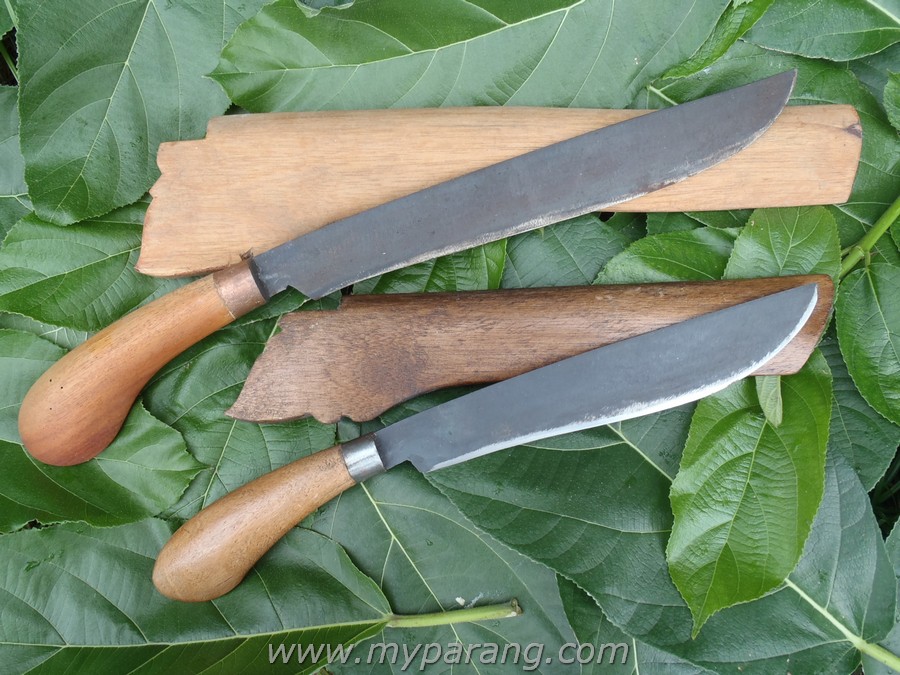
Kelantan is another state in Peninsular Malaysia which has some really talented parang, golok and keris makers. Below are some typical Kelantan Parang which can be found in the local shops and markets.
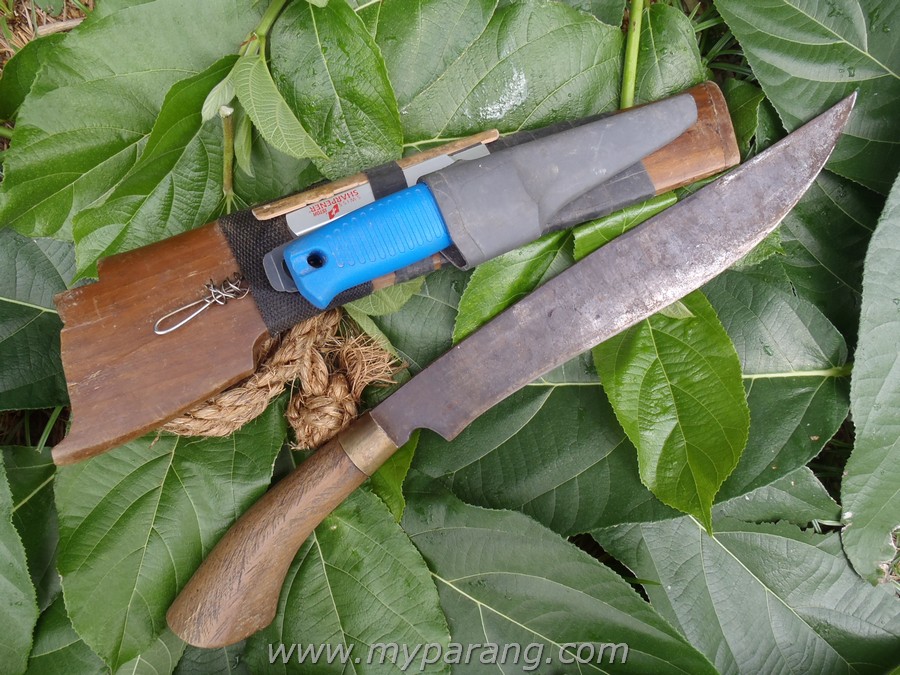
 This parang above is my personal and favorite parang. I have been using it for at least 18 years , and it has and still served me well. I purchased it in a local market in Kelantan and I paid a reasonable price for it back then. I am usually very picky when it comes to buying something I want, and I remember spending quite a few hours looking at the various kelantan parangs available. They all differ, some are longer, some are shorter, some are heavier meant for chopping and some are lighter – meant for slaughtering or cleaning game. Somehow I liked ( and still do ) the shape , especially how the handle and the blade itself sort of “flows ” together. The steel is made of 5160 or recycled leaf springs , and it has been very very well heat treated. In all the years I have been using it, I have never ever had a rolled or a chipped edge on this particular Kelantan parang.
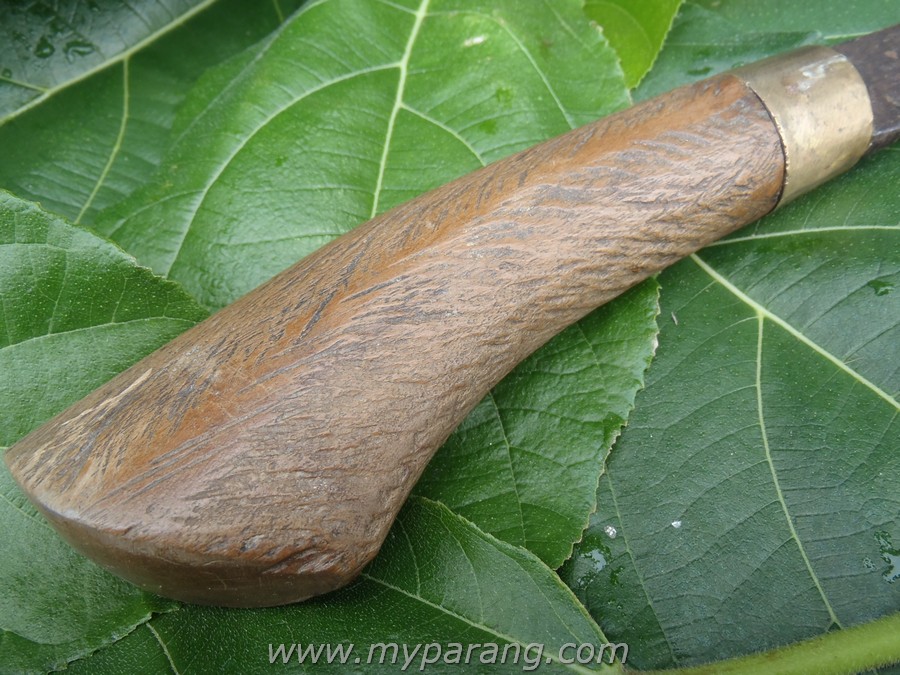
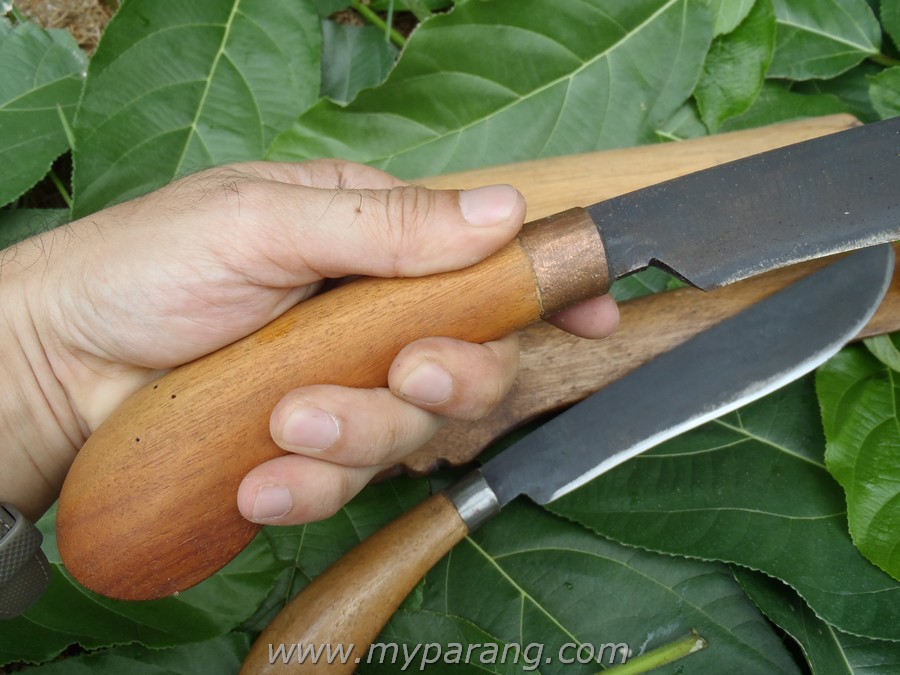
 One of the first things I did after I purchased the Kelantan Parang was to roughen the handle. It was an easy job with a rough wood file and it was probably the single most valuable modification I made to the parang. The original handle had a smooth and shiny surface, and once your hands sweat, your parang will not be secure anymore in your hand. After so many years, the handle has smoothened out abit, but there is still enough grip to be safe . You will also notice that there is no pin in the handle, and despite it’s hard use for 18 years, the parang blade has yet to loosen.
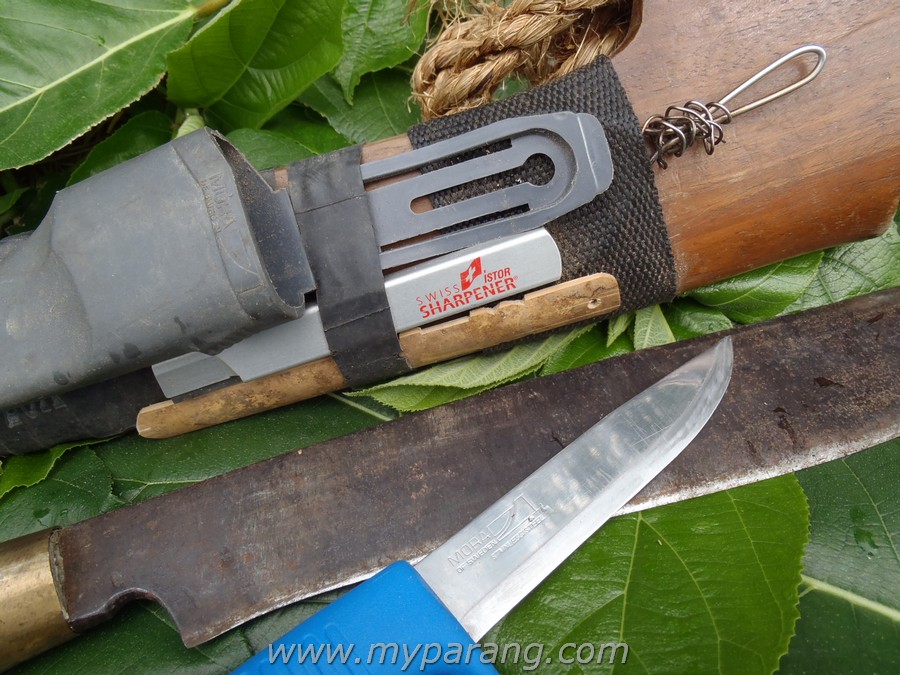
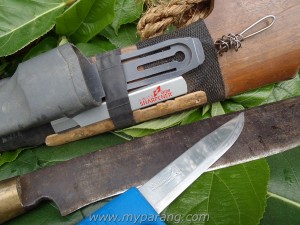 As you can see, I use this parang quite alot, and it has “evolved” to something of a mini survival kit. As you can see from the picture above, my kelantan parang has some additions, one of them is a small 3.5 inch stainless steel mora knife . I find this knife very useful for cutting food, like fish, fruits and vegetables. Having it in stainless also means that I do not have to keep polishing the edge to prevent rust. You will also see some cut up tyre tubes which I use as rubber bands to keep my lighter and mora knife in place. I also have some small bits of stainless steel wire I used to cook sausages over the fire slipped on the sheath, and a carbide sharpener. The carbide sharpener works well for a quick sharpening job in the field . At home I use an array of sharpening stones to keep my parangs sharp.
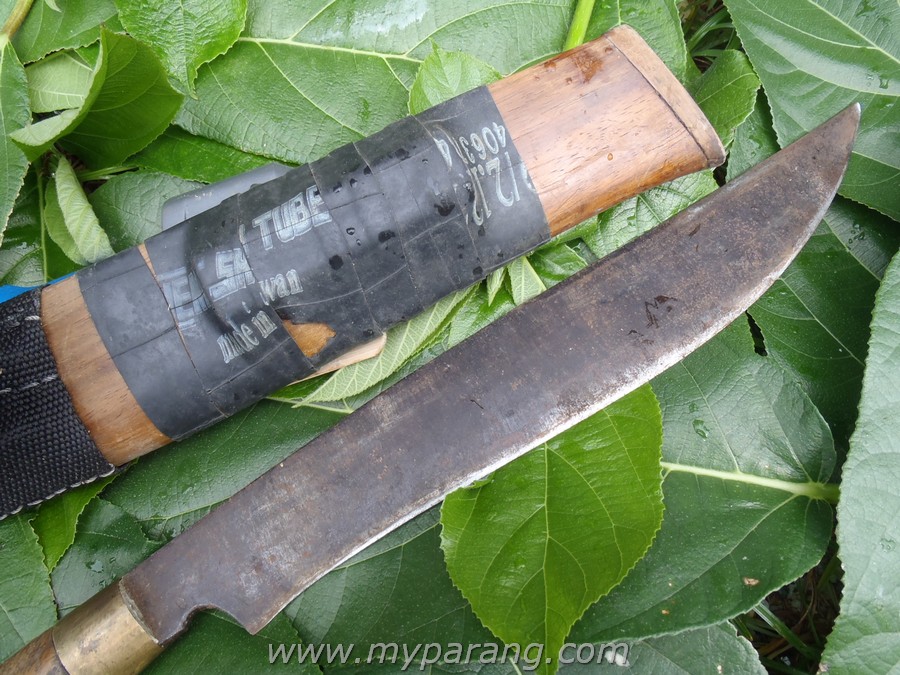
 Here you can see the beautiful patina on the surface of my kelantan parang blade. Initially I used to keep the edge nice and shiny, but after a few trips, I decided to leave all the tree sap and gum on it, and after so many years of doing so, it hardly rusts now. I have not oiled the parang for a very very long time and sometimes I can see only small specks of rust that will disappear with the next use. From the picture above, you can also see the rubber bands I cut from used bicycle inner tubes. The cut up inner bicycle tubes can be used as an emergency fire starter, and if you look closely at the tubes, you can see the bulge which is actually a lighter ( piezo ) .
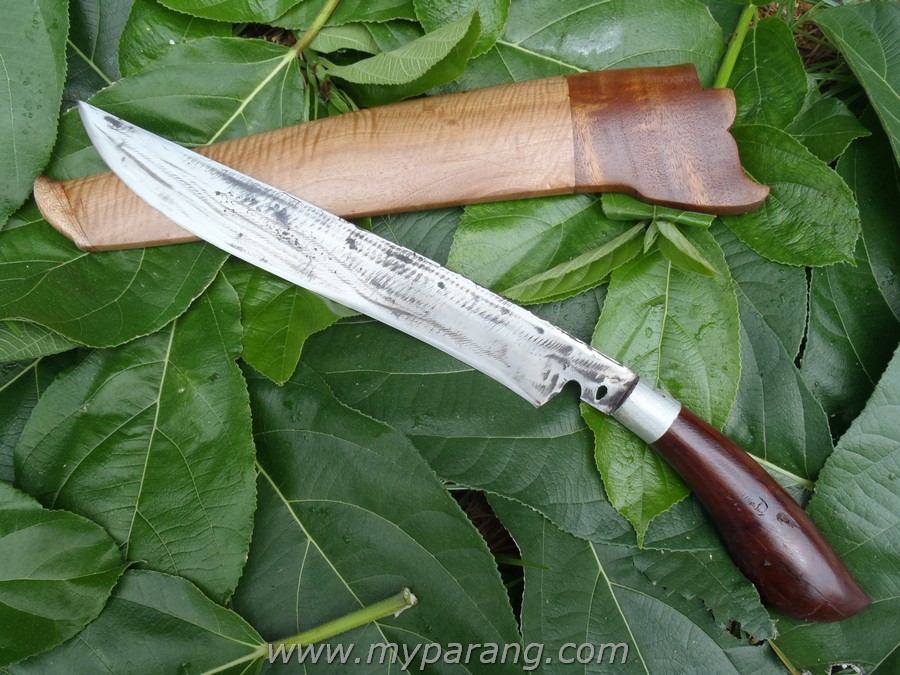
 The above parang is a more recent one I pruchased. I know I already have too many, but most of them are bought to be used, so I bought this one more for me to collect. This particular piece , I bought from a famous blacksmith called Pok Loh in Kelantan. He is recognized by Perbadanan Kraftangan ( Local Craft Development Corporation ) as a “Pandai Besi” or blacksmith . His works are pretty impressive.

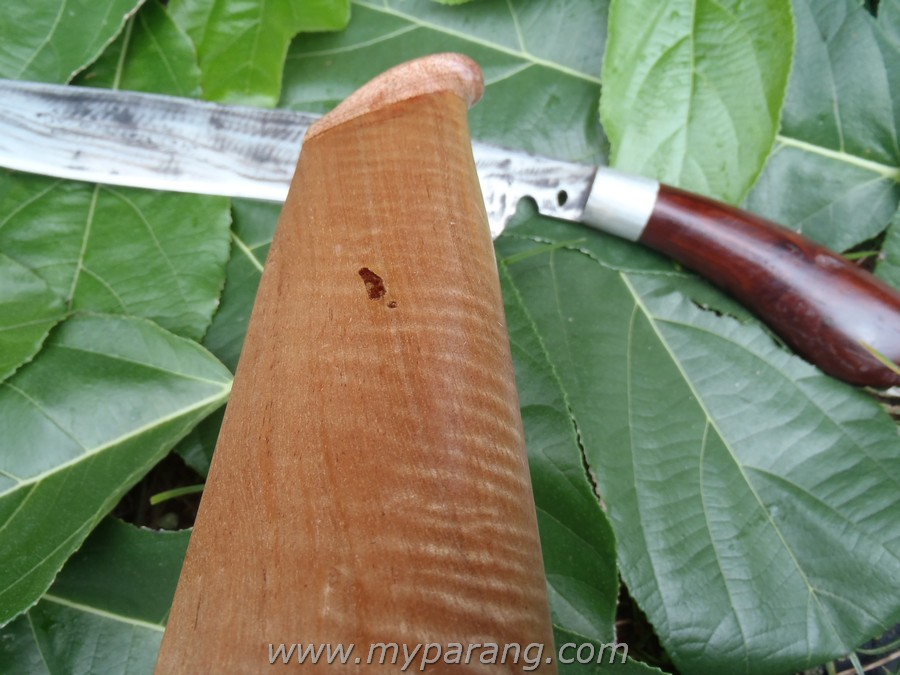
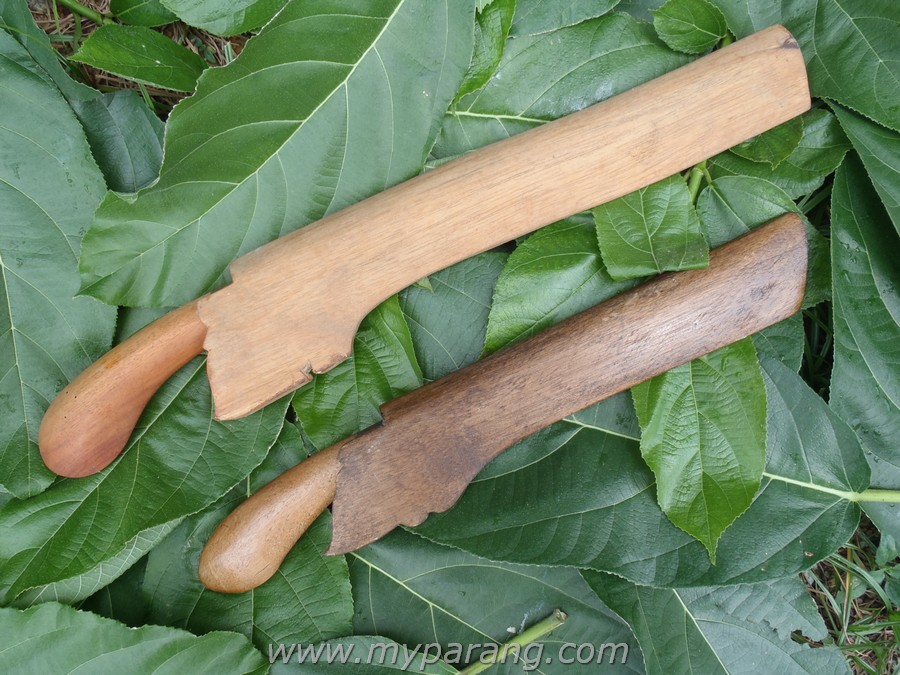
What I really like about this parang is of course the shape of the blade. But not only that, but I really like the sheath as well. As you can see from above, it is also made of Serian wood, and you can see the 3-D stripes in the picture above. This sheath is also a one piece sheath , which is much much harder to make. I’ll explain and compare sheaths in another post.
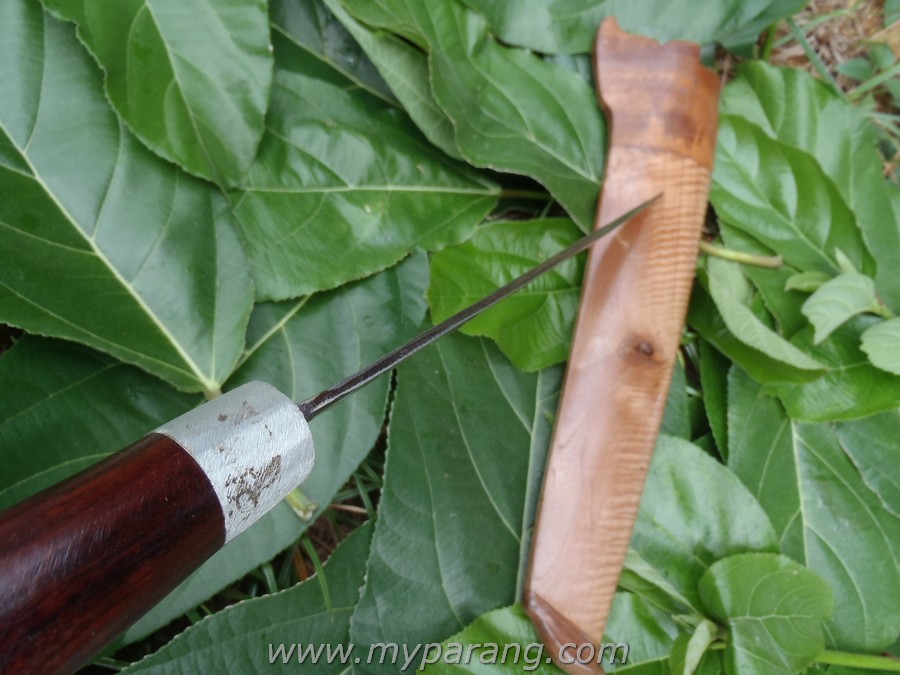
 From the picture above, you can see the spine of the parang, which is pretty thin. Overall, the weight of this parang is suitable for light work only, and not that suitable for chopping wood. Will I ever use this parang? Probably , but for the time being, it’ll be a cupboard queen .
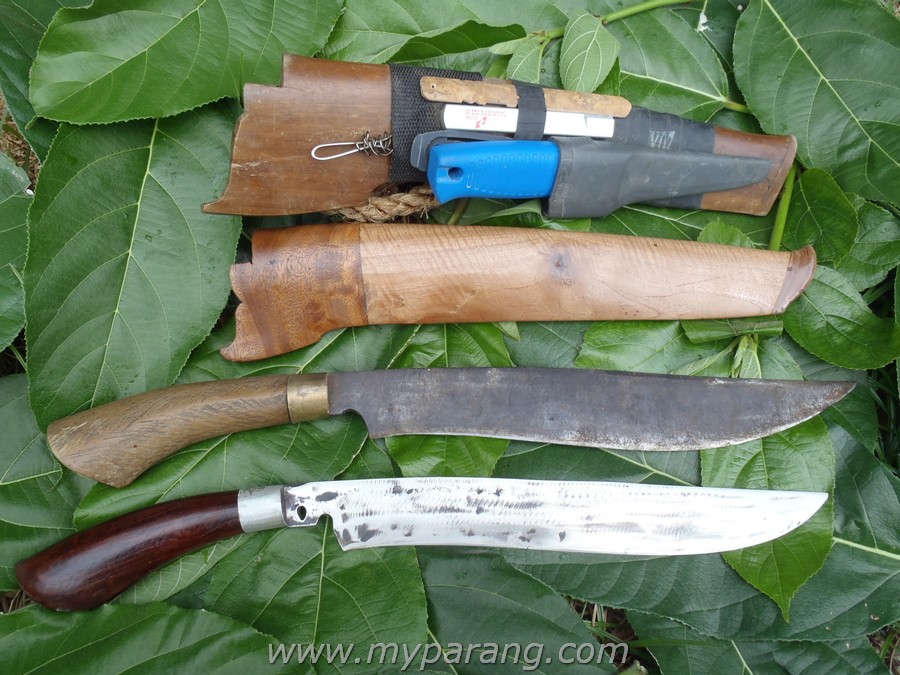
 Here is both of them next to each other. They are almost the same length but with very different in weight.It is quite obvious as well, which one is being used more often.
 The Parang Panjai or to some the parang Panjang.
 Here from the photo above you can see the handle of the parang panjai . When I first saw the bolster, I cringed and informed my supplier, please do not send me any with a rubber hose bolster! Usually the bolster is made of rattan , copper or steel , but this maker decided to use rubber hose. His explanation was that the rubber hose expands and contracts at the same rate as the wooden handle.
 The picture above is of the Parang Panjai’s sheath. I like the simple dark colored rattan weave. It makes the sheath look elegant. The weaving also serves a purpose which is to keep the two piece sheath together. The sheath itself is made of a very lightweight piece of wood, I think perhaps from the Meranti tree.
 Who can resist chopping a log when it’s right in front of you!