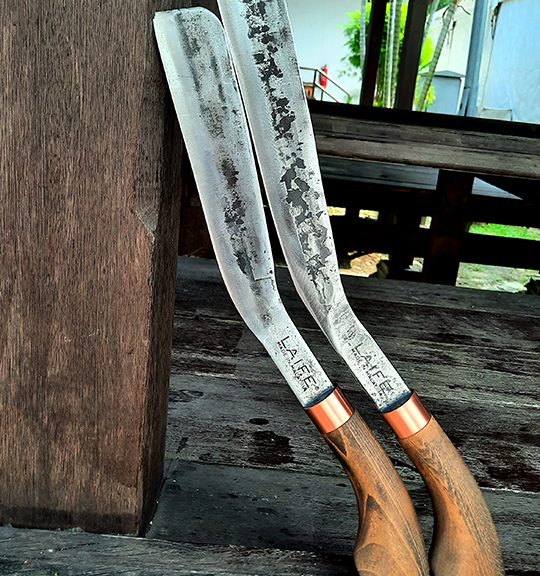
Duku Latok – The Forgotten Working Parang of Borneo
When people talk about traditional Bornean parangs, the Duku Chandong often steals the spotlight. Thanks to television and bushcraft enthusiasts, it has become one of the most recognized parang designs in the world.
However, there is another traditional Bornean blade that deserves attention – the Duku Latok.
While not as widely known outside of Sarawak and Kalimantan, the Duku Latok has a long history as a practical working tool. It is a design that has served farmers, villagers and indigenous communities for generations.
Today, MY Parang produces the Duku Latok in two practical sizes – a 10-inch model and a 12-inch model.
What is a Duku Latok?
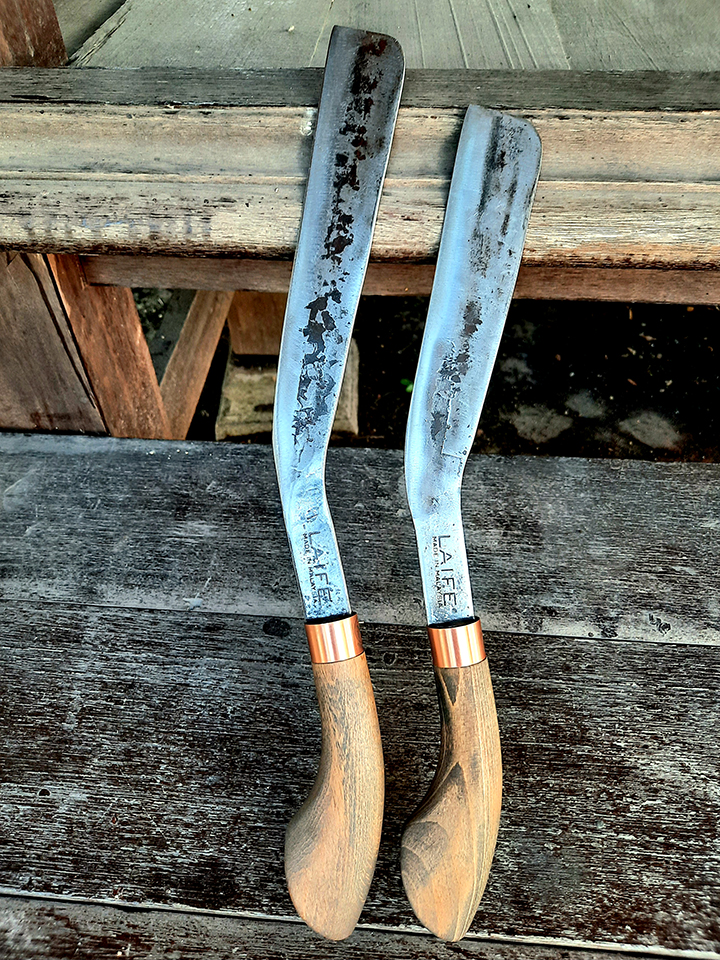
The Duku Latok originates from Borneo, particularly in areas of Sarawak and Kalimantan. The blade is associated with various Dayak communities .
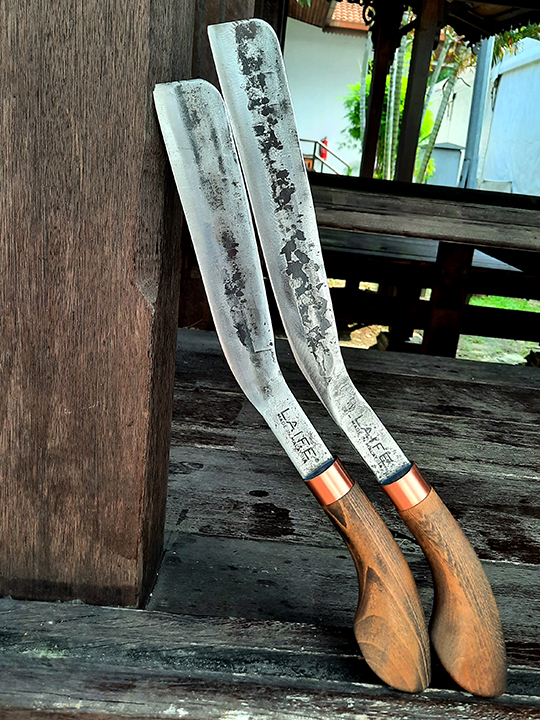
Unlike the Duku Chandong which features a pronounced upward sweep and sheep’s foot tip, the Duku Latok is instantly recognizable by its distinctive angled handle and upward angled blade.
At first glance, the shape may seem unusual. However, every curve and angle exists for a reason.
Traditional users developed the design to make cutting easier and more efficient during daily work.
Why Does The Handle Sit Higher?
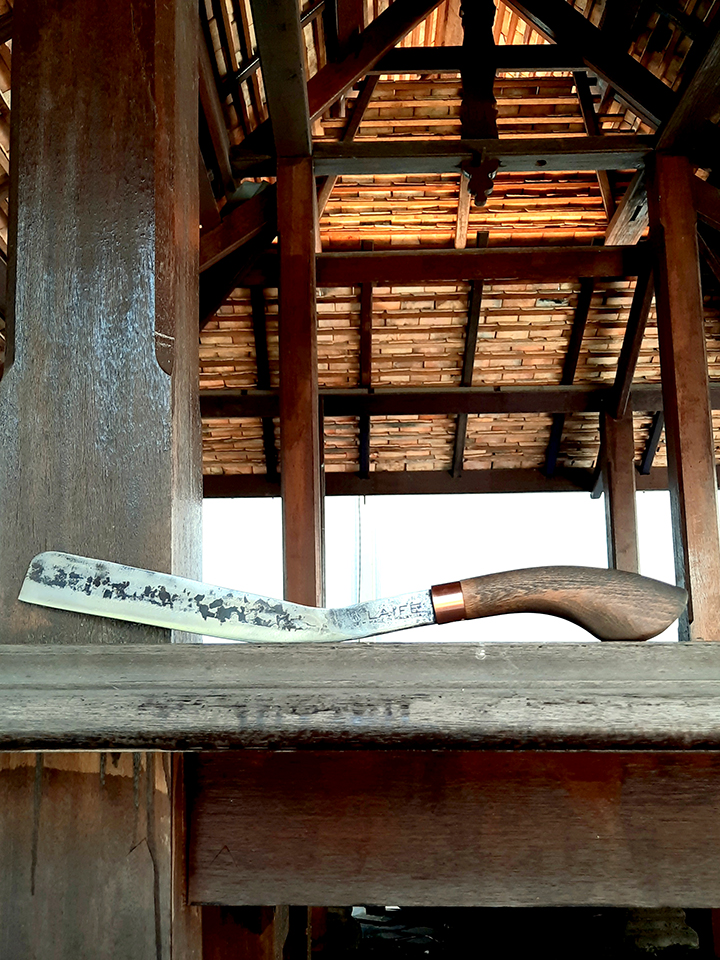
One of the most interesting features of the Duku Latok is the raised handle.
The handle sits noticeably above the cutting edge. This allows the blade to strike the target before the user’s knuckles arrive.
This may not sound important until you spend a day working close to the ground.
When clearing grass, chopping small saplings or splitting wood on the ground, a conventional straight-handled blade can cause your knuckles to strike the earth or the wood. The Duku Latok reduces this problem significantly.
It is a simple solution developed through generations of practical use.
As with many traditional tools, function came first and appearance came second.
The Communities That Used The Duku Latok
The Duku Latok has historically been used by the people of Sarawak and parts of Kalimantan.
Various Dayak groups, including the Bidayuh community, have long been associated with the design. It was commonly carried as both a working tool and, historically, as a weapon when required.
Like many traditional parangs, it was not designed specifically for one purpose.
A single blade might be used to clear vegetation in the morning, prepare building materials in the afternoon and process food in the evening.
In rural Borneo, tools needed to earn their place.
The Duku Latok certainly did.
What Is The Duku Latok Best Used For?
Many people assume that a forward-heavy parang must be intended for heavy chopping.
While the Duku Latok is certainly capable of chopping, we believe its greatest strength lies in lighter general-purpose work.
Tasks such as:
- Clearing grass and weeds
- Trimming small branches
- Cutting bamboo
- Preparing campsite materials
- Light agricultural work
- Harvesting crops
- General property maintenance
The blade geometry naturally wants to slice as it cuts.
This makes it very efficient on green vegetation and fibrous materials.
For users who spend more time maintaining trails, gardens, orchards or farms than felling trees, the Duku Latok can be an excellent choice.
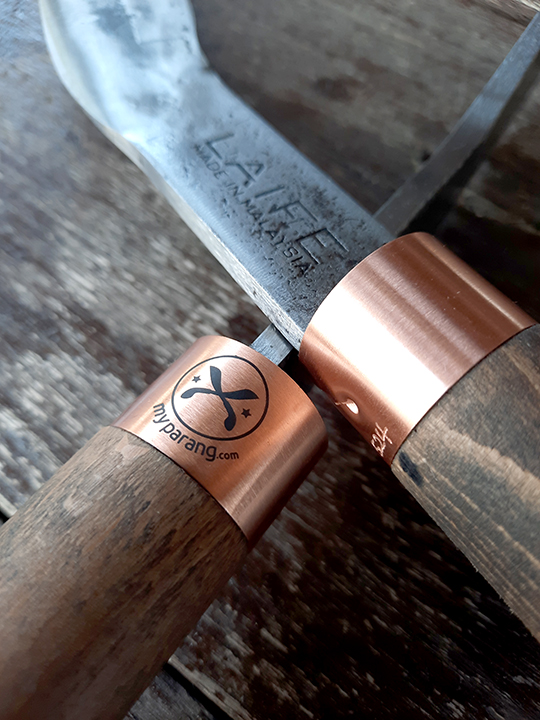
MY Parang Duku Latok 10 Inch
The 10-inch Duku Latok is the lighter and more compact version.
Its smaller size makes it easy to carry and less tiring to use throughout the day.
For users who prioritize portability, this is often the better choice.
The shorter blade is particularly suitable for:
- Gardening
- Orchard maintenance
- Campsite duties
- Bushcraft tasks
- Light vegetation clearing
Do not let the smaller size fool you.
A well-designed parang does not need to be large to be effective.
MY Parang Duku Latok 12 Inch
The 12-inch Duku Latok offers additional reach and chopping power.
The longer blade generates more momentum and covers more ground with each swing.
If your work involves larger vegetation, thicker branches or more demanding outdoor tasks, the 12-inch version may be the better option.
Many users consider the 12-inch size to be the ideal middle ground between portability and performance.
It remains easy to carry while providing noticeably more cutting power.
Traditional Designs Survive For A Reason
There is a tendency today to assume that newer designs are automatically better.
However, many traditional parang designs have survived for hundreds of years because they simply work.
The Duku Latok is one of those designs.
It may not be as famous as the Duku Chandong, but it represents generations of practical experience from the people of Borneo.
Every angle, every curve and every detail exists because someone found it useful.
In a world full of tactical gadgets and modern marketing, there is something refreshing about a tool that was shaped by actual work.
The Duku Latok remains exactly that.
A practical parang designed for practical people.
Whether you choose the MY Parang Duku Latok 10-inch or the larger 12-inch version, you are carrying a piece of Bornean heritage that continues to prove its worth today.


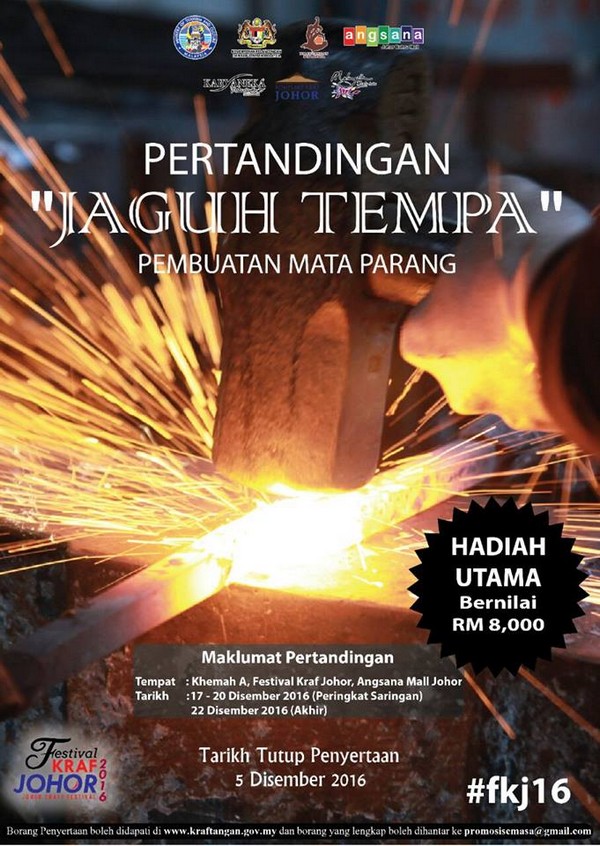
 We are back at the Festival Kraf Johor 2016 ( Johor Craft Festival 2016 ) It is currently happening now ( 15th Dec – 25th Dec 2016 ) . So if you are nearby, please drop by our booth in the main tent ( its about 150meters long , you can’t miss it ) booth no LTS4 which is right at the end of the tent. There are another 6 parang makers , so yes, there is a lot of choice.