Here is a small update on testing parangs made by myparang.
A few weeks ago some of us had the opportunity to go off in the the bush nearby to test the parangs made by myparang. These were some of the newer versions, which include the Bidor 123 , 135 , the Duku Chandong 12″ , and the Duku Chandong Heavy 12″. The main reasons to do this test was to find out how well the handles held on . I was also curious to know how well the handle would feel like after a few hours of heavy use. I have a similar handle on another parang, and I find the shape extremely comfortable. But who knows, perhaps the weight , dimensions or shape may be slightly off. I know that I find it comfortable, but what about others? That’s why I brought some friends to help out.
It was a hot day but we did some hard work on the parangs . Small twigs, bigger branches, Dry and live branches, dry bamboo and even at batoning , no task prove to be too hard while we were testing these parangs from myparang. At the start of the test, we were determined to create some failure , ie handle loosening or cracking , but we failed and the parangs won. Beautifully .
Below is the video we took while we were testing them out. We will be adding more videos on parangs and their usage later on . Please don’t hesitate to comment on the video if you have any.
Here is a simple video on how to cut open a young coconut I made some time ago. It shows how the parang is choked up for close up work or when you don’t need too much chopping power.
I’m sure many of you have heard of the Bidor Blacksmith by now. There has been many blog writings on them and their blades are sold worldwide. From a small family shack, they are now one of the leading parang / agricultural tools in Malaysia. Their expertise lies in their heat treatment – their blades are easily sharpened and able to hold an edge for a long time.
Recently on our last trip, we took some pictures of the workshop and this post will be pretty picture heavy .
Here, they earn their living from making agricultural tools – from sickles to kitchen knives , and most things in between. Hence to live of this , their setup is pretty much bigger and is a stark contrast with the traditional makers. Here you can see half a dozen power hammers and tons of steel stock.
This post on the Bidor Blacksmith will be less wordy and will be mostly pictures. Pictures are worth a thousand words, therefore I won’t bore you much with lengthy explanations.
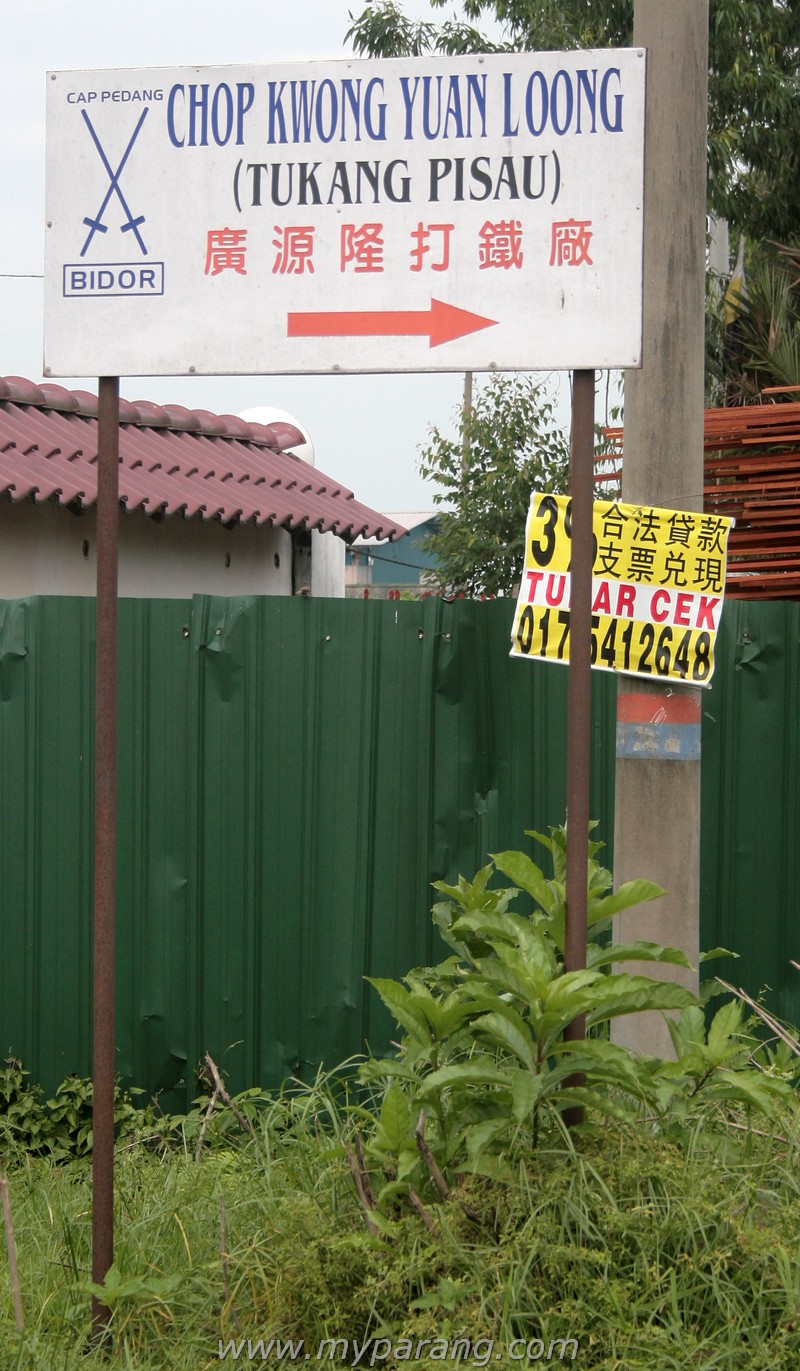
Signboards showing you the way to the factory
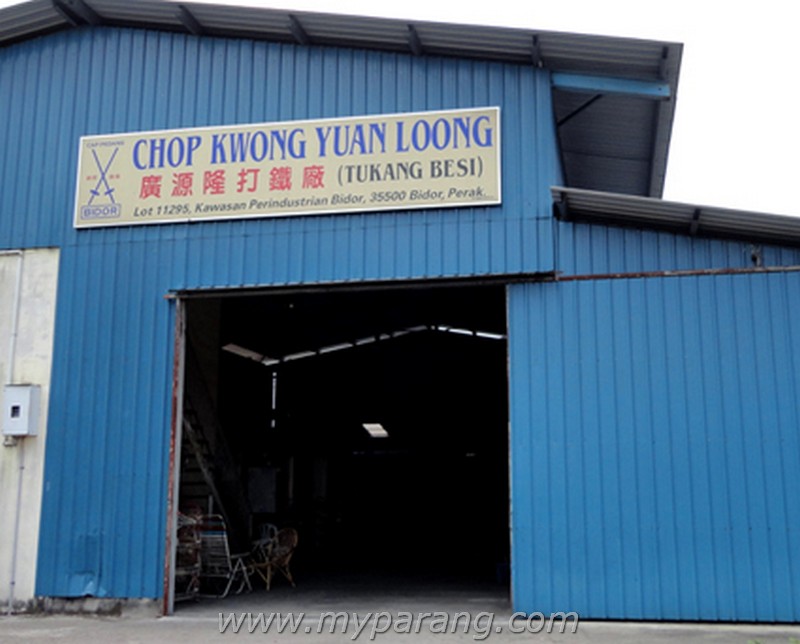
The factory main entrance
Some of the various agricultural tools you can find made there.
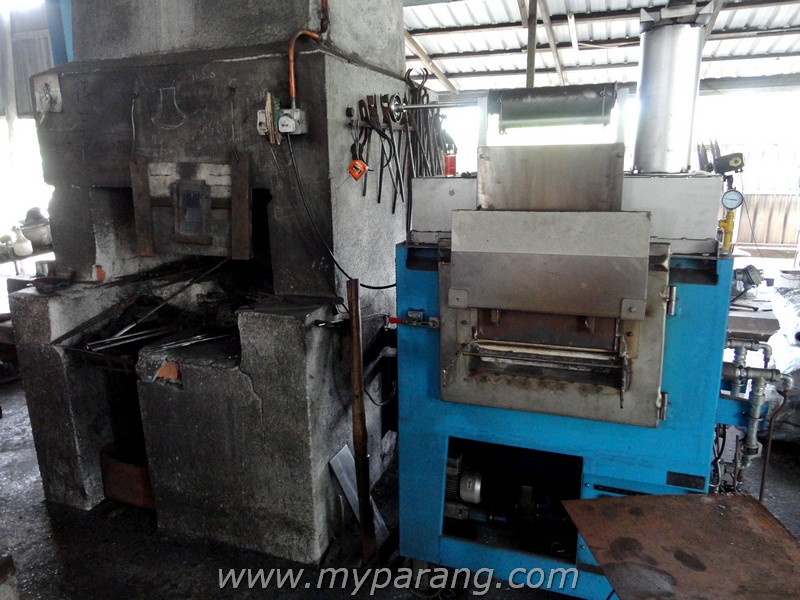
Late 2013, they purchased two gas forges, as you can see in the picture below. Apparently they have been having trouble sourcing for the right type of coal, and the gas forge is a very much welcome upgrade. Gas is much easier to obtain and more consistent in supply . They however, do not use it to heat treat their products. This is because the gas forge heats up the whole blade, and not only the cutting edge. This is true, since you only need to harden the edge only.
Brand new gas forge next to the charcoal forge
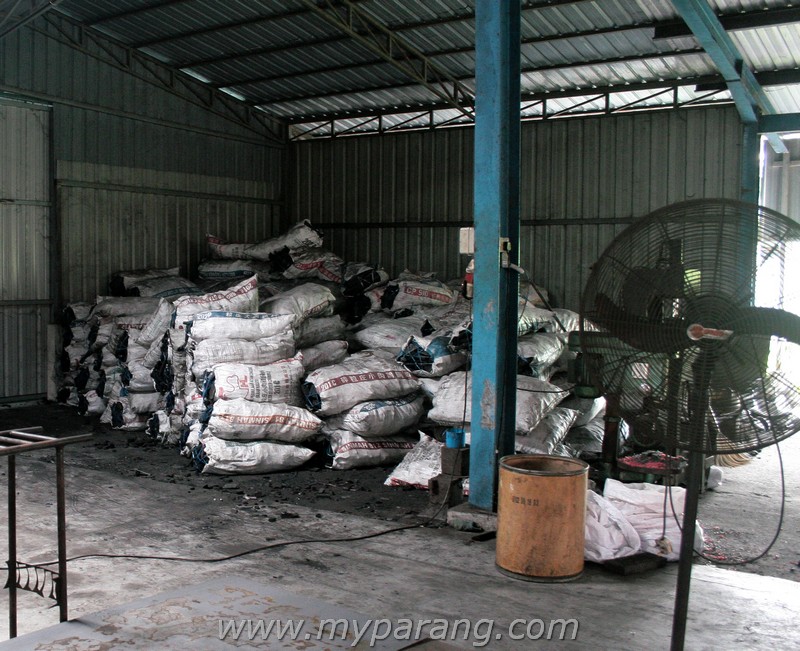
Their stockpile of charcoal. Ah Pin once told me if I can source this particular type of charcoal, he’d buy any amount I can supply him.
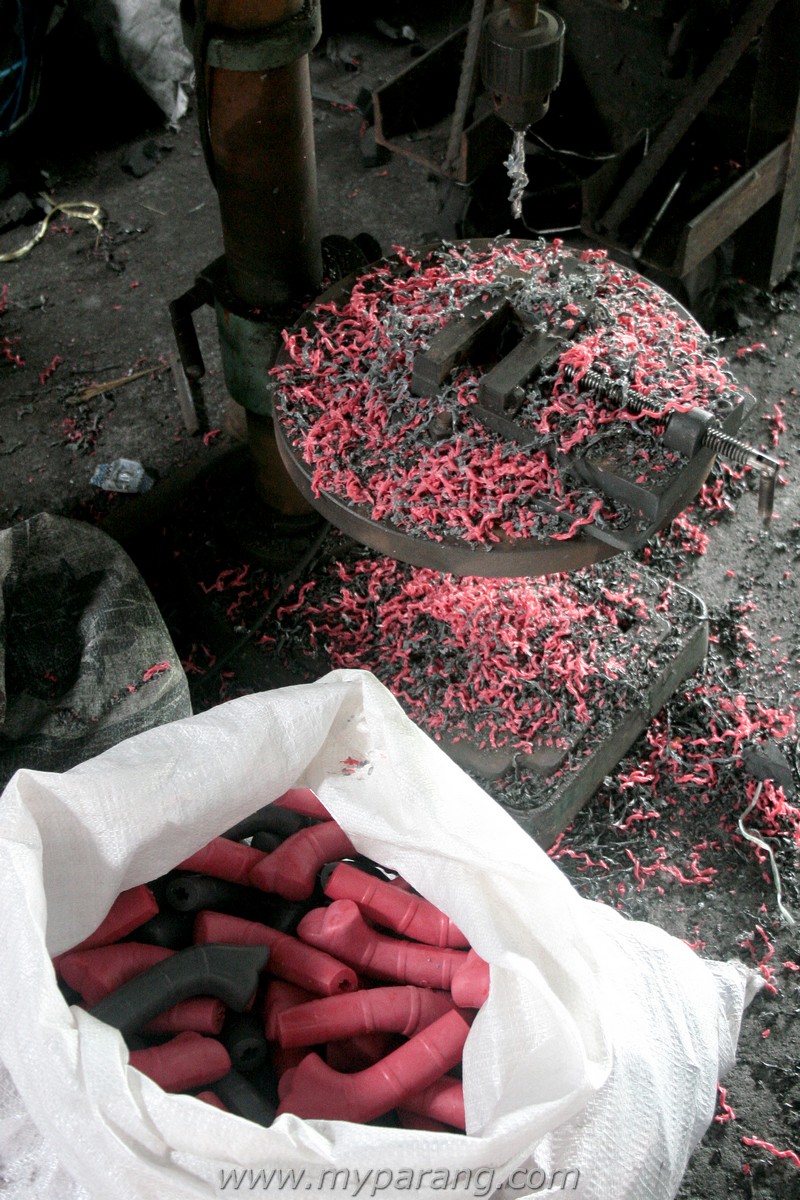
The plastic handles everyone seems to hate. Waxy, Slippery , obnoxious colours , but hey, it’s practical and easily seen on the jungle floor!
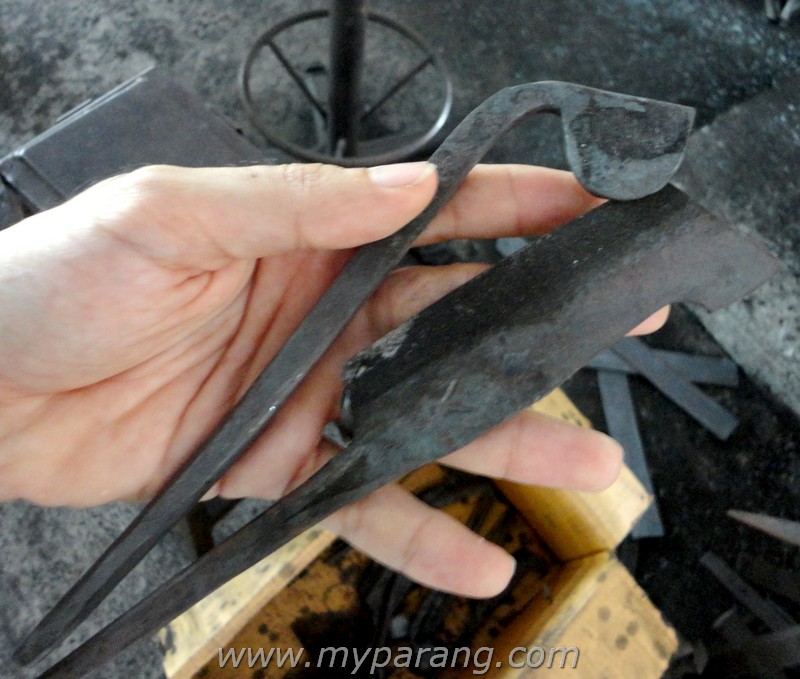
One of the tools they make – a betel nut cutter. You don’t see them much anymore.
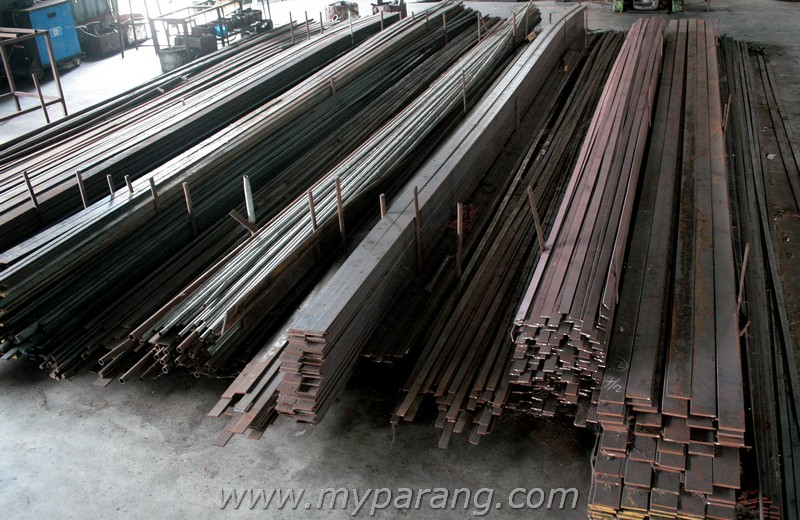
The steel stock they use come directly from the steel mill, and not from the recyclers. Recycled steel ( ie. leaf springs ) differ in composition and will result differently after the heat treat.
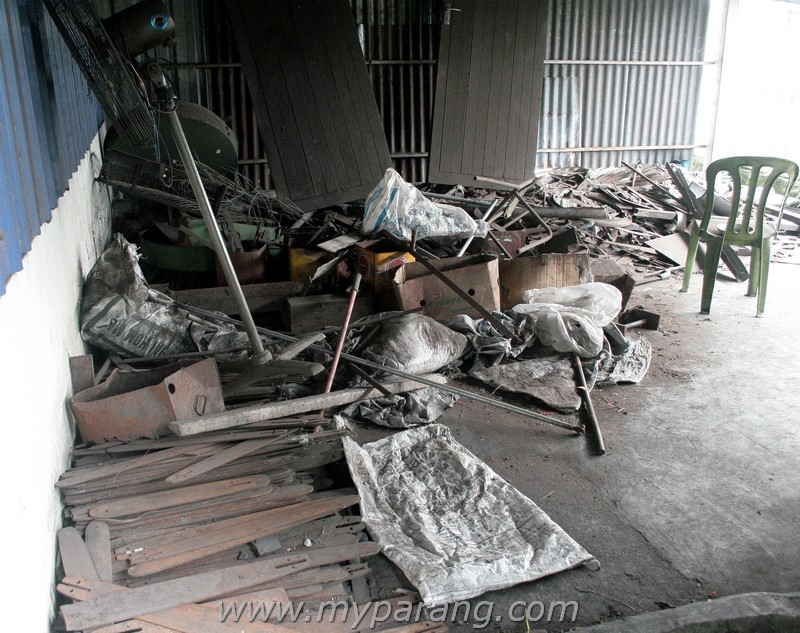
Here is a stockpile of scrap steel which they used back then. There are various files , chainsaw bar guides, recycled leaf springs etc , which are not used anymore.
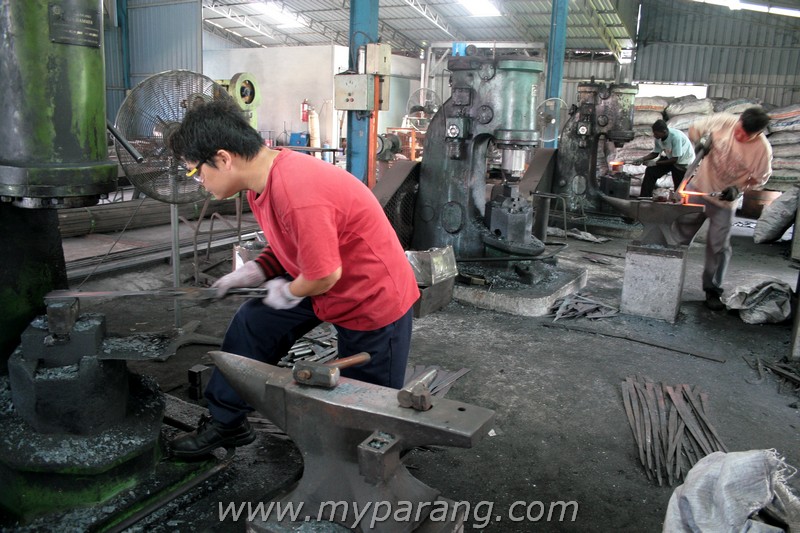
Here workers pound the hot and soft steel into a shape .
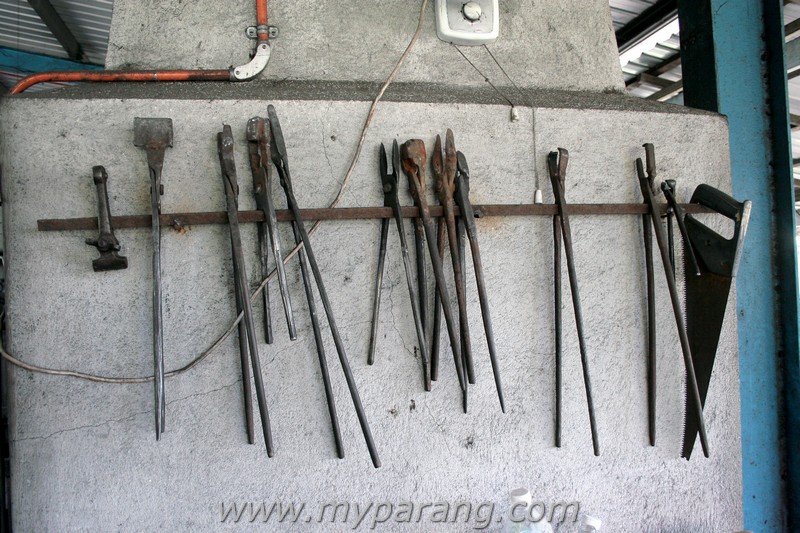
Some of the blacksmith’s tools hanging . Some are made by themselves.
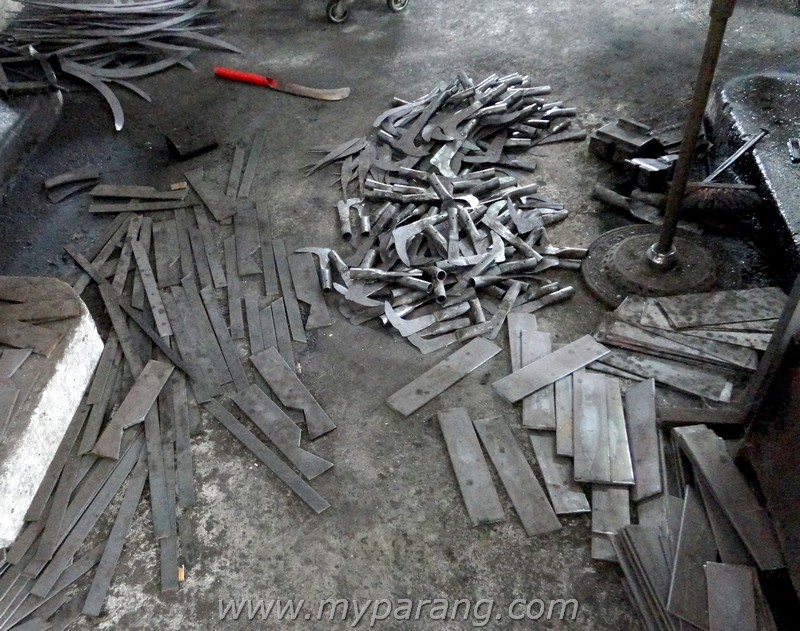
Some of the semi finished products left to cool on the factory floor
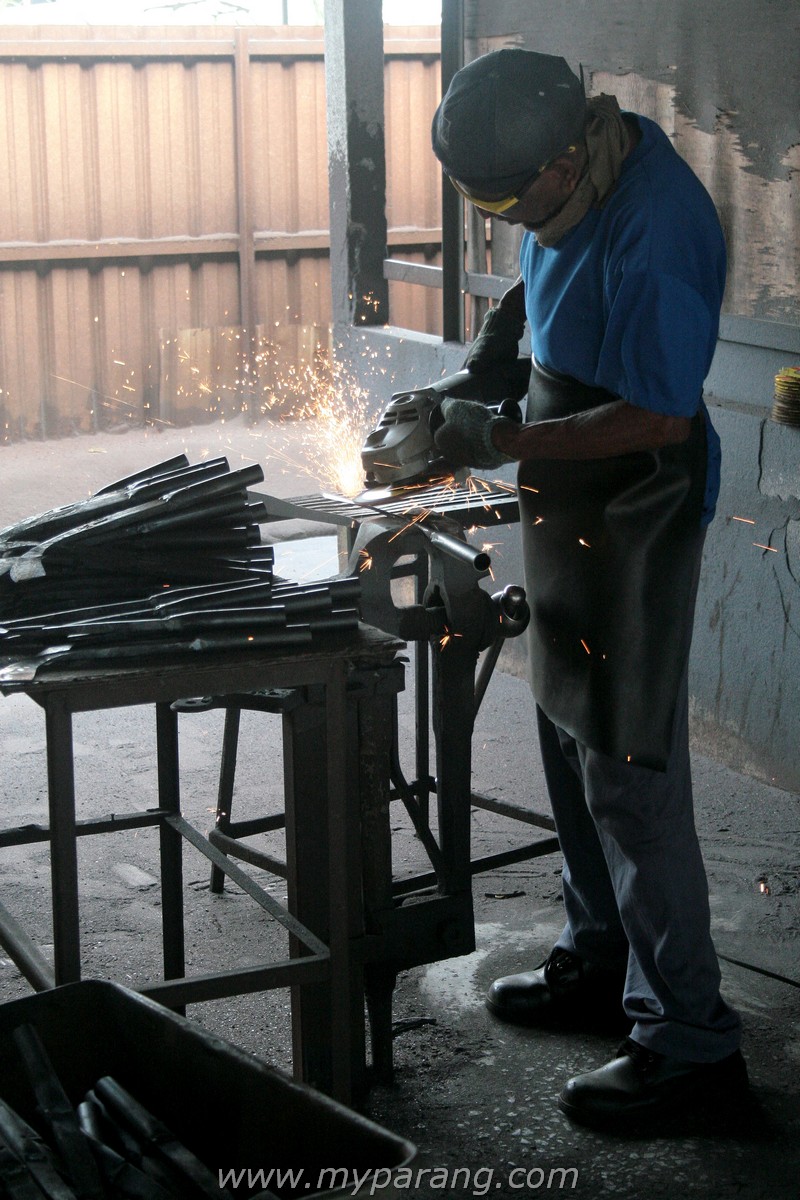
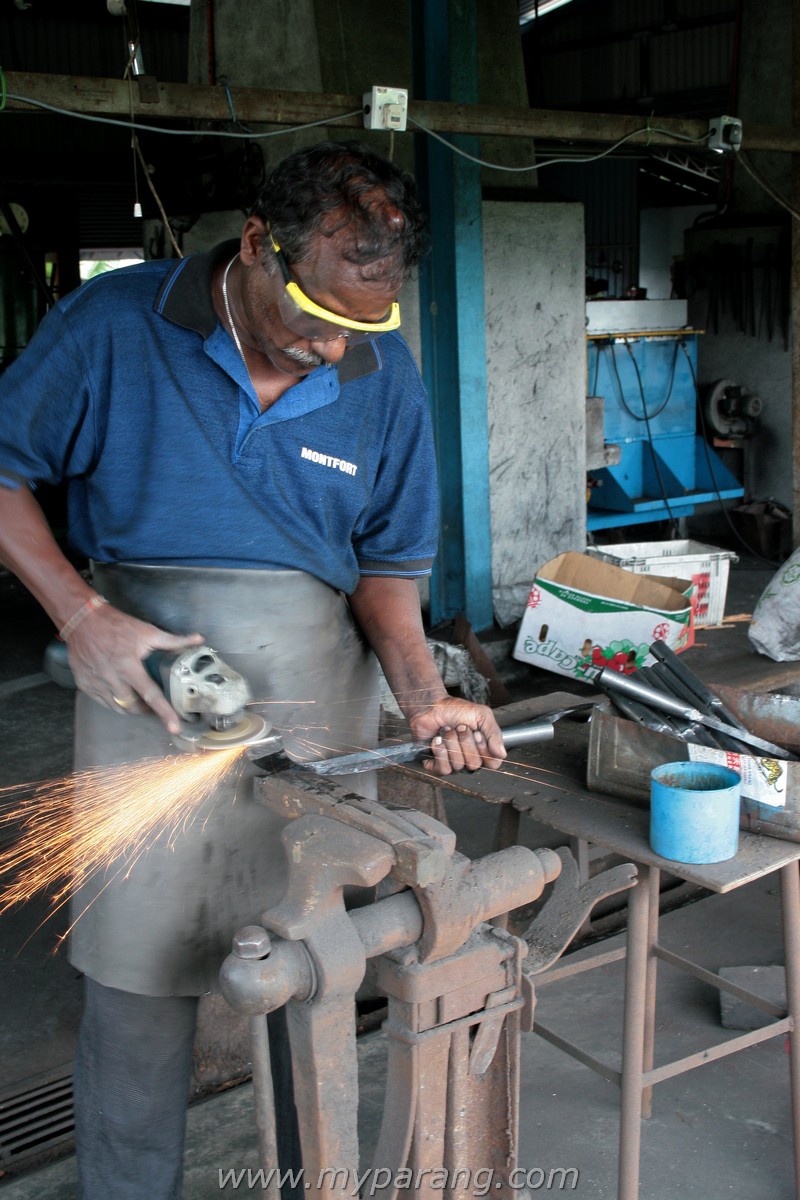
A worker rough grinds the worked steel into its final shape
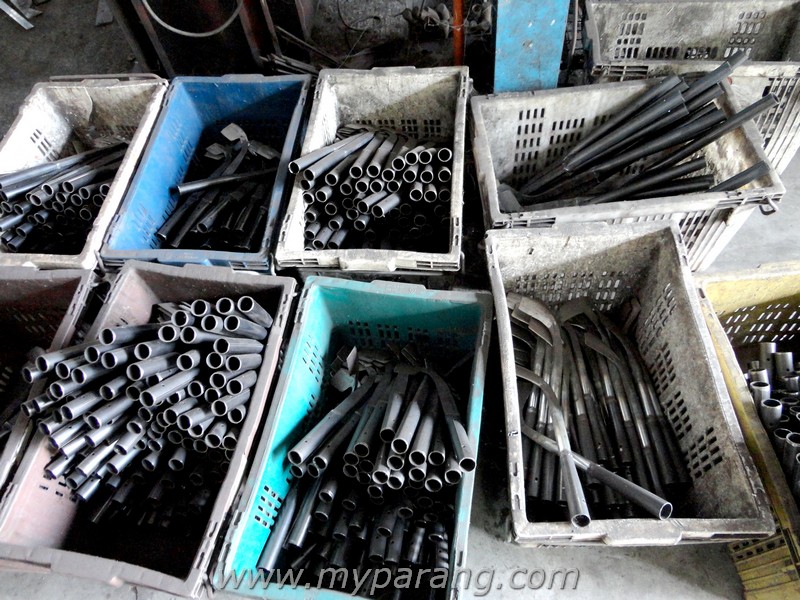
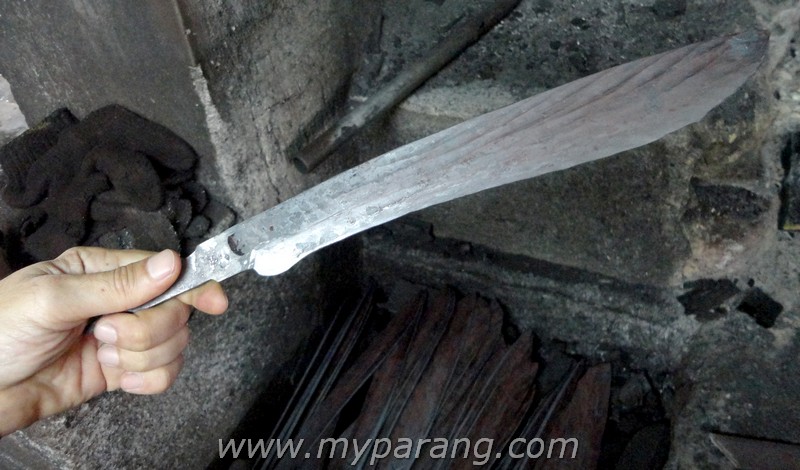
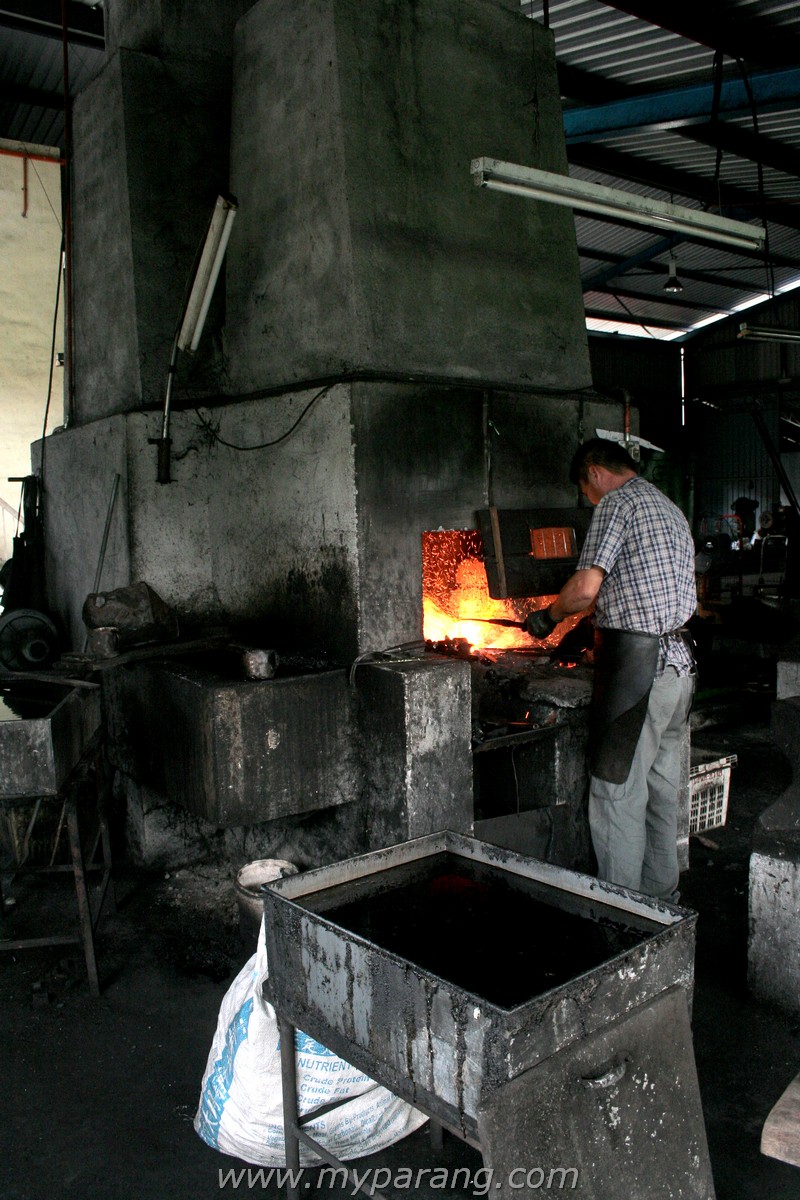
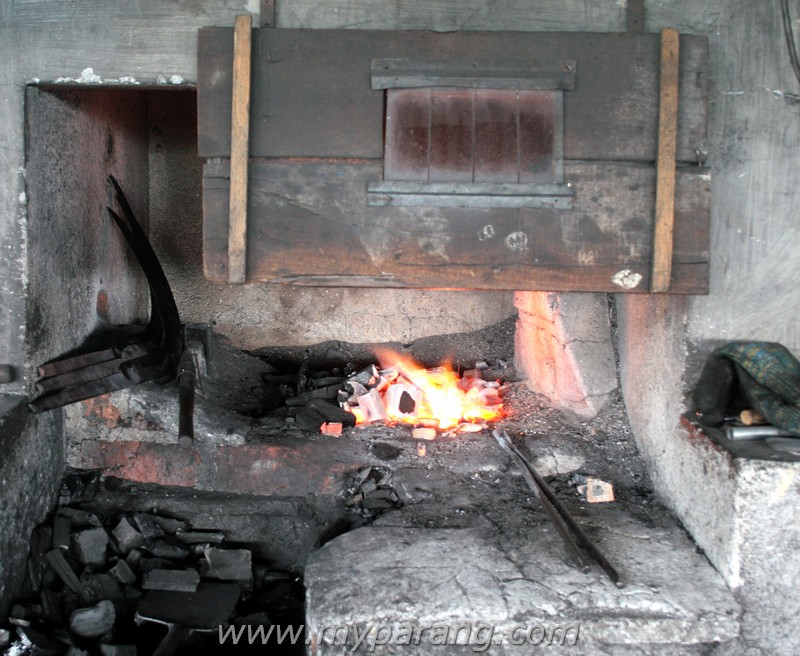
A Parang blank ready to be sent for heat treatAh Ming firing up the forge to heat treat some blades. Note that he uses the charcoal forge and not the gas.Heat treat done in Oil .
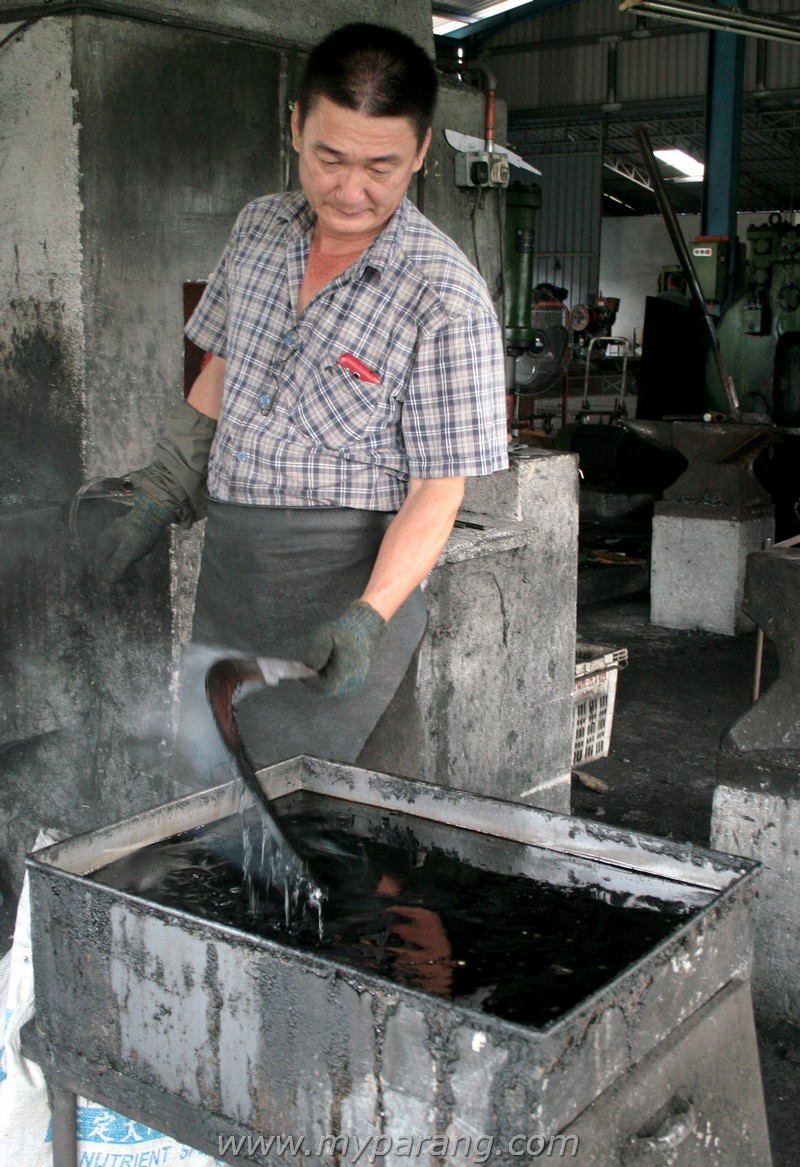
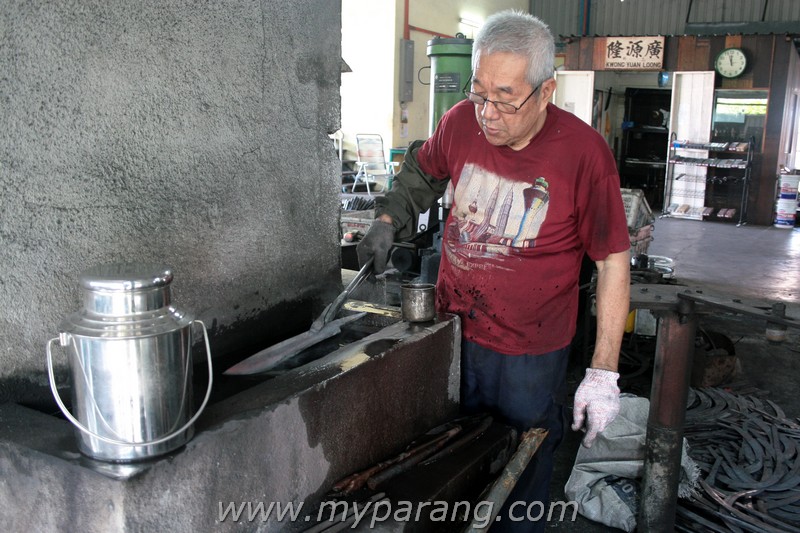
Heat Treat done with water
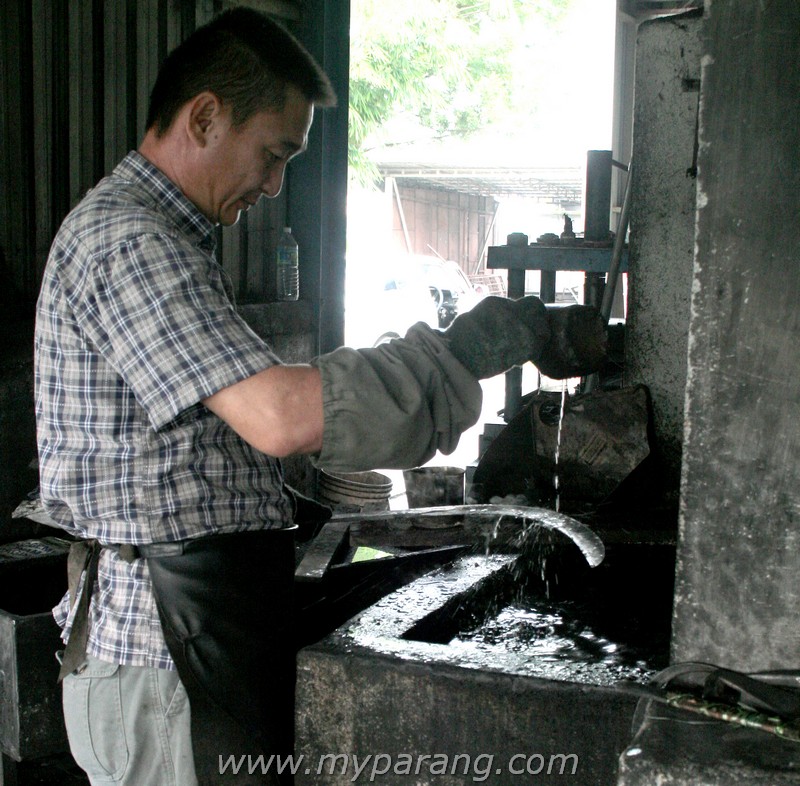
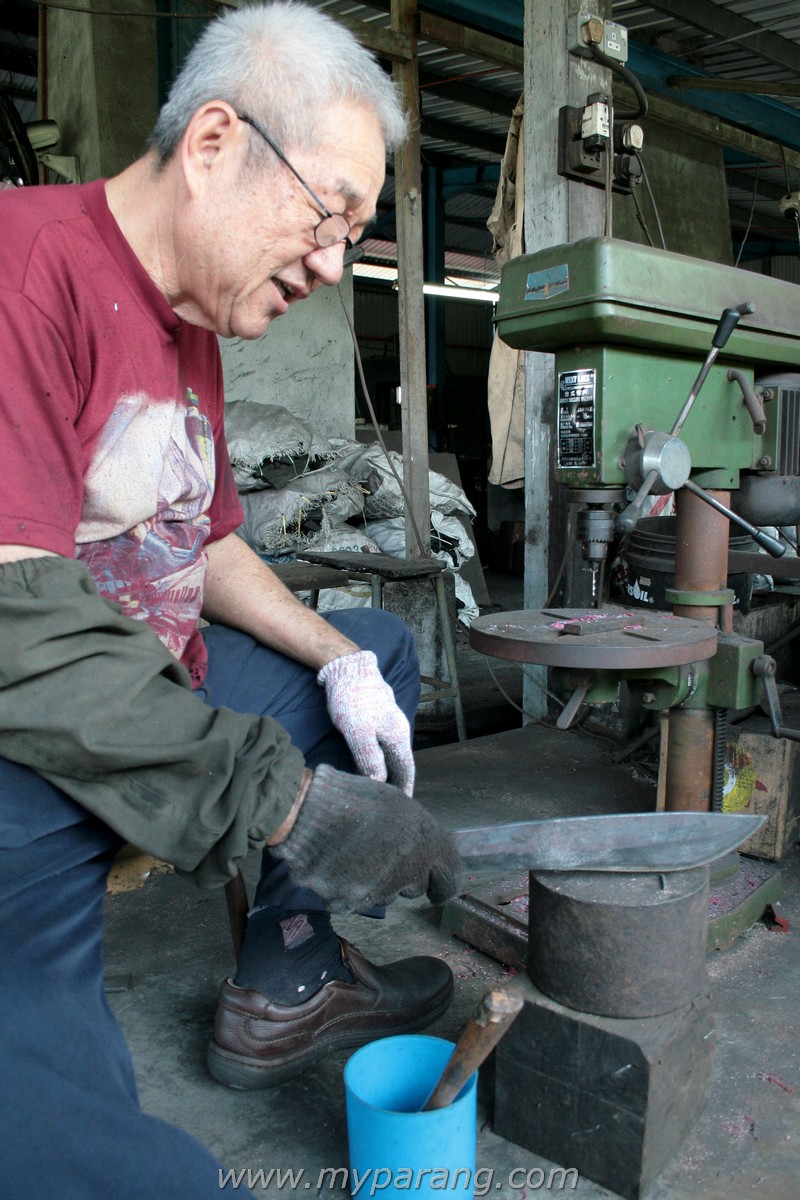
Mr. Pin showing how it’s done – hardening a parang blade in water.
I asked Ah Ming when he was demonstrating the heat treatment if there was any difference in using water or oil. He said no, but he mentioned that the oil is much messier , as it leaves a greasy surface on the blades.
After treat, the blades are left at the side of the forge to temper.
A worker sharpens the blanks – in this case a rubber tapping knife .
Here Mr. Pin showing the ability of his hand – hardened blades. Chopping steel pins with ease.
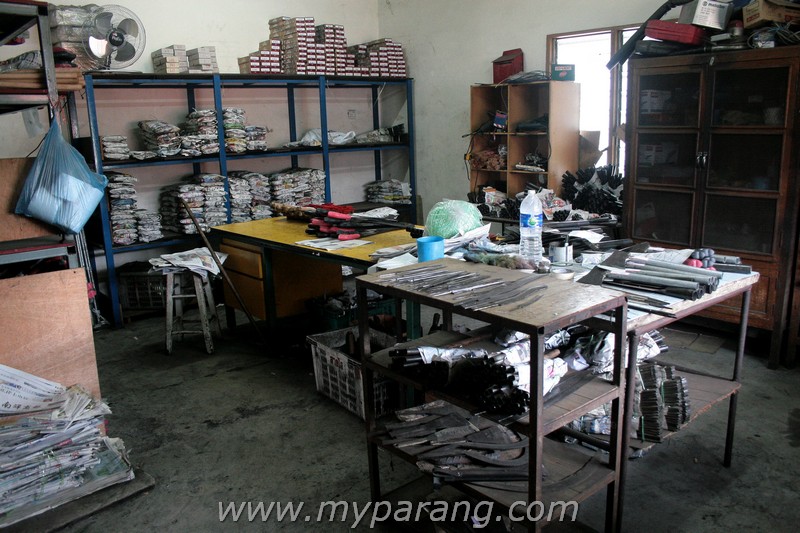
The packing center. Where orders are packed and kept for customers.
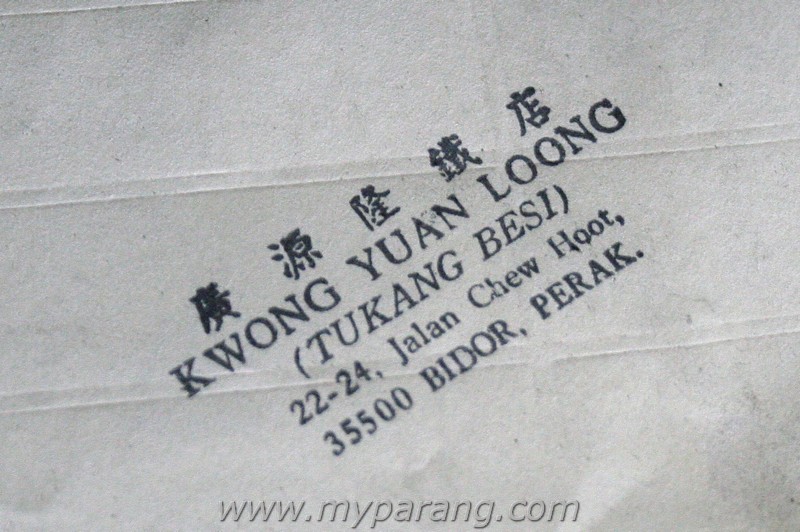
The picture below shows the old address of the Bidor Blacksmith. Beware, as there are fakes make now days which uses this old address. When I spoke to Ah Ming, he mentioned that he knows about the fakes. He said they started when customers requested for Bidor made parangs , but the shops and their suppliers were too lazy to get them from Bidor itself, so they asked their blacksmiths to copy to name and stamp it into their products. Really , anything can happen in Malaysia!
edit 5/11/2014 : We have added a good video by the cool guys at ” Bush Channel ” on you tube.
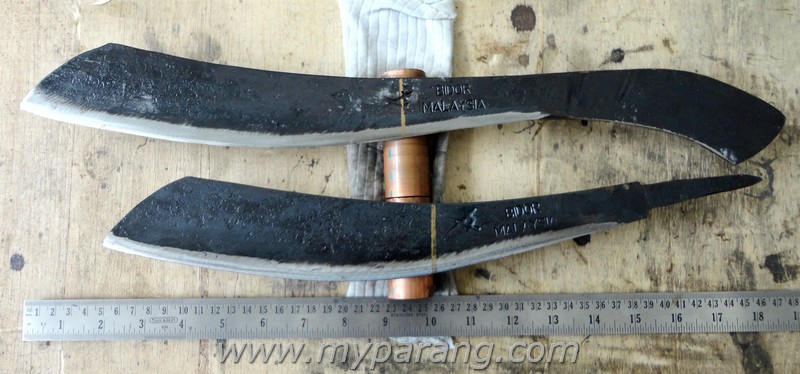
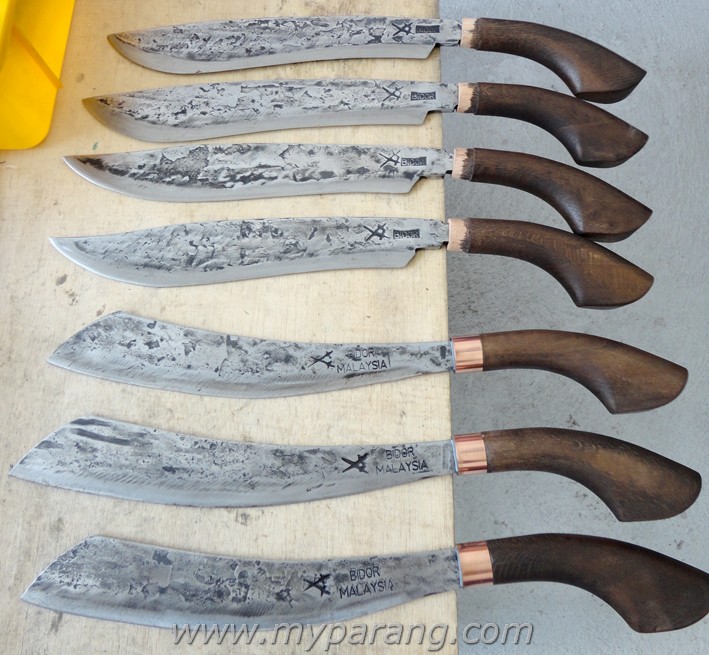
Here is a sneak preview of the first batch of Goloks from myparang.
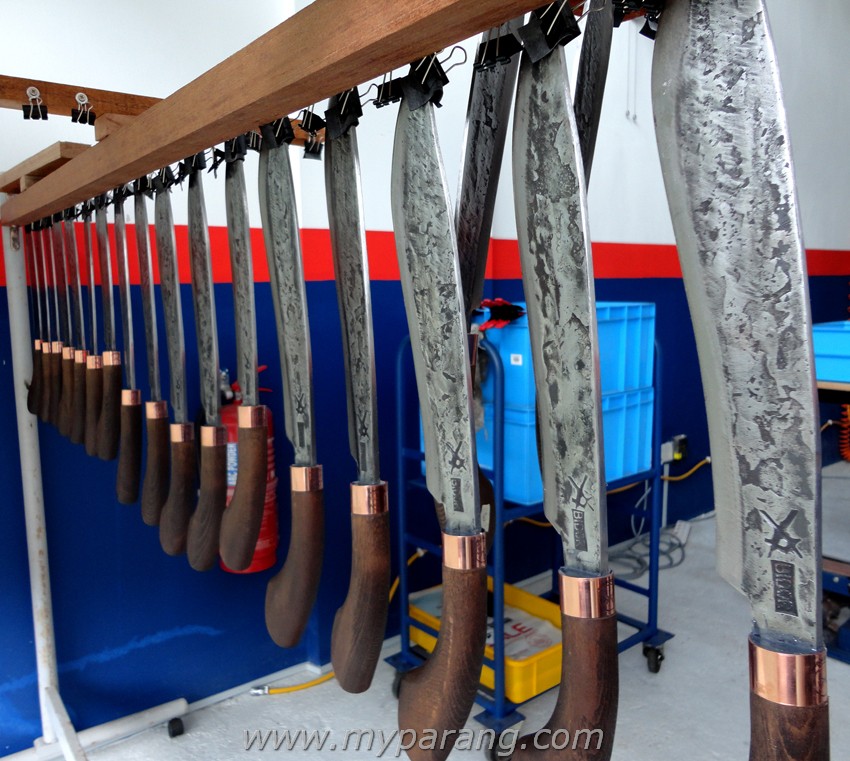
Completed goloks waiting to dry on the hangar
We have finally started assembling the parangs after much delay. The delays are not much due to components or manpower, but mostly due to some fine tuning of the process. The colour for the parang handles needed to be consistent – so we had to make up some colour samples, the copper rings needed polishing , and not to mention the creation of many jigs that is very much needed. Sometimes we need to think, make and rethink again a few of the jigs so they work better and give better consistent results. These all take time, but it is very well spent. We’d rather spend time now to make things right rather than keep spending time reworking as we go.
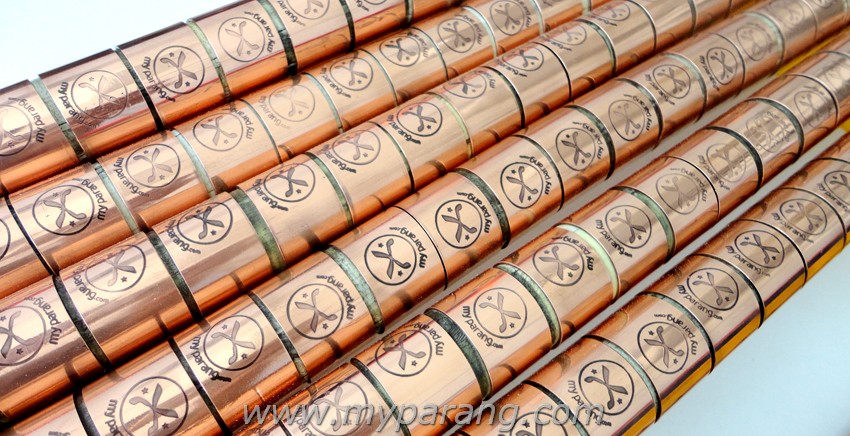
The polished copper rings. as bright as gold!
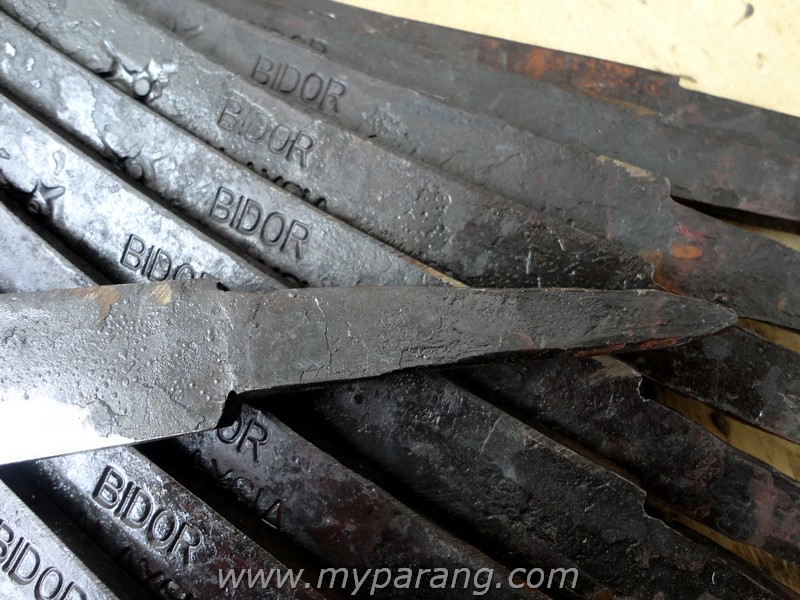
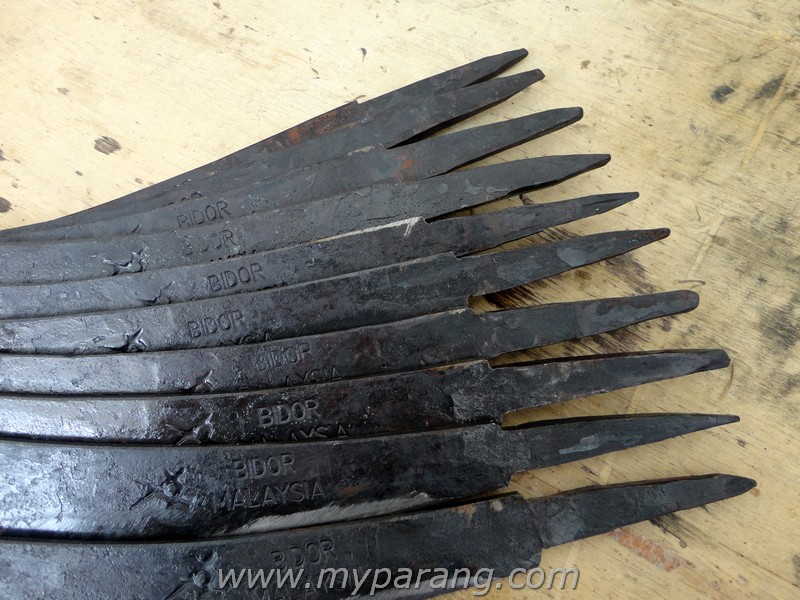
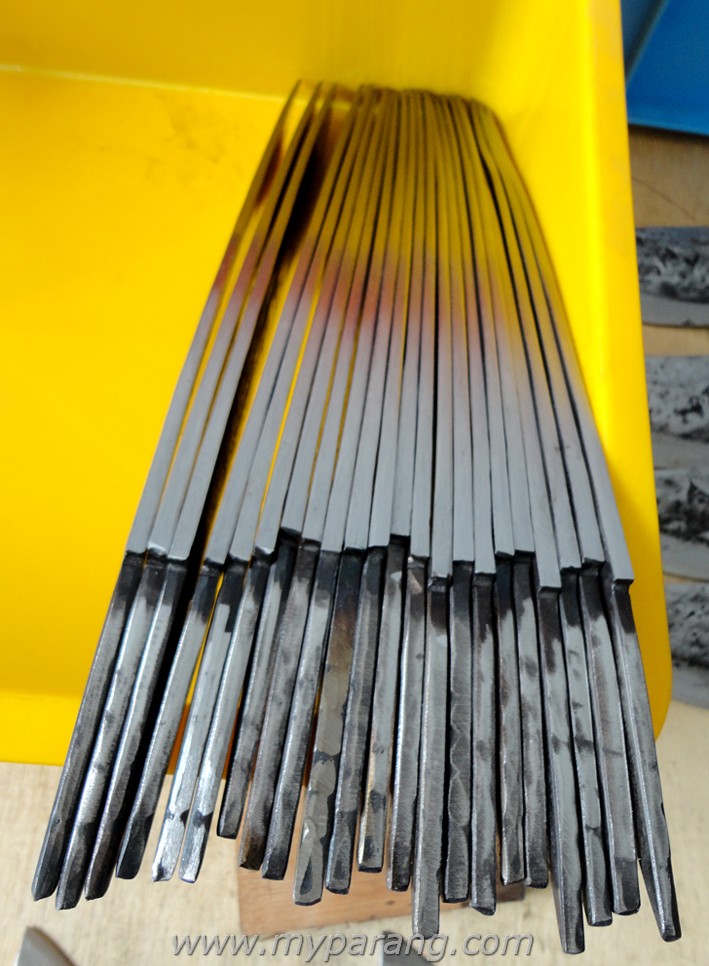
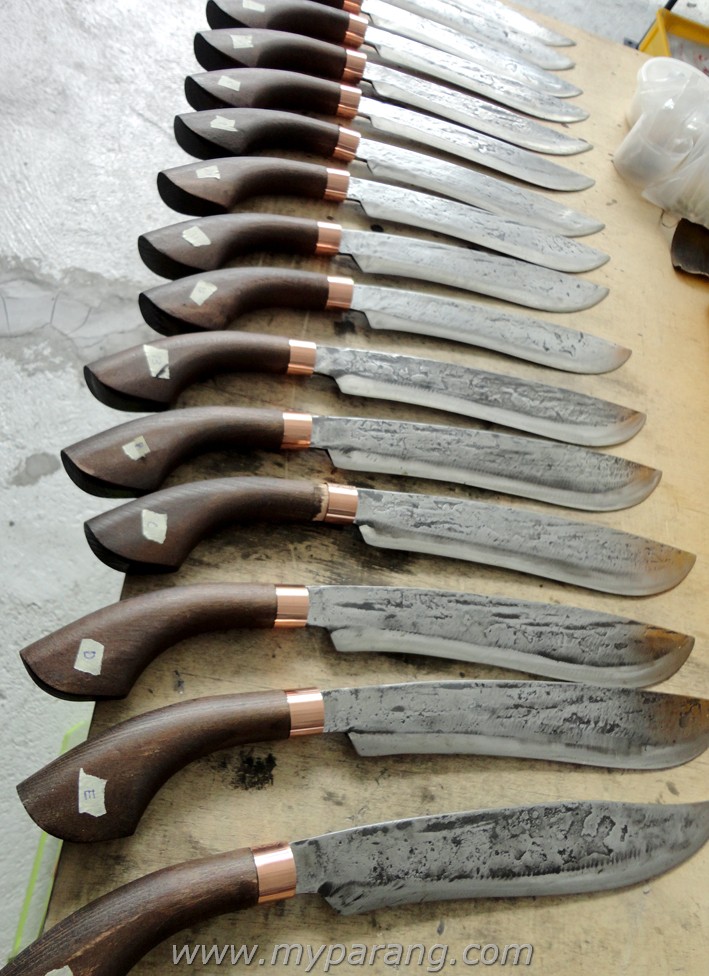
This post will be pretty short, but there will be lots of pictures. It takes quite a few steps to make one complete parang, but the final results are much what we were expecting, actually even better. As you can see from the pictures, here is the first batch of goloks from myparang . The blanks get a ride on the belt sander to smoothen the spine and clean up the side surfaces.
The Beech wood handles fitted with the blanks, ready for the copper collar and first round of epoxy Copper collar inserted waiting for the “drill”
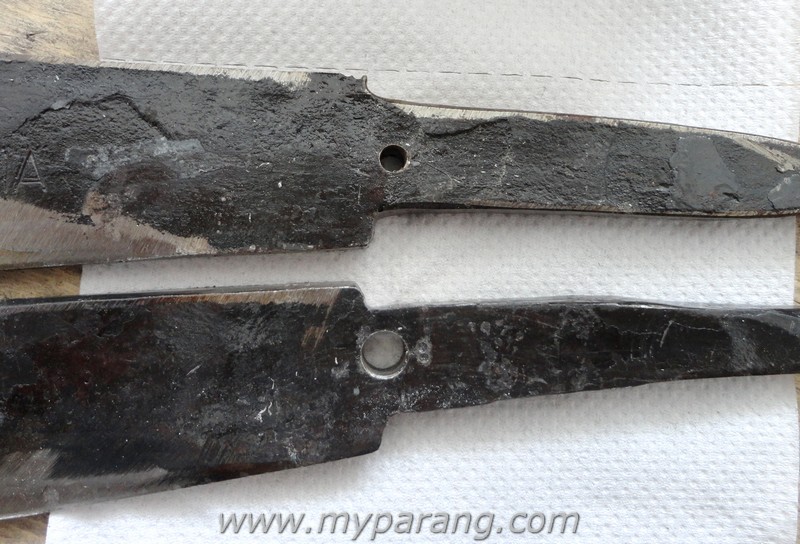
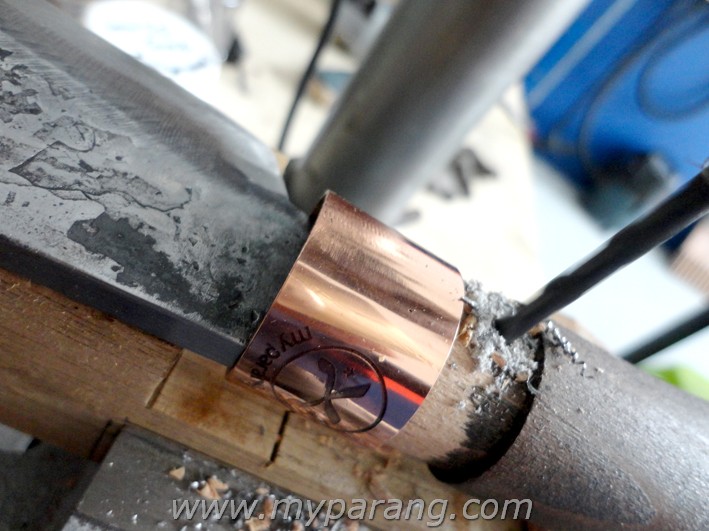
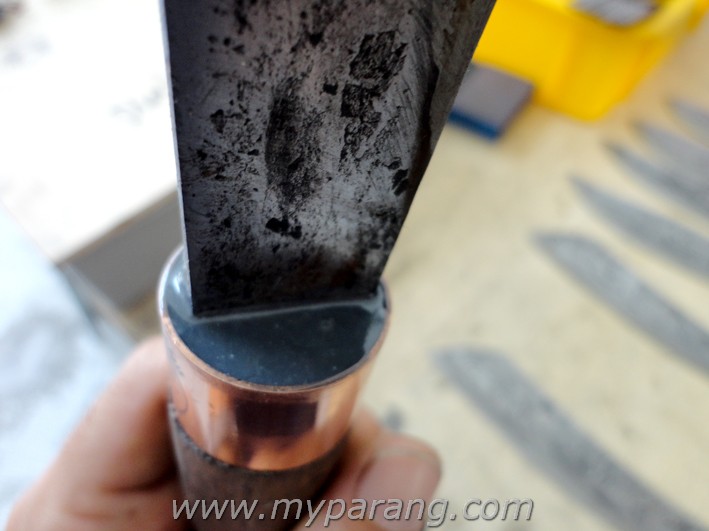
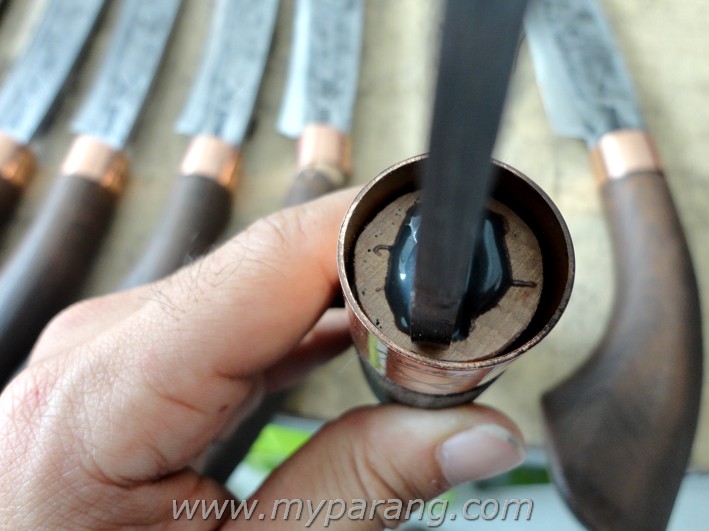
I know some of you will be asking – ” but they are stick tang , the blades will fly out when I use them” Actually no, as we do not take shortcuts. We grind the tangs to bare metal, clean it up with solvents and use industrial strength epoxy. We do not use commercial bought epoxy as we do not have the necessary technical data to make us decide which is the best. We narrowed down two types of epoxy and finally chose one with very high specifications. To add to that, we also have added a 3.0 mm brass pin under the copper collar to add further security and a peace of mind. So IF the tang does come loose, no way will it “fly” out. The brass pin will never fall out as well, as it is held in between the copper collar . Good luck trying to loosen the tang anyway.
The collar installed and the hole for the brass pin being drilled.
This is how it looks after the first round of epoxy. We do not skimp on the epoxy in terms of quality or quantity
And this is how it looks once we’re done.
Here they are fresh off the second round of epoxy , and waiting the QC check.
The picture below are some of the coming models which we have fixed up and will be going for a field test very soon. For the time being, we have the golok 125 and 135 done, but there will be many new ones coming soon. If you are interested to purchase a Golok 125 or a golok 135, you can click on Outdoor Dynamics and it will take you straight to the myparang page.
We’re really happy that we have finally completed the first batch of goloks from myparang. We have sent some samples out to our international dealers, so if you want to be a potential dealer, drop us an email soon!
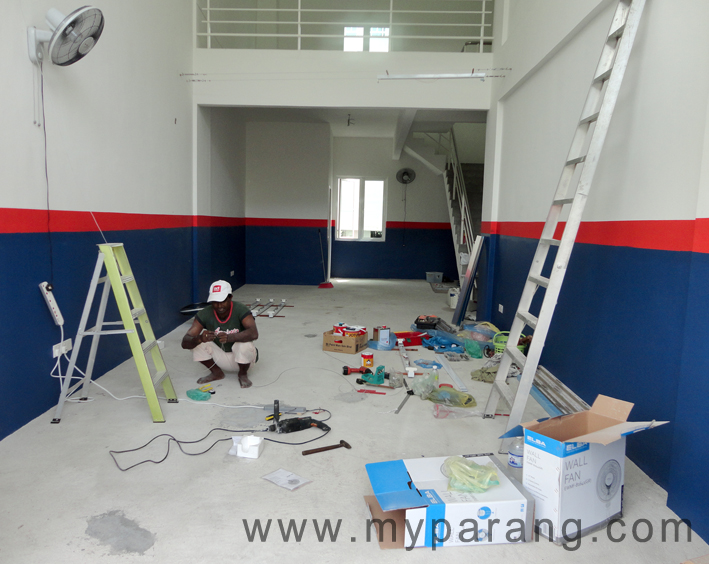
Finally after months of planning and searching for a suitable place, the myparang workshop is finally on its way and near completion. The hardest part was looking for a suitable spot to house the myparang workshop and this is one true case of what you can get when you are patient . We secured a shoplot nearby which is very accessible and central.
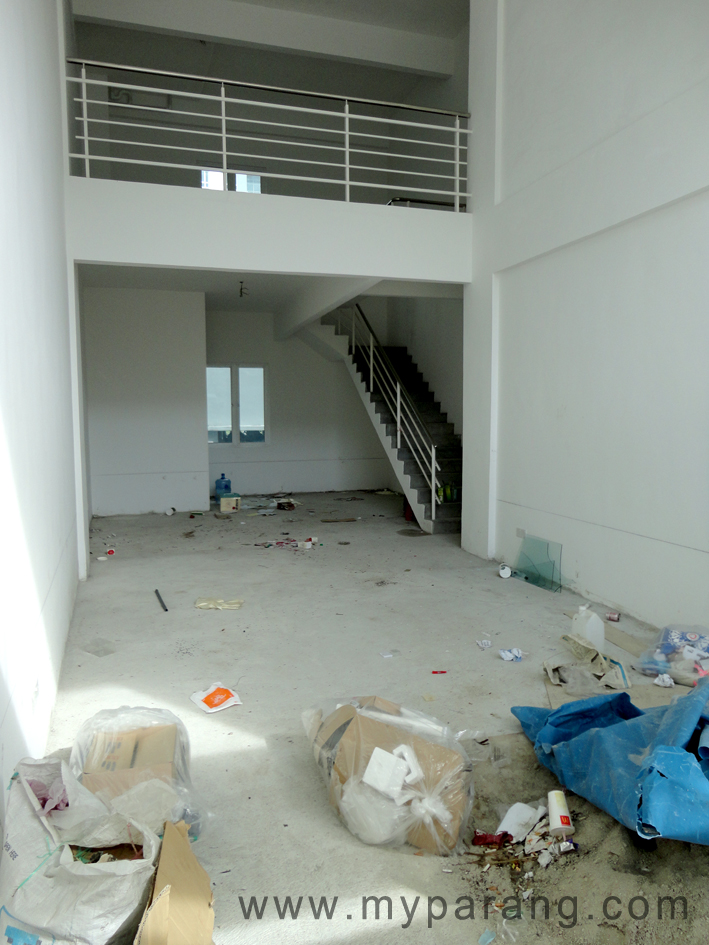
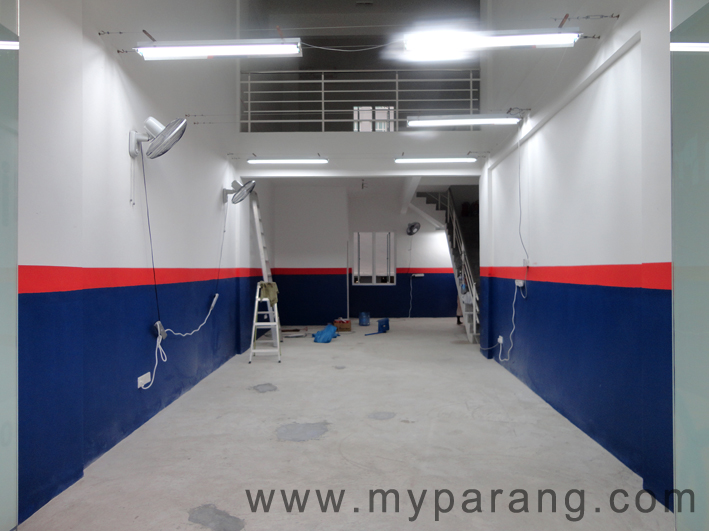
The previous owner was a Spa, but it did not get completed and we took whatever was left , over. There was lots to be done, lots of cleaning up since the previous owners left quite a mess. No to mention they left a pile of sand right in the front entrance. After clearing up the mess, the next thing to be done was painting the walls and floor as well as installing the electrical fittings. This shop lot had such a high ceiling, that we decided to have the lights about 8 feet above the lower floor instead of having it up where the ceiling was. By having it much lower, you save on lighting and it would be much easier to change a bulb should one go off. Below is a picture of how it looks after the paint job. I must say it looks much better after cleaning up and some bright colors. By coincidence, the colors we chose resembles the local power company colors and many people thought we were a branch office.
After the main lights and fan were installed we did a lighting check and it looks all good! It was bright as day when we tested the lights at night, no no matter what , our staff will have a bright and safe environment to work in .
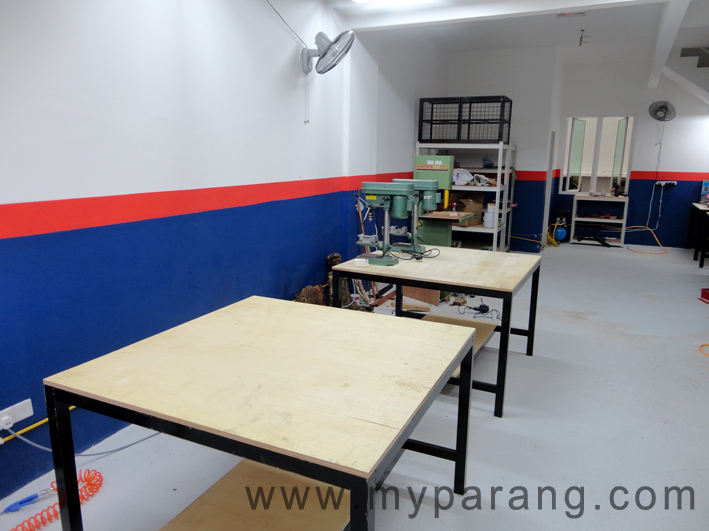
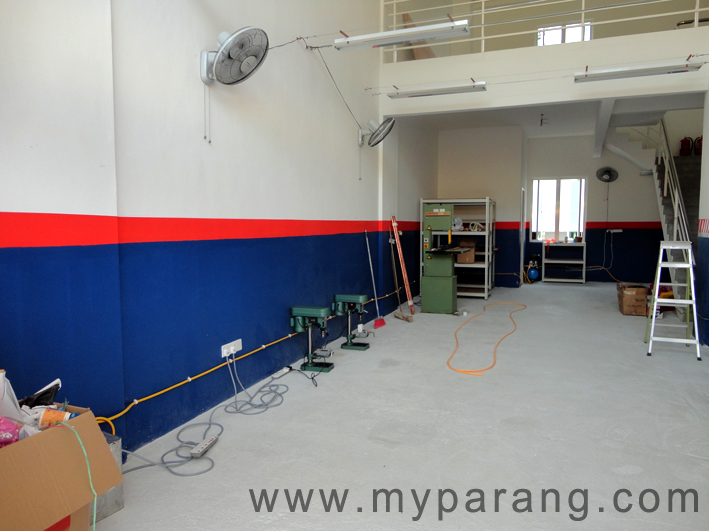
After the electrical fittings, we re supposed to take delivery of the metalwork, but there was a slight delay and we received our tools first. Can’t complain much as it helped to receive them first so we could place them around the workshop to see which location suits best. After much moving around, we decided to place most on the power tools together on one table and leave one worktable clear for finishing purposes.
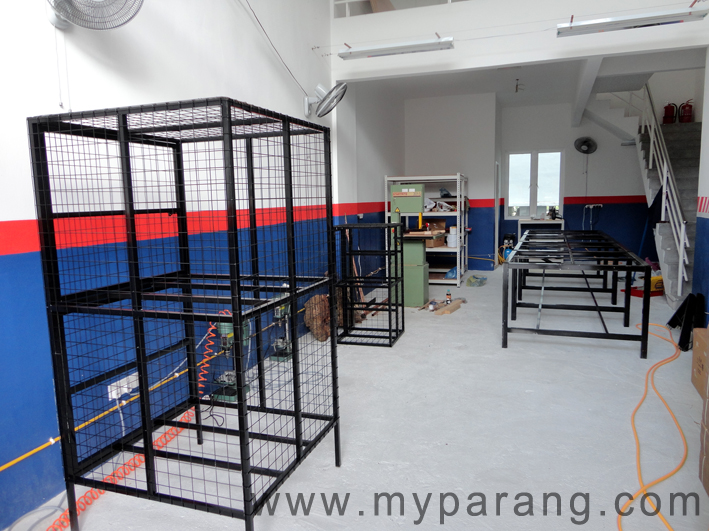
Finally after a few days of delay, we received our work tables and lockers. The work tables came without the table tops, which we will install ourselves using 1″ ply. The lockers are meant to keep tools and parts which are not needed immediately. You just can’t be too safe , sometimes small items tend to grow their own feet and “walk off” . By now we were having some delay already in the myparang workshop setup.
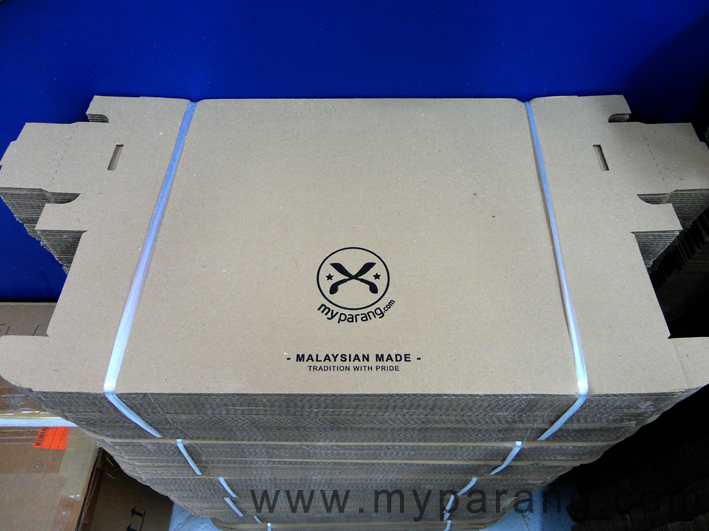
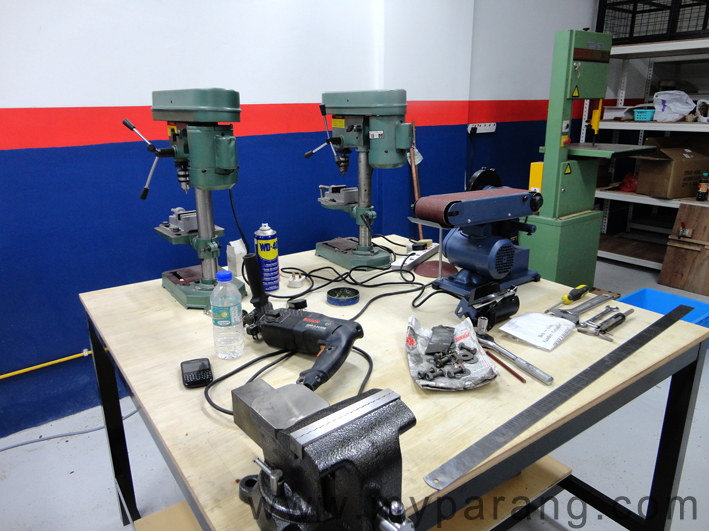
In the following days we also received our order of carton boxes for packaging the parangs. They consisted of two carton sizes, one inner carton and a bigger outer carton which can fit 20 inner cartons. This will be easier to send overseas to our international dealers. All the cartons were piled upstairs for storage. Finally we had all the tables fixed and positioned , plus had all the machines bolted on. We figured out it would be best to bolt all the machines in the myparang workshop so they cant be moved around , you know sometimes staff think they know better….. Plus bolted means they are more sturdy and will not topple or fall off. The main worktable looks pretty cluttered with the Bench Vise, Belt Sander and Drill Press , but there is enough space around each tool to work comfortable and safely . We left one table completely free for options later on. We might move some tools over, but that will come later. Even if we need to, we might add in another worktable.
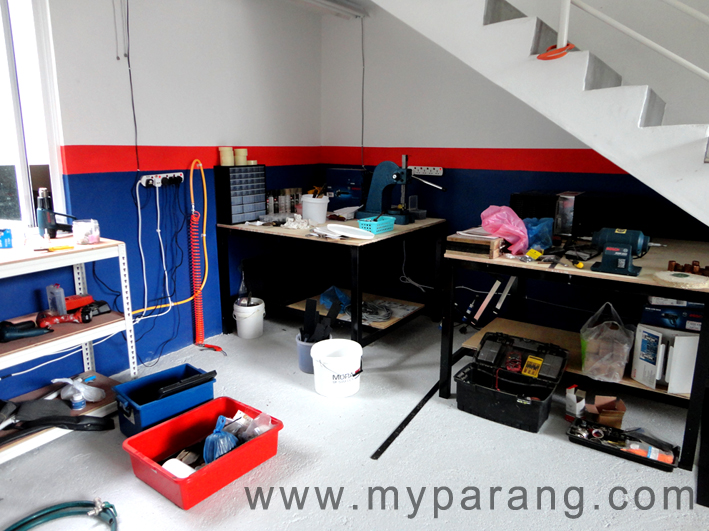
Also at the far back, under the stairs is our Kydex workshop. That section is pretty much complete , with everything set up. Since then, we’ve already made a few sheaths in the new workshop and I must say it is much better working there as the space is bigger the the previous workshop. We also looooveeee the air compressor, it helps so much in getting the sheath inner clean from dust and whatnot
So thats it folks. The parang workshop is currently 90% complete and we’re already working on the parts for the parang. I have not taken any new photos since the ones above, but it has started to look much busier. Keeping a workshop clean and neat will be a daunting task, but it will be done. A messy and dirty workshop will invite accidents. Today we just added a vacuum cleaner or if you prefer the more technical name ” a dust collection system” and it’s going to help a lot keeping the place clean.
All right folks! That’s the myparang workshop setup so far, once we’re in operation, we’ll update on more exciting stuff!
All about Malaysian Parangs, Goloks and Duku Chandongs