Here are two duku chandong from my personal collection. These pieces were sent to me by a supplier and I decided to keep them to myself as I kind of like them. They come from Sarawak , or sometimes known as Borneo . Both are made by different makers as you can see there is some difference in their styles.
In East Malaysia ( Sabah and Sarawak ) Parang are called Duku and they basically mean the same thing. Just like how East Malaysia has the Parang Panjang, Parang Lading, Parang Pendek, Parang Bentong, Parang Jawa etc, there also different names for East Malaysian parangs or dukus – ie Duku Tangkin, Duku Panjang , Duku Chandong, Ilang and many more. All these names describe a particular shape, however, some parangs are very difficult to categorize as they may have different elements from a few or many different types of parangs.
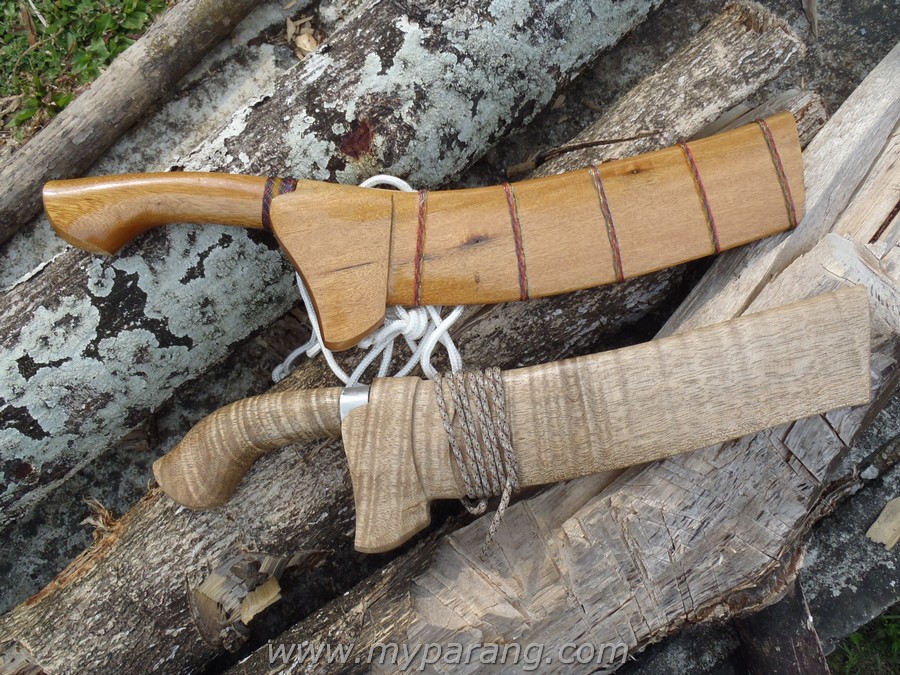
 The two Duku Chandongs in my collection
As you can see in the picture above, they are really well made. I love the simple and clean look of them. They both have some slight differences, which I’ll describe later on. The upper one is made of a dark – yellowish wood, which I am not sure is from which tree. The bottom one is made form a type of wood called Serian ( sometimes written Surian ) and the special thing about this wood is that it has sort of like a 3-D effect. It looks something like a cats-eye stone; if you have seen one before, you will probably understand.
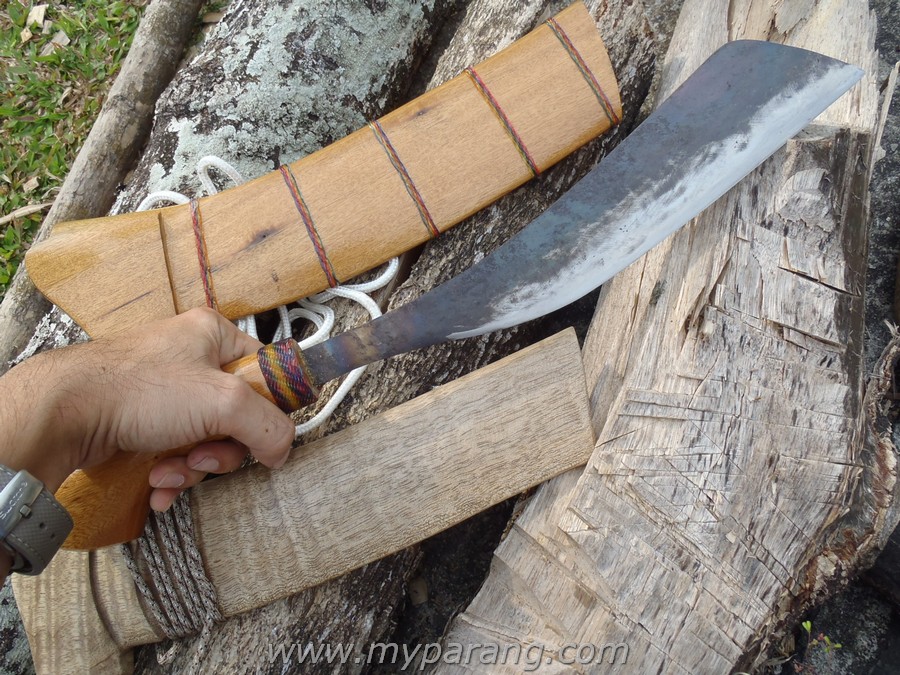
 The Duku Chandongs unsheathed
They both come with wooden handles and sheaths , and that is how traditional parangs are made. The more modern ones or those which are mass produced, are made with plastic handles and PVC sheaths. Wooden handles just make the parangs look much much better in my opinion.
As you can see form the above photo, the shape of the blade is almost identical and is a common duku chandong shaped blade. The famed bushcraft expert , Ray Mears once used a simillar parang in one of his episodes and since then, people have been referring it as the “Ray Mears Parang” , although all he did was use it. It is quite unfortunate that the Duku Chandong got a foreigner’s name, but at the same time, the duku chandong also got world famous.
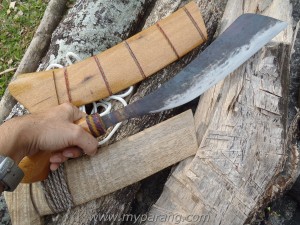

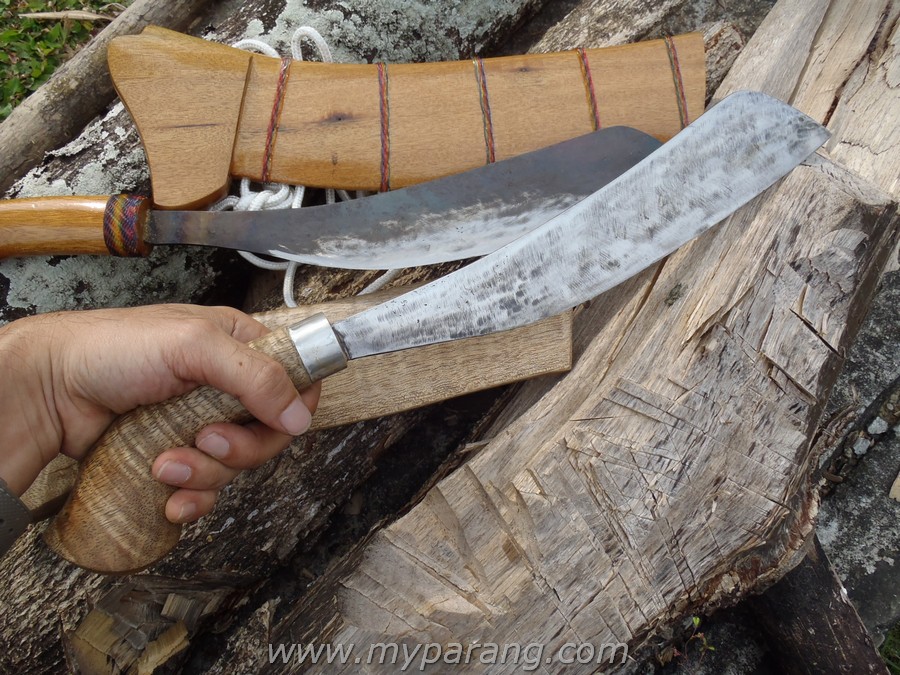
The above two pictures show the parangs in my hand, I would have to say that their handles are very very comfortable and you can chop with them all day plus the next without having any blisters or hot spots. These handles are traditionally shaped and what that means is that the shapes have been used for centuries and are proven to have an excellent grip and extremely comfortable. If I had to look for fault, I would remove the slippery shiny varnish the maker put on the handles. The varnish does make the colour and wood grain pop, but it also makes the handle slippery , especially when you hold the parang with damp or wet hands. Like all my other parang i use often, the first thing I would do is to roughen up the handle with a wood file.

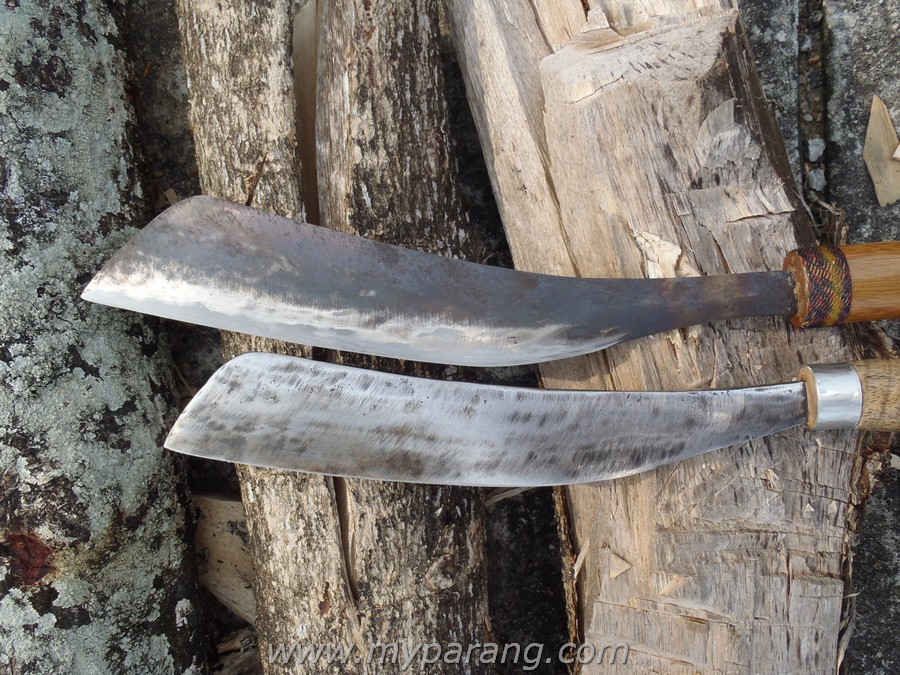
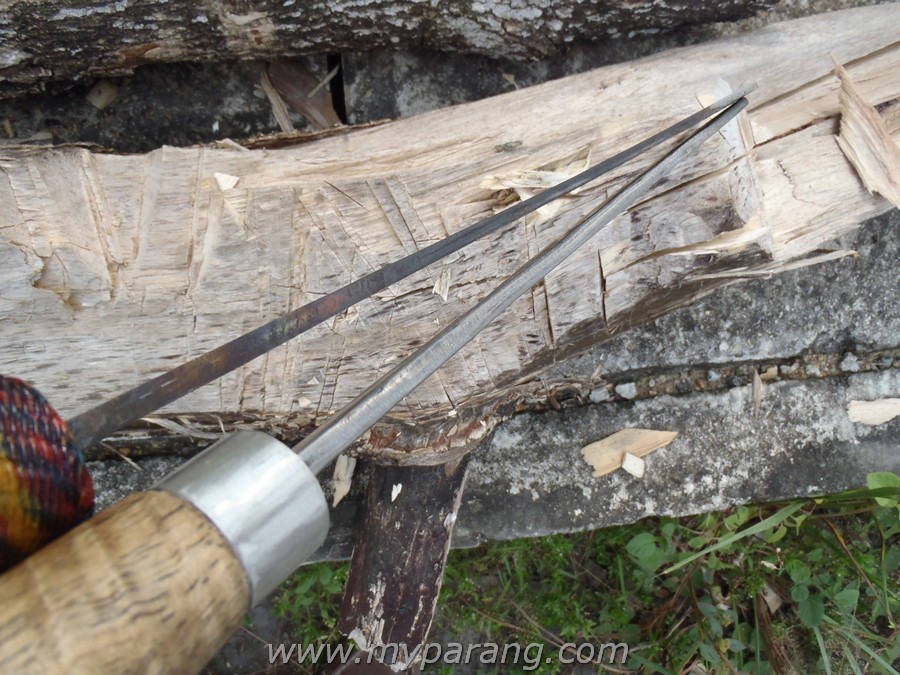
Above is a picture of both parang blades together. Notice the similarities in their shapes? you will also note the different finishing on each blade. The top one has a dark colour, and that’s how it looks after the heat treat . After the heat treat, only the edge is sharpened, compared to the bottom one , where the blade is semi polished with a grinder to clean it up a bit. Both methods do not change the way the parang handles, it just makes them look prettier. The definition of ” prettier” lies in the eye of the beholder.

If you noticed , the Duku chandongs are of different lengths, and different weight. The longer one is actually lighter and quicker in the hand, compared to the one with the polished blade or shorter one. Being shorter, the spine is much thicker as you can see in the picture above. A shorter and heavier parang is more suitable for chopping and heavy work, while a longer and lighter one would be more suitable for brush clearing.

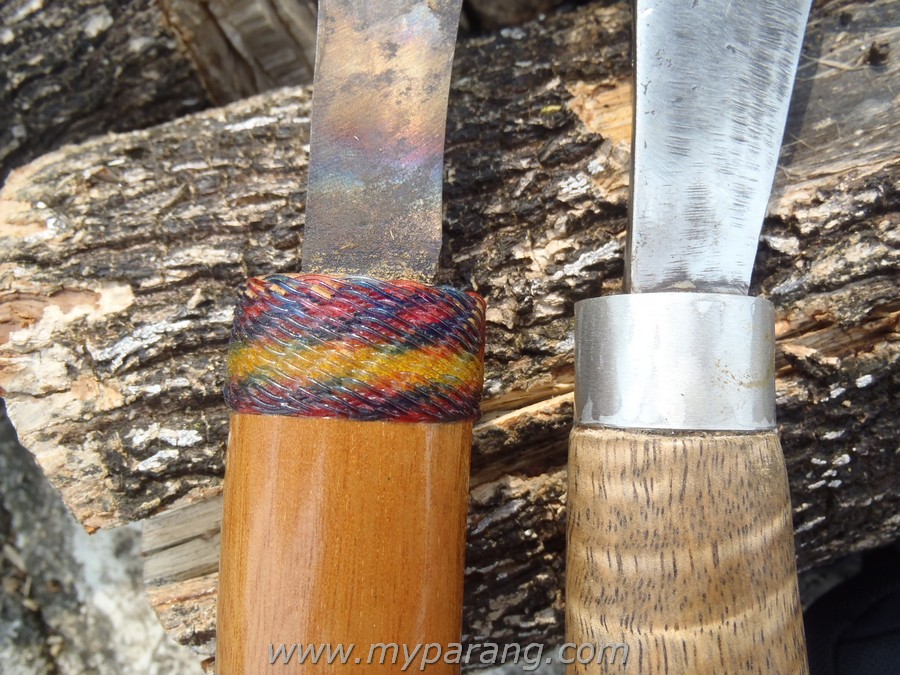
Here you can see the two different ways of how the bolster is made. One is woven using mono filament line while the other has a steel ring. I’m not sure how much they contribute to the strength of the parang, but without the bolster, it would really look odd, and I don’t think I have ever seen a parang without a bolster.

Here is a picture of the sheath . Both these duku chandong sheaths are made by gluing two halves together. I have seen similar sheaths , but made out of one piece of wood, where the slot for the parang is dug out using special tools. One piece sheaths are hard to find and are not common as they are much harder to make.
So there you have it, these are two from my collection. More to come in the future.
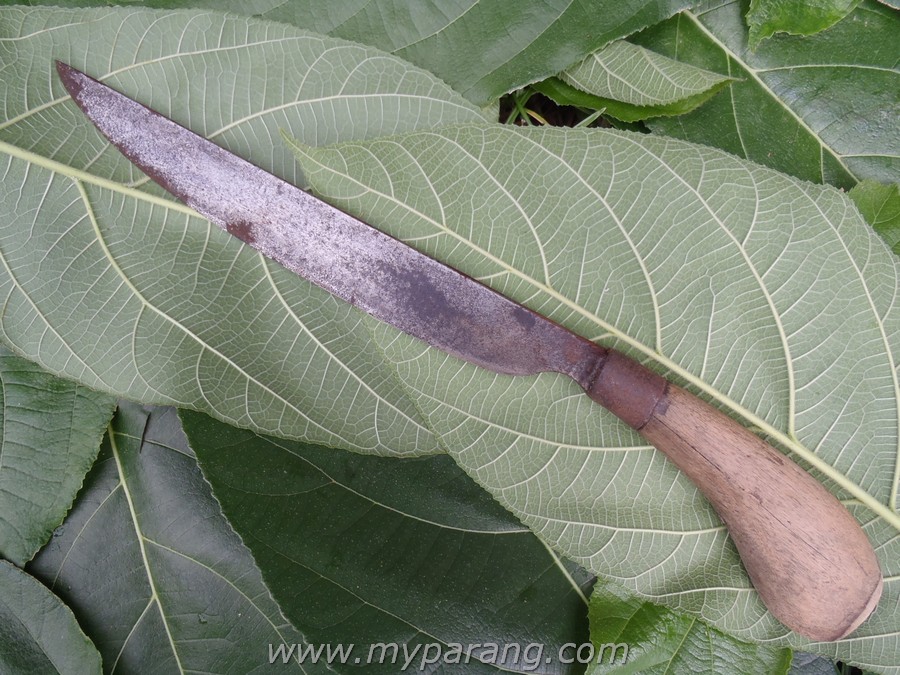 Here is a small golok Kedah which I found in a flea market some time ago. I consider myself pretty lucky , as I used to be quite a regular at the local flea market – Lorong Kulit – in Georgetown Penang, but I dare say I’ve not seen any good deals or anything worth buying for the past 2 years. When I saw this small golok, I knew it was going back with me. The reasonable price also made my purchase easier.
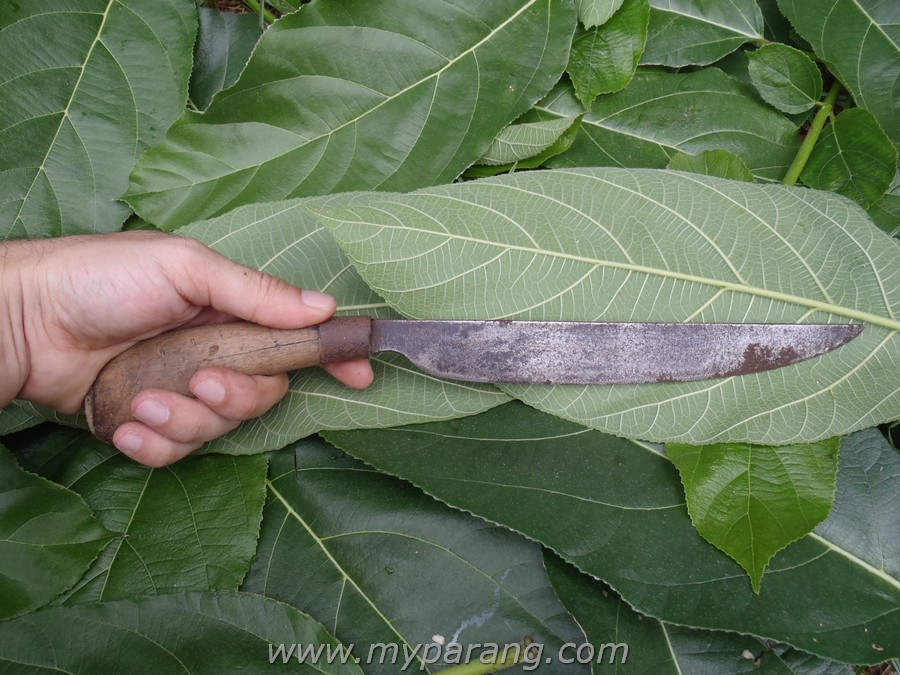 As you can see in the picture above , the Golok Kedah is pretty small. I believe it is used for small tasks like cutting meat, slaughtering game or even to be taken for a fishing trip. It feels very comfortable in the hand and is definitely to be used.
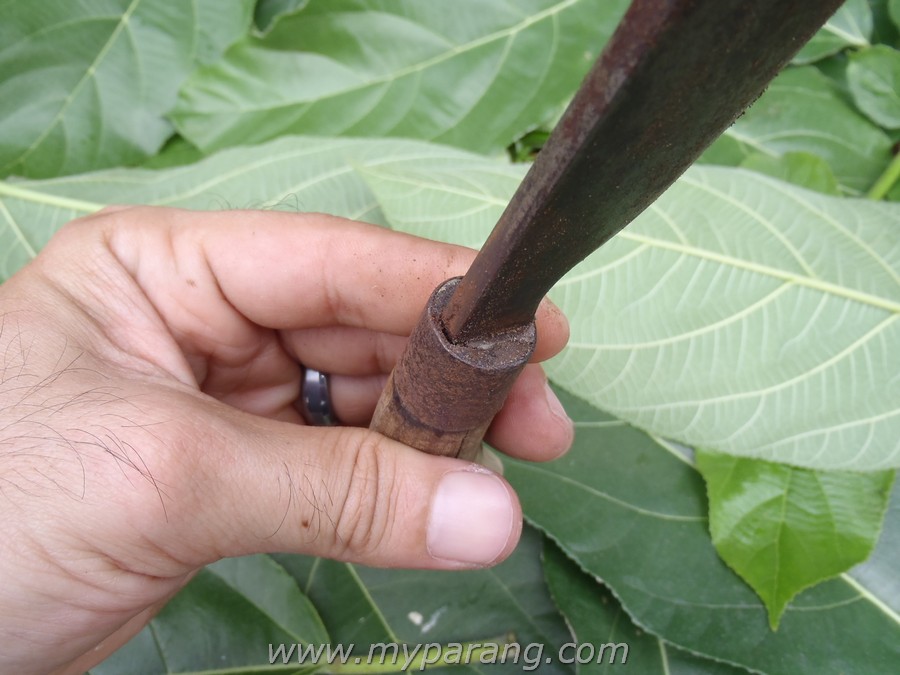 As you can see form the pictures, there is a bit of rust and the blade itself is slightly pitted , but that’s okay with me . The “rustic” look suits me fine . As of now I wont be using it and this one will be a cupboard queen .