Ray Mears Parang

Ray Mears Parang

ray mears parang

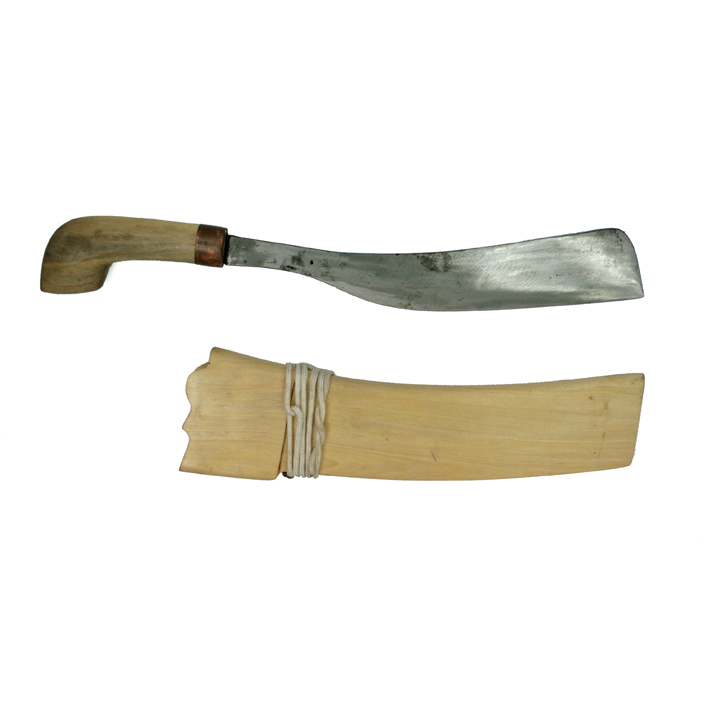
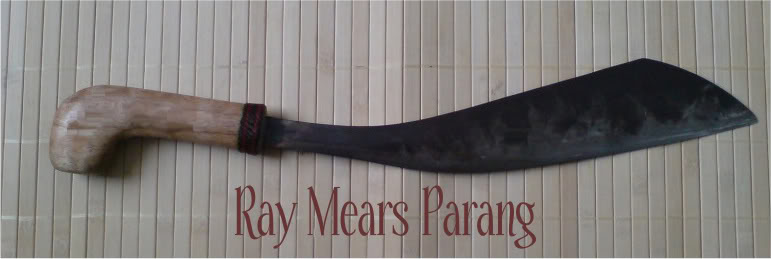
So we’ve read and heard so much of the Ray Mears parang , which is actually a parang he used in one of his shows . A clear picture of ” The Ray Mears Parang  ” in Mr Mears hand is in the video grab below. Actualy,  Mr Mears did not create any parang or sells any parang with his name on it. So why did the name ” the Ray Mears Parang ” come about? RayMearsparang 2When Mr Mears was making the episode in Borneo, he , as expected of anyone who knows what he is doing, would choose the tools of the local people. Say, if you go to the South America, you would use a machete , if you were to go to Nepal, you would use a Khukri , if you came to Malaysia, you would use a Parang. It is as simple as that.
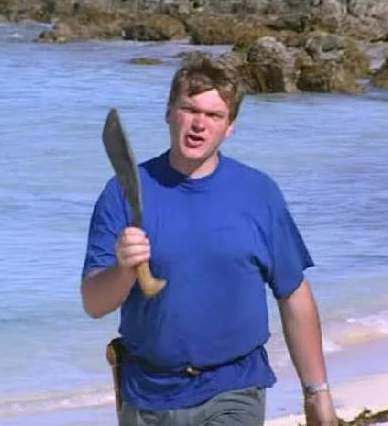
So how did the name “Ray Mears Parang ” came about? Sometimes we see things we don’t know what they are, or what it is called and we give it  a name which is easy to connect and understand. Say maybe some people have no idea what a Khukri is, but when you mention – the knife the Gurkhas use , then Aha! It means something now.

Besides that, some people also also have generic names for certain items , like in Malaysia, Milo is the common name for chocolate drinks. Any chocolate drink will be called Milo. Just like baby diapers, it’s called Pampers, which is actually a brand. Some people call all big knives and choppers a Machete. This is actually wrong as a Bolo , enep , khukri or parang is not  a machete by far. I hope you get what I mean.

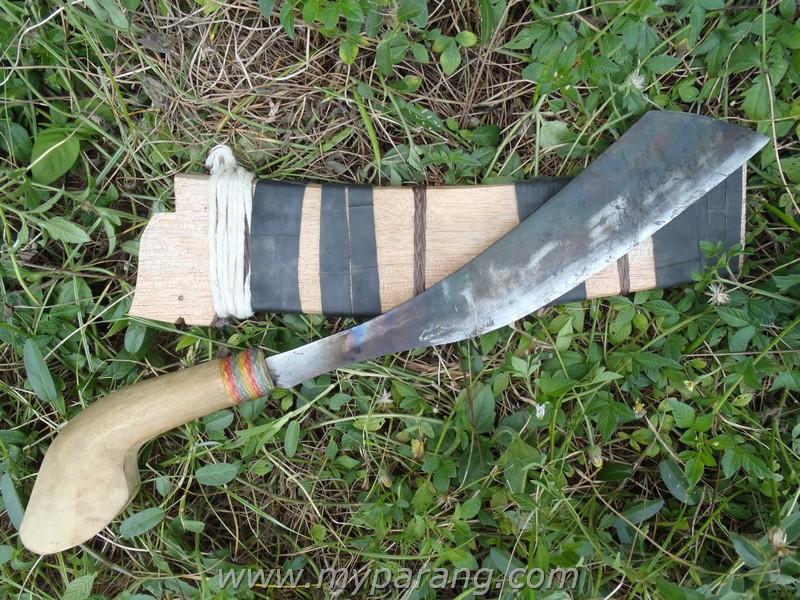
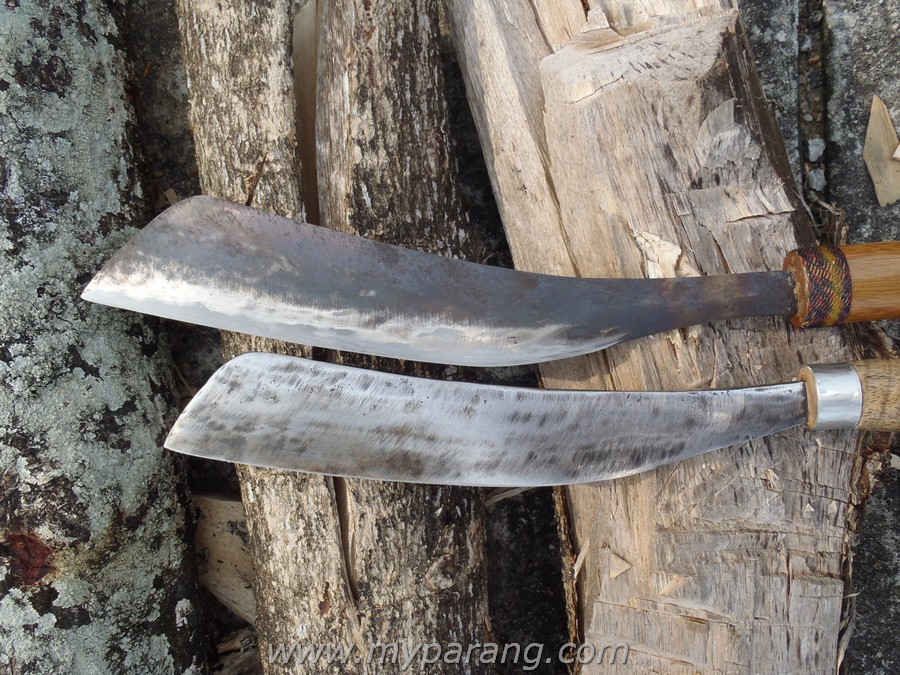
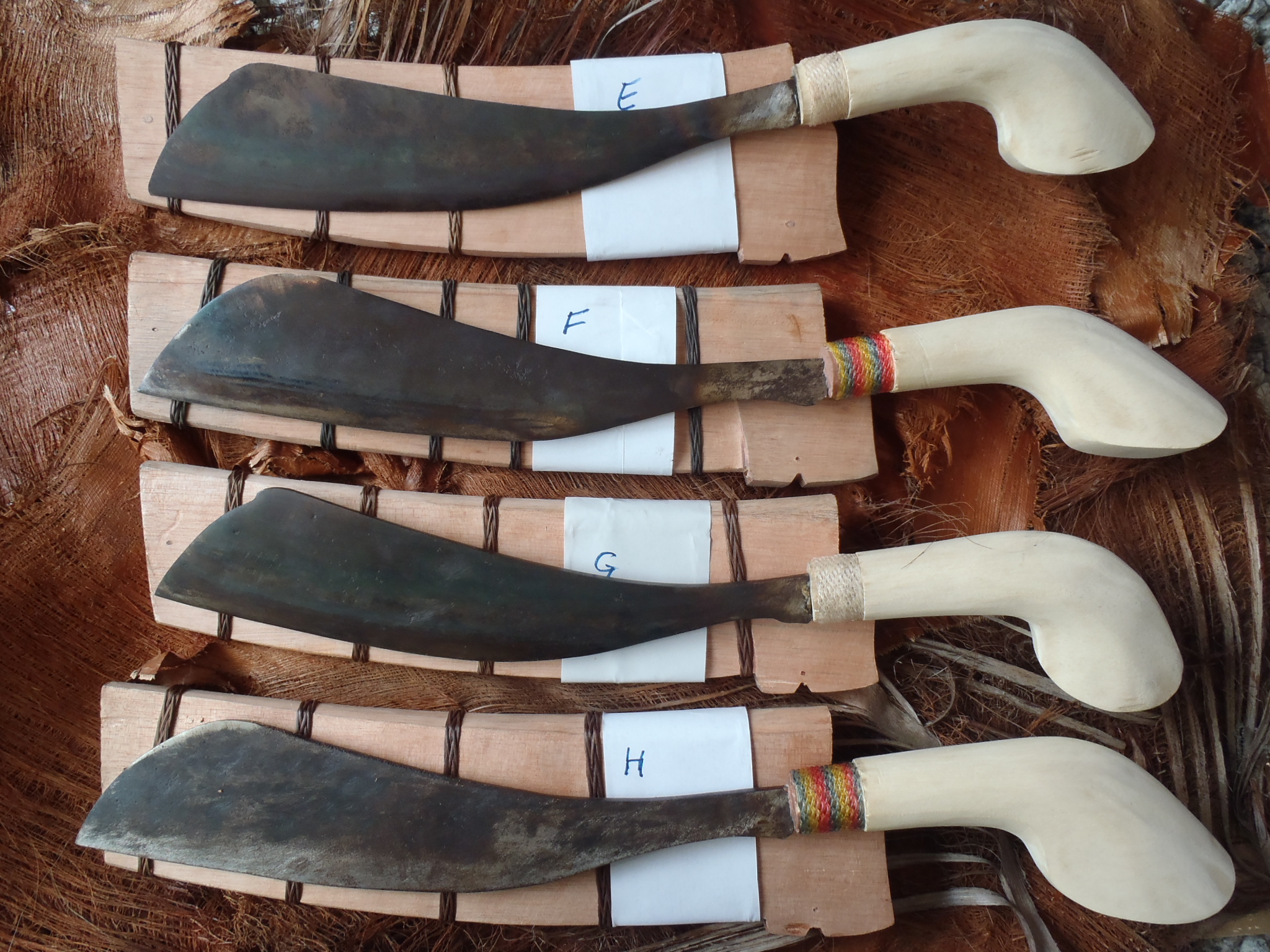
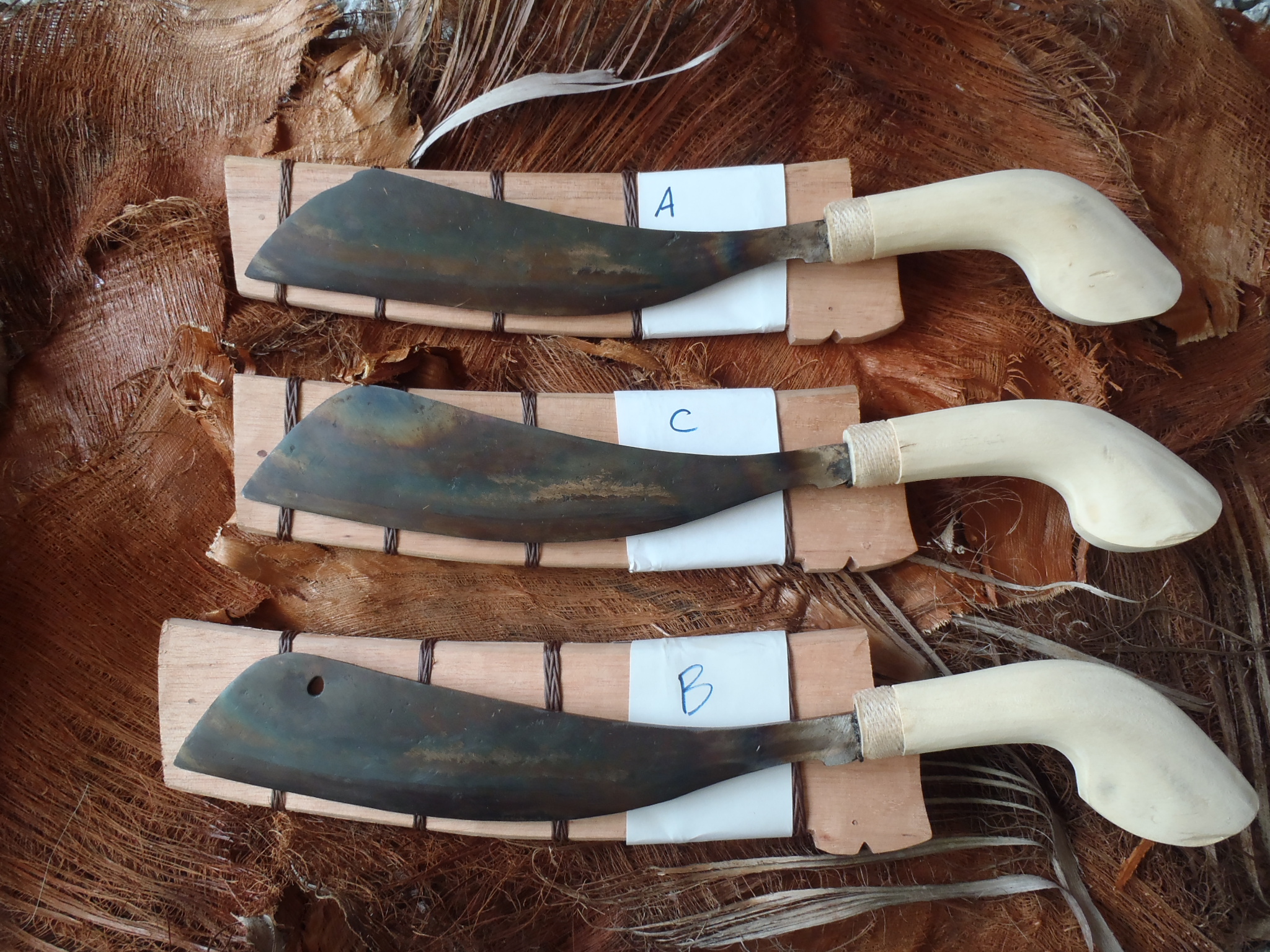
Anyway, back to the Ray Mears Parang, well, if that is what some people like to call it, then so be it. For those who prefer to use the correct terminology, the Ray Mears parang is actually a Duku Chandong . Duku actually means parang in the Iban language, so it basically means Chandong parang. There is no specific shape for the Duku Chandong, as it is a very common knife in Borneo ( also known as Sabah and Sarawak ) , but there are a few distinct points as I will try and explain.

One is the blade angle. As you can see , the Duku Chandong has an up swept blade. If you are holding the handle of the parang horizontally, you will see that the tip of the parang points upwards. Again in some duku chandongs, the sweep may vary . Some have a slight and unnoticeable sweep, while for some, it is more prominent.

Another distinct difference with other parangs is that the Duku Chandong has a sheep’s foot blade tip. It is not pointed as some other traditional parangs and goloks, but has a very strong and robust sheep’s foot. The tip needs to be strong and hardy as it is used quite often to split and flatten bamboo, for prying and digging into wood ( looking for nibong grubs ) .

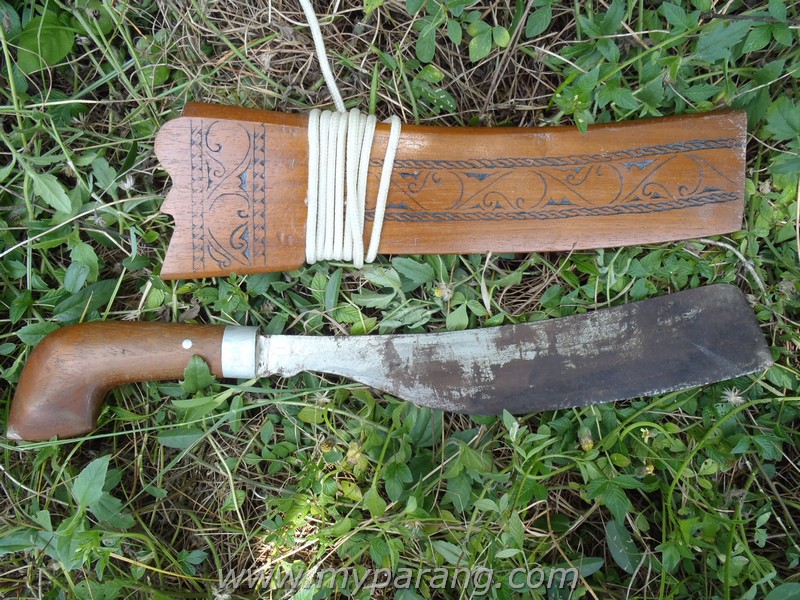
As you can see from the photos below, all these parangs are variations of the duku chandong or also known as the Ray Mears Parang. Enjoy they photos and we’re glad that you now know the actual name of the Ray Mears Parang. Actually, because of Mr Mears, the Duku Chandong now has gotten worldwide recognition . The blade shape now gets copied by many big knife manufacturers like Condor , and even the local parang sellers have hopped on the bandwagon , using the “ray mears” parang name as a leverage to market their parangs. Whatever it is called, or made, a duku chandong will always be a duku chandong!

OLYMPUS DIGITAL CAMERA OLYMPUS DIGITAL CAMERA OLYMPUS DIGITAL CAMERA parang knife chandong borneoOLYMPUS DIGITAL CAMERA OLYMPUS DIGITAL CAMERA OLYMPUS DIGITAL CAMERA Duku chandong

My personal parang collection #6 – Kota Belud Parang


Kota Belud Parang

OLYMPUS DIGITAL CAMERAHere are two parangs that I bough from Kota Belud, Sabah. Kota Belud is a township very famous for it’s Tamu or weekend market. Kota Belud also is well known for their Bajau or sea Gypsies. Traditionally they are very skillful parang and knife makers, and the kota belud parangs are well known throughout Malaysia as being great parangs .

As you can see form the above photo, the parang they make have a very distinct shape, with a sheep’s foot tip. They make various sizes and weights, from those suitable for general work around the house to more dedicated choppers ( for trees and bones )  . Material used is the good ol recycled leaf spring or also known as 5160 steel . OLYMPUS DIGITAL CAMERAAnother signature mark is their carves sheaths, just like above . Some are simple , like the close up below, but some kota belud parangs have very intricate sheath carvings. There is also an annual Kota Belud parang competition, where you can see dazzling displays of very very well made kota belud parangs. Most of the parangs use exotic wood like Serian, Kemuning Hitam, Kayu Malam and others. The carvings on the sheath and finishing are top notch.

OLYMPUS DIGITAL CAMERA

The Below pictures shows the kota belud parangs without their sheath, as you can cee the one on the right  has much more weight to it and is suitable for chopping bones and trees. The one on the right is a much slimmer version with less weight and is suitable for clearing small shrubs. I have used both, but I prefer the smaller kota belud parang on my outdoor trips. It packs down much smaller and is lighter to carry around. OLYMPUS DIGITAL CAMERABesides the Chandong parang shape as the ones in this post, the other typical blade shapes in Kota Belud is the Barong . Unfortunately, I do not have any with me at the moment, and will look at getting some in the future.

My personal parang collection # 5 – the Parang Panjai

parang panjai or parang panjang The Parang Panjai or to some the parang Panjang.

This parang panjai was another sample given by my supplier, and before i ordered more, I tested this one out pretty extensively. Parang panjang basically means long parang, and this one is made of recycled leaf srpings.  I would have to say that it excels as a general all round tool, although it is on the long side.  I used it on quite a variety of trees, from bamboo, to grass to limbing branches and chopping small trees ,and it did all pretty well. Although the parang panjai is pretty long, it is not that heavy as the spine is pretty thin and the blade itself is narrow. But while it lacks in weight, it actually  a very good chopper as it gets it’s power from the length. Just how like a beliung works, where the long handle makes up for the small and light axe head .

parang panjai pinned handle Here from the photo above you can see the handle of the parang panjai . When I first saw the bolster, I cringed and informed my supplier, please do not send me any with a rubber hose bolster! Usually the bolster is made of rattan , copper or steel , but this maker decided to use rubber hose. His explanation was that the rubber hose  expands and contracts at the same rate as the wooden handle.

You can also see from the picture of the parang panjai above that I pinned the tang in using two brass pins. Pinning the tang is usually not needed, as the handle and tang is very much secure. Some of my customers insist on having the handle pinned, as they are worried that the parang blade might come out during use. If you use your parang regularly, you will notice when it starts to loosen, and you can remedy it before it becomes worse. In this instance, I pinned the tang just for the fun of it.

two piece parang sheath The picture above is of the Parang Panjai’s sheath. I like the simple dark colored rattan weave. It makes the sheath look elegant. The weaving also serves a purpose which is to keep the two piece sheath together. The sheath itself is made of a very lightweight piece of wood, I think perhaps from the Meranti tree.

testing the duku panjai Who can resist chopping  a log when it’s right in front of you!

How to carry a long parang


If any of you have noticed, some of the East Malaysian or Borneo parangs ( Sabah and Sarawak ) can be quite long. I am sure some of you may be wondering how on earth do the locals carry a long parang or duku . If you hang it down vertically or hook it to your belt, like a conventional parang , you will be very uncomfortable as for two reasons, one would be because the parang is so long, it will swing all over the place , and second, if you were to squat or sit, the parang will rip your belt off when the edge of the sheath hits the ground.

how to wear long parangIf you look at the picture  above, you will notice that these three long parangs all have a different way of attaching it to your waist. They do not have a belt loop, but have some cord or rattan weaving which is attached to the the sheath lengthwise. The cord is actually a length of cord with a loop, and part of this loop is tied on to the sheath. It’s pretty difficult to describe by words, but if you look at the following pictures, it should be pretty understandable.

how to wear the long paranghow to wear long parangs

This is how the prang looks when it is worn. Notice how the parang/ duku is horizontal compared to vertical? It looks almost like how a katana is worn too. By having the parang horizontal like this, it enables you to draw the parang easily, while it does not hinder your movement. I’ve carried these types of parang before and believe me , it is very comfortable and does not get into the way at all. I did push the parang all the way to the back once as the handle kept getting in the way while walking, but once that is done, no more problems. And when you need the parang again, just pull it back to the most comfortable position. This way of wearing the long parang is the traditional way, ie it was not invented by me, so I’m pretty sure it has evolved and stood the test of time to be the most suitable way of carrying the long parang.


drawing the parang Here is how you draw the parang . You notice that the handle and blade is forward, so you don’t have to change hands or grips when you draw and use the parang. So there you have it, that’s how to carry a long parang .

Parang wooden sheaths – Dug out sheath

The Dug out sheath my parang with the dug out parang sheathdug out sheathparang wooden scabbard and sheath

Some of us may not even know that there are basically two types  of wooden parang sheaths  – the one piece sheath and the two piece sheaths. What this means is just how the sheath is made , for one piece sheaths , the slot for the parang is dug out from a block of wood, using special tools. As for the two piece sheaths, the slot for the parang is dug out on two halves and later glued or tied together.

Obviously, the dug out sheath is more complicated , difficult and time consuming to make , compared to the two piece sheath. The top two pictures shows two parang sheaths that use the one piece sheath, while the lower picture shows the joints or the two halves of a 2-piece sheath.

The two one piece sheaths above are made in Kelantan, and I am not sure if it is only available in that state. I have yet to find a one piece sheath made in other states in Malaysia.

golok kelantan sheathsAnother tell tale sign that a sheath is one piece , is the extra wedge of wood at the end of the sheath . You can see this from the picture above. Note how the two sheaths on the left have a small wedge of wood at the bottom of the sheath ( one piece ) . The two sheaths on the right are 2-piece sheaths. some two piece sheaths can be opened and cleaned.

wooden sheath making toolHere in the picture above you can see some of the tools used to make the one piece sheath. First a hole needs to be drilled through the sheath, then a  special saw like to ones above are inserted and used to saw out the slot for the parang. These special saws are not available for purchase, but are usually hand made by the parang craftsmen themselves.

Translate »