Discontinued from 2021
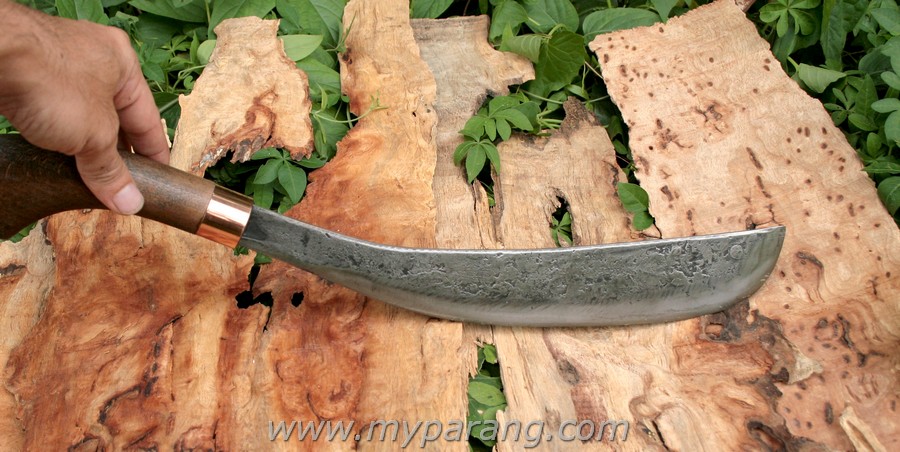
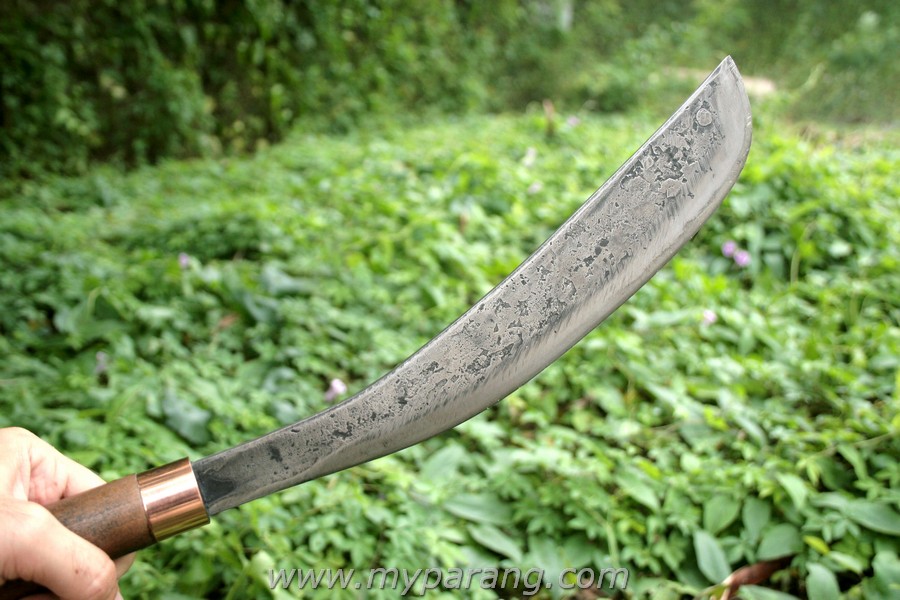
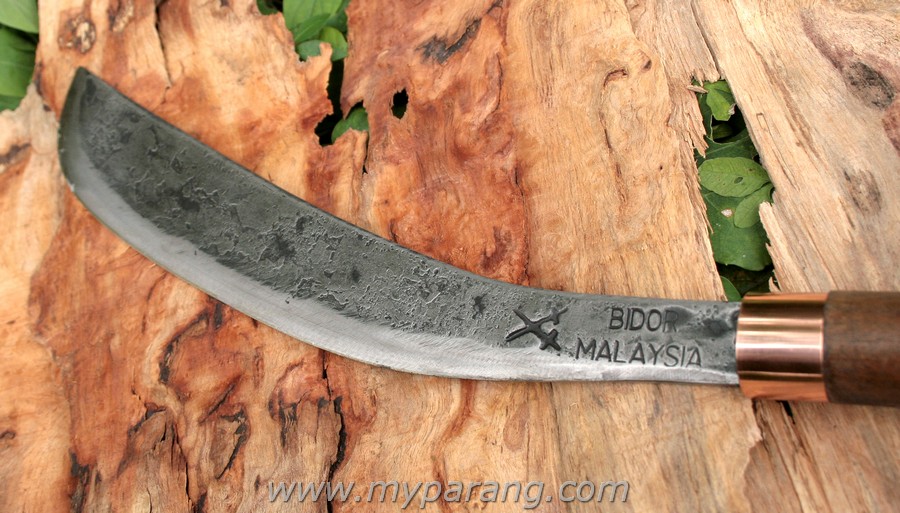
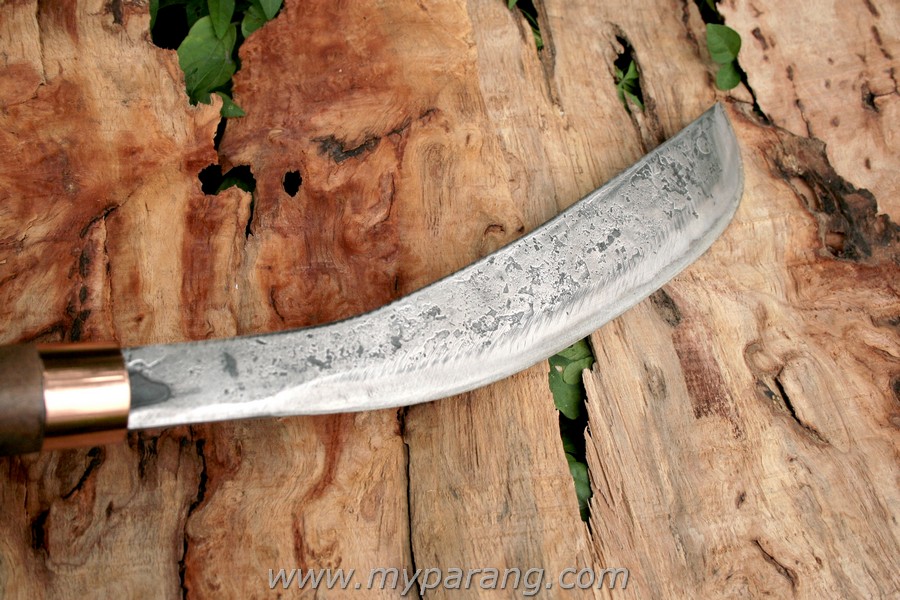
MY Parang is proud to present to you a new model – The MY Parang – Parang Tangkin. We released this model mid September 2015 and they are now out on sale . We will have a closer look at this new Parang Tangkin in this post.
Parang Tangkin by MY Parang
First thing you will notice is how the blade is angled upwards. Some people may find this quite awkward, but in fact it is very ergonomic . It works especially well when you are positioned low on the ground. Using the parang tangkin in this position enables the blade to hit parallel to the ground , keeping your knuckles safe. This will enable the user to fully use the entire blade or the sweet spot for chopping. Compared to other parangs, you might hit the tip into the ground when cutting from a low position.
Note how the blade lies flat on the ground and the handle is away from the ground
When cutting from a standing or higher position , with the cut at chest or upper waist level, the parang tangkin delivers a slicing cut which is very effective . Try this and you will notice how effective it is.
A slicing cut when used upright
Here are some stats for those who like numbers:
– Blade length – 30.5 cm / 12.0 in
– Handle length – 17 cm / 6.7 in
– Overall length – 47 cm / 18.5 in
– Widest blade – 4.7 cm / 1.85 in
– Weight – 400 grams / 14.1 oz
– Gross weight ( with sheath and box ) – 690 gram / 24.5 oz
All the other goodies like the Nylon sheath, squared spine, stick tang, distal taper, 5160 high carbon steel , zone hardened , wooden handle with pin are on this parang as well. Not to forget, hand – made.
We are also in the process of making a video on the parang tangkin, and we will update the video page once it is done and uploaded.
Every year , the Craft Development Corporation of Malaysia holds a Craft Fair called the ” Hari Kraftangan Kebangsaan ” , and this year, we were honored to be a part of it. This year there was a huge turnout , consisting of 637 exhibitors, displaying all sorts of crafts Malaysia is proud of such as Bamboo, rattan and palm weaving, wood carvings, batik, pottery, jewelery, furniture , leather craft and knife making. The Craft Week is very popular especially for those who live in Kuala Lumpur at is brings all the traditional crafts from all over Malaysia, from Perlis right to Sabah.
Hari Kraftangan Kebangsaan 26th March – 7th April 2015
Usually it is held in the month of February every year, but this year due to the devastating floods which happened at the end of 2014, the Craft Week was pushed forward to the end of March. Most if not all of the batik ( especially ) and knife makers from the East Coast of Peninsular Malaysia were badly effected. Most lost everything , and needed time to start new. We hope they managed to get good sales to during the craft week so they could recover from the loss .
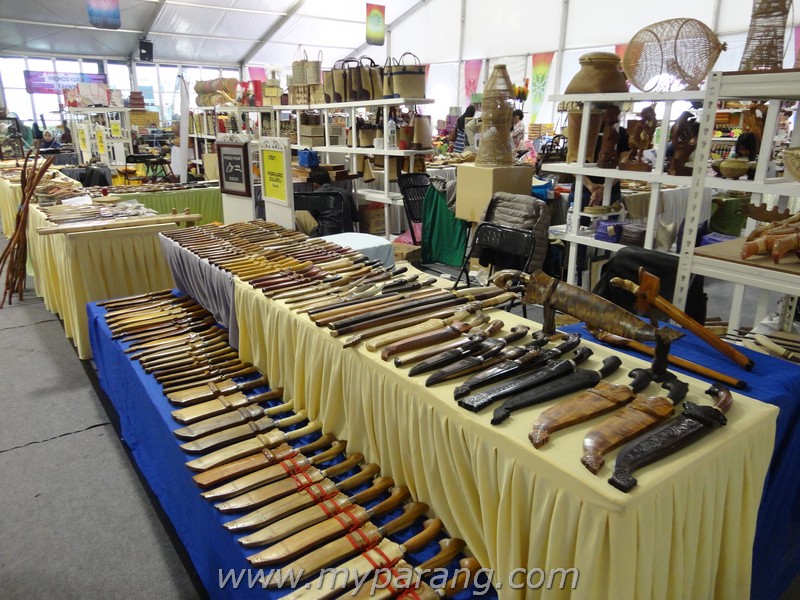
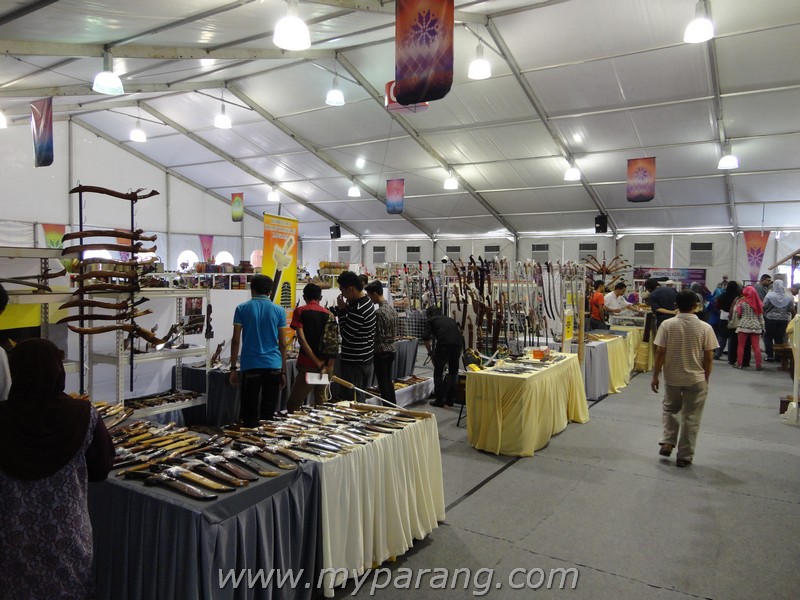
Some of the crafts available at HKK
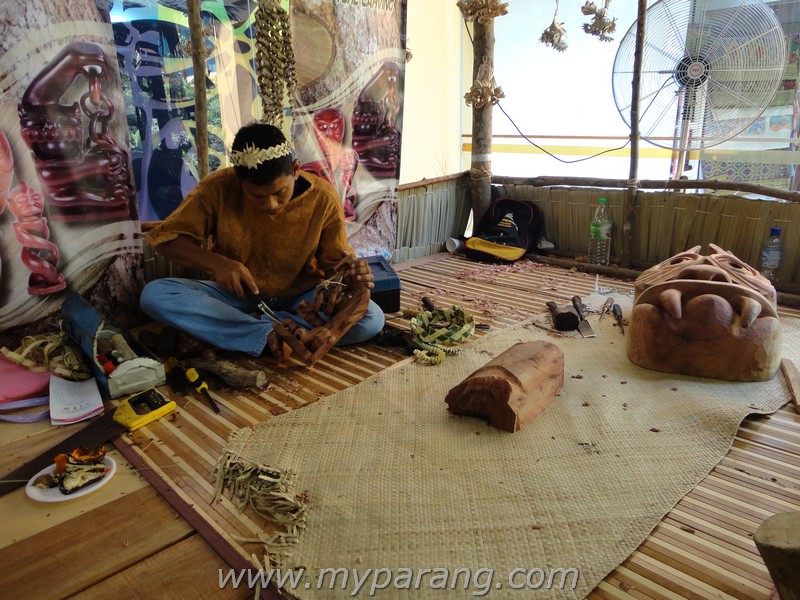
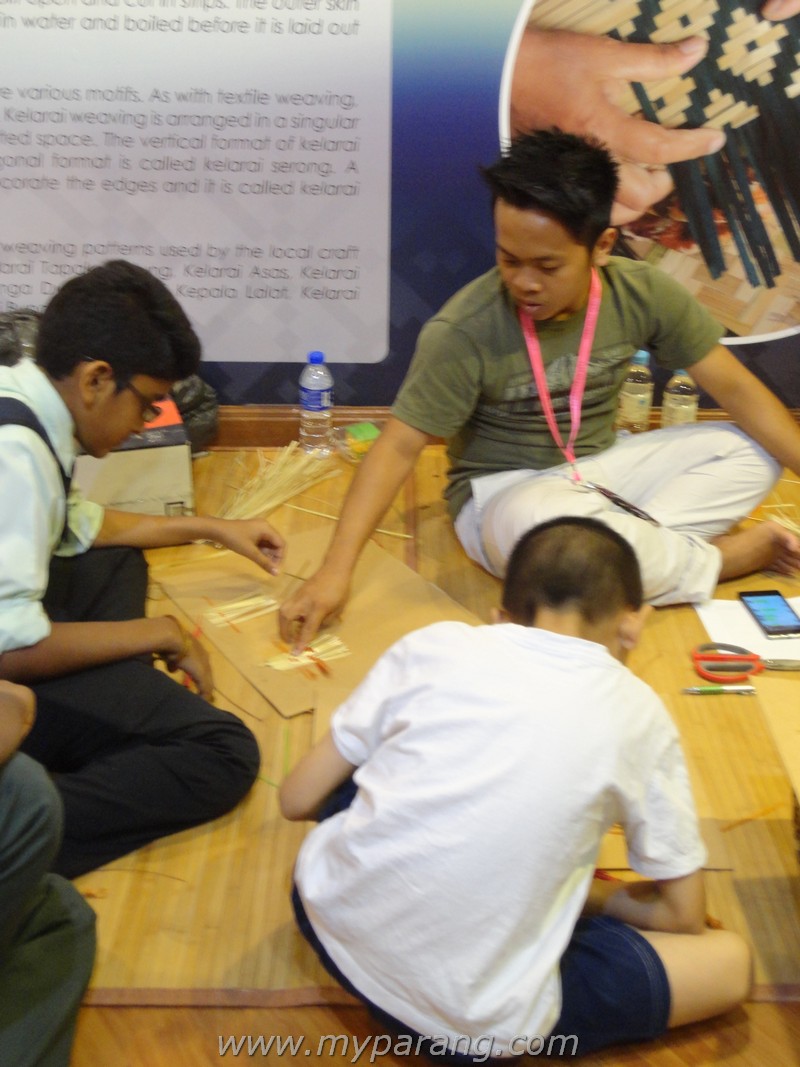
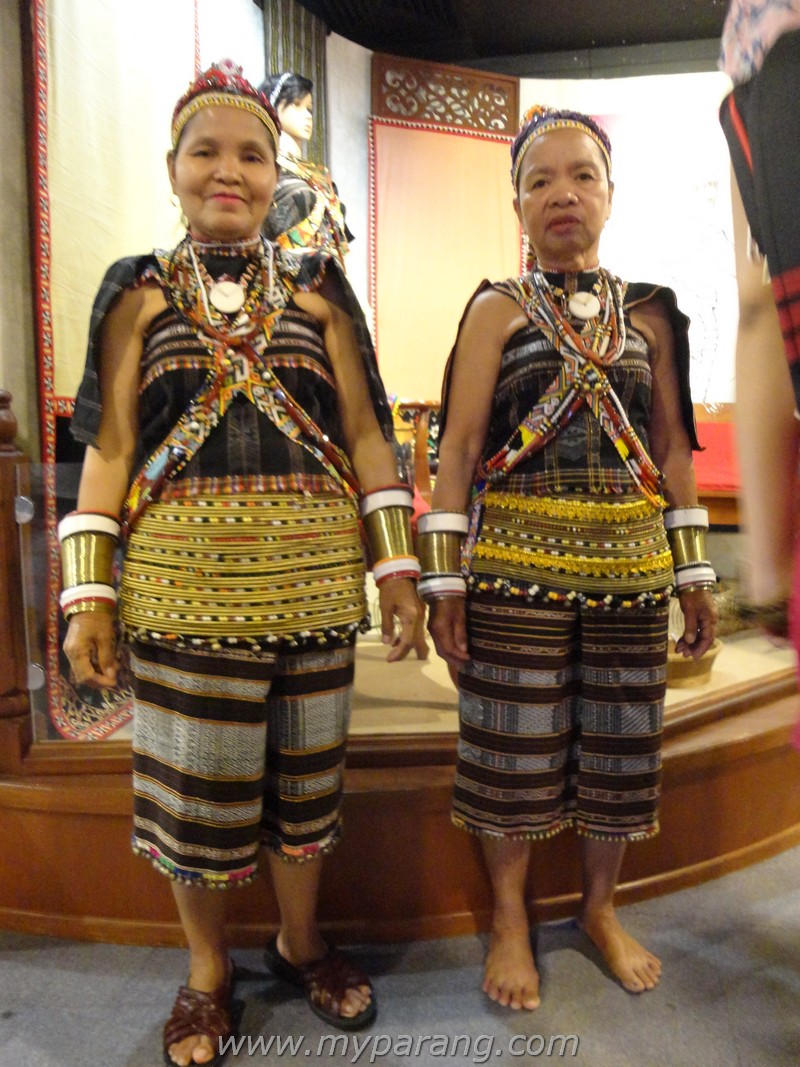
Besides buying and selling, there was also a lot of hands – on activities for visitors, such as batik painting , traditional music , kris standing competition, live carving demonstrations by the Orang Asal , mat and basket weaving classes and Parang making. It was definitely a busy two-week , and everyday we could see dozens of buses arriving and leaving with school children as well as government servants. Most of the parking lots nearby were choker full and the free shuttles were always busy arriving and leaving with full occupancy.
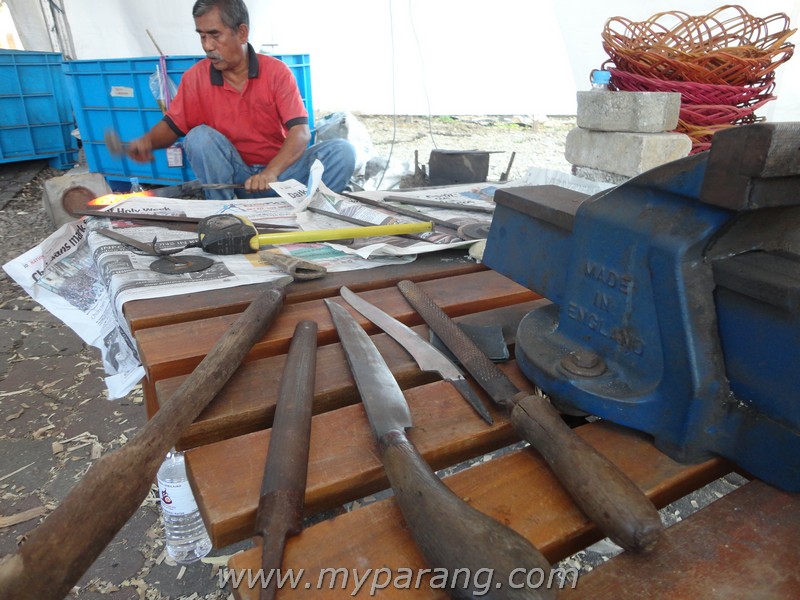
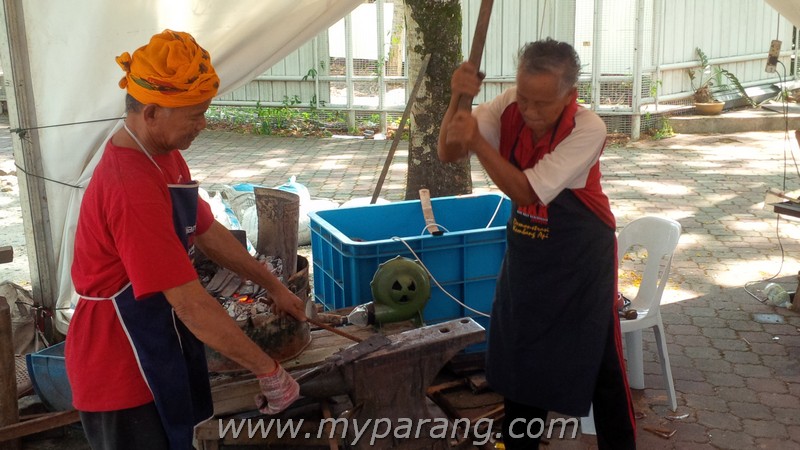
Knife making demonstrationOrang Asal wood carving demonstrationmat and basket weaving demonstrationKelantan knife makers pounding on hot steel
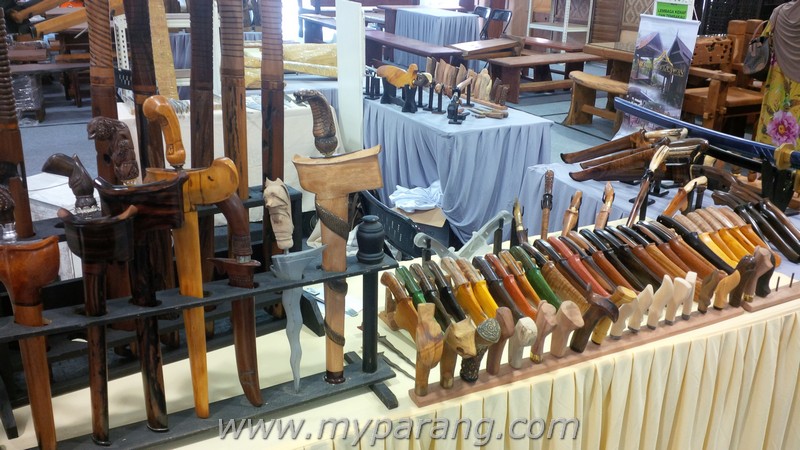
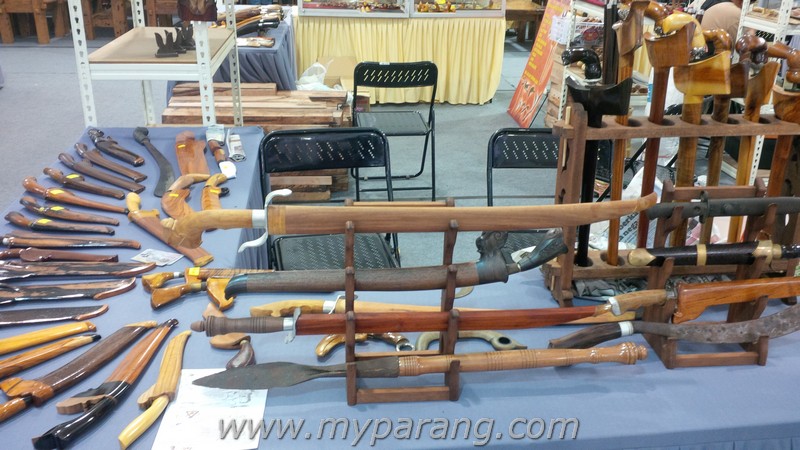
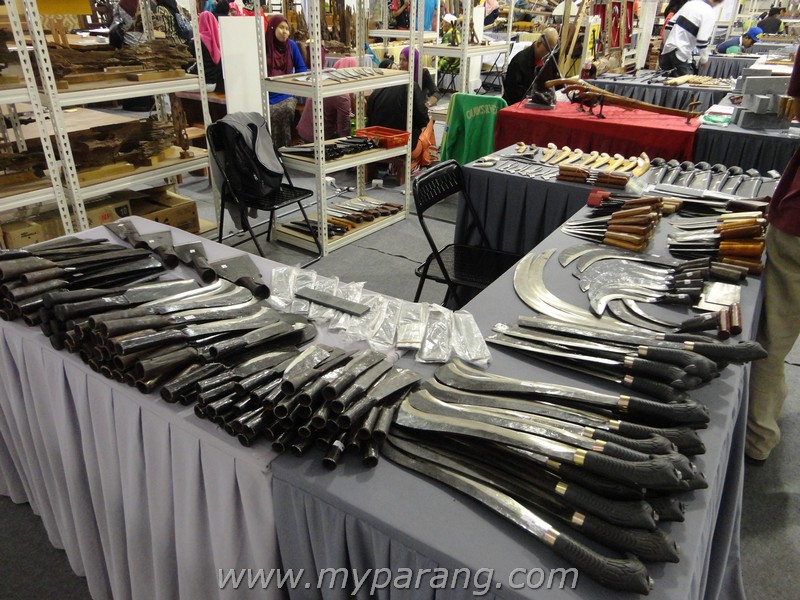
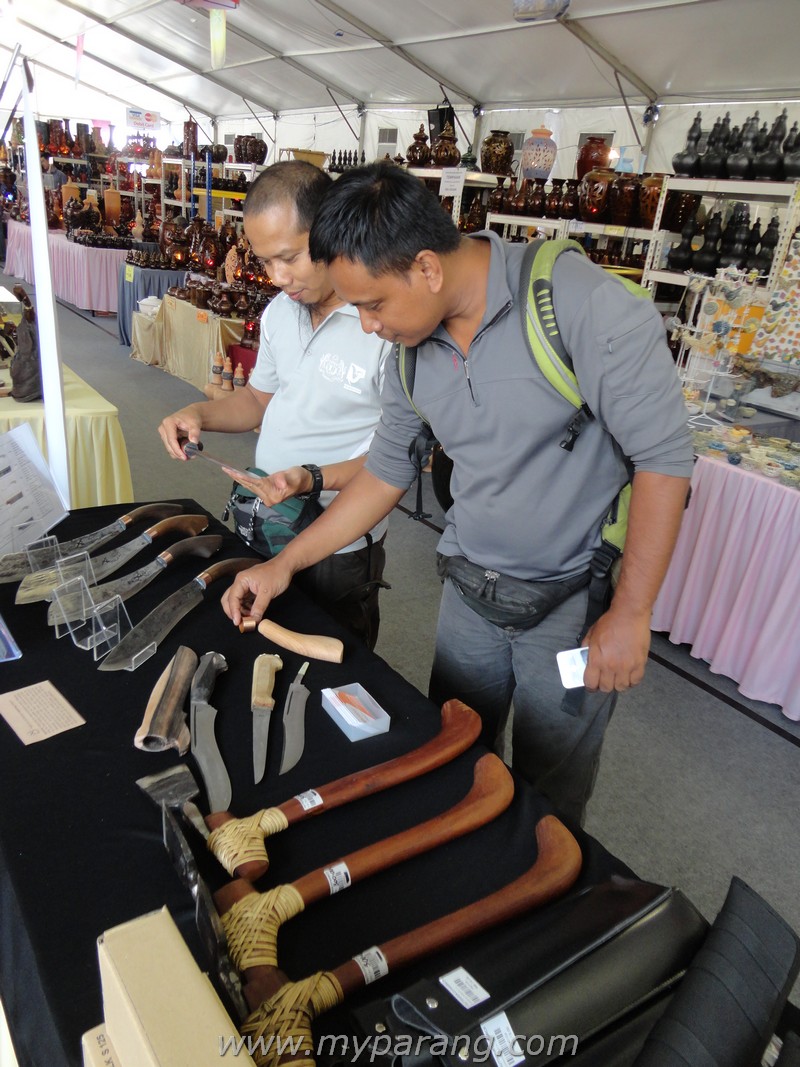
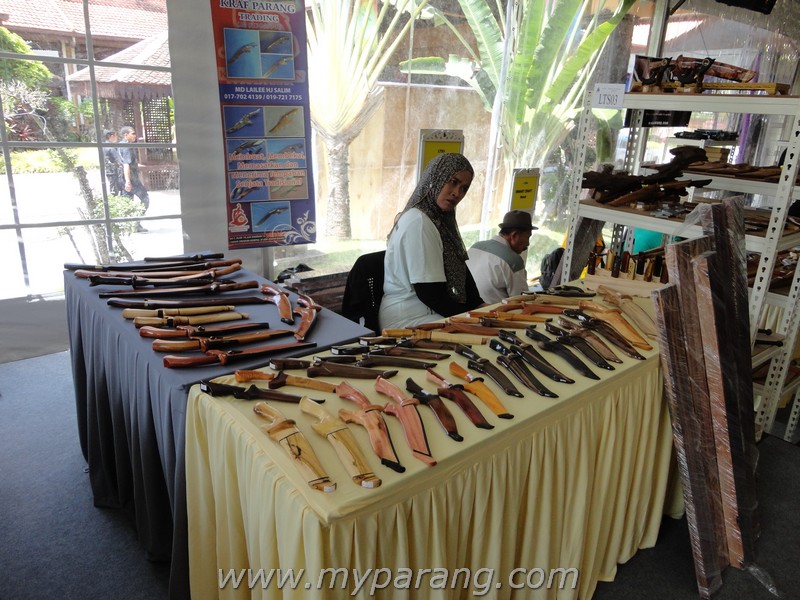
In the previous years, I would drop by and check out the various parang makers and sometimes pick a parang or two. Some come with 200-300 pcs for sale and some come with about 50 pcs. They vary widely in price, and sometimes you can get really exquisitely made parangs and goloks. You can also purchase exotic local wood, such as Kemuning ( Emas and Hitam ) , Arang Bunga , Juha ( Seribu Bunga ) , Serian , and many more. Below are some pictures of what you can find at the National Craft day .
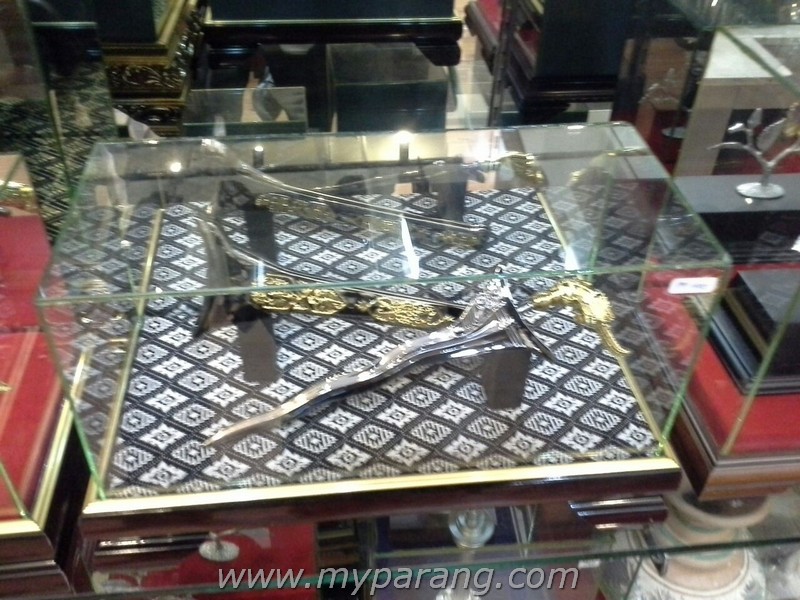
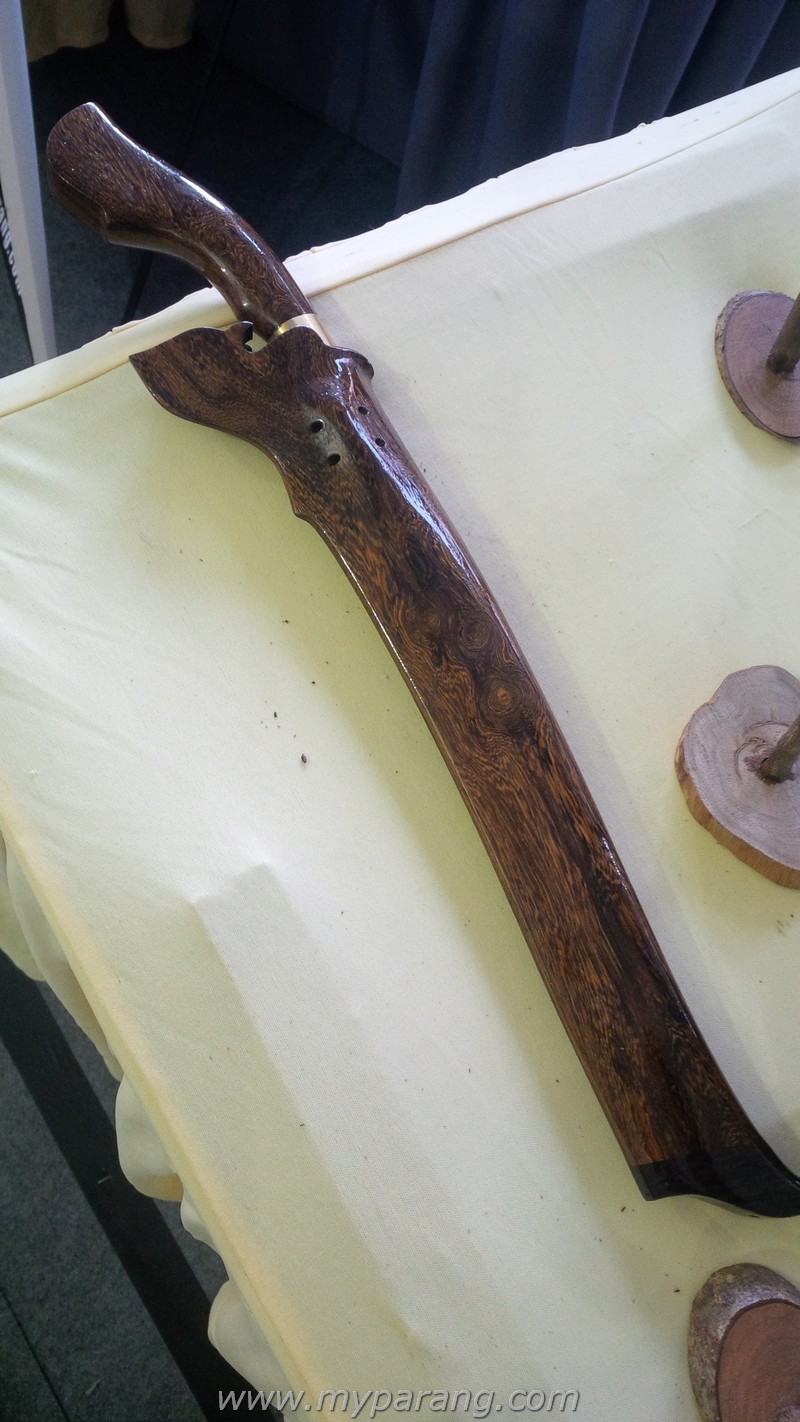
Exquisitely made krisA parang with the sheath made of Juha woodA parang with sheath made form the Acacia wood
Most of the Parang and golok makers were placed in hall C, while some, including MY Parang were placed in hall E.
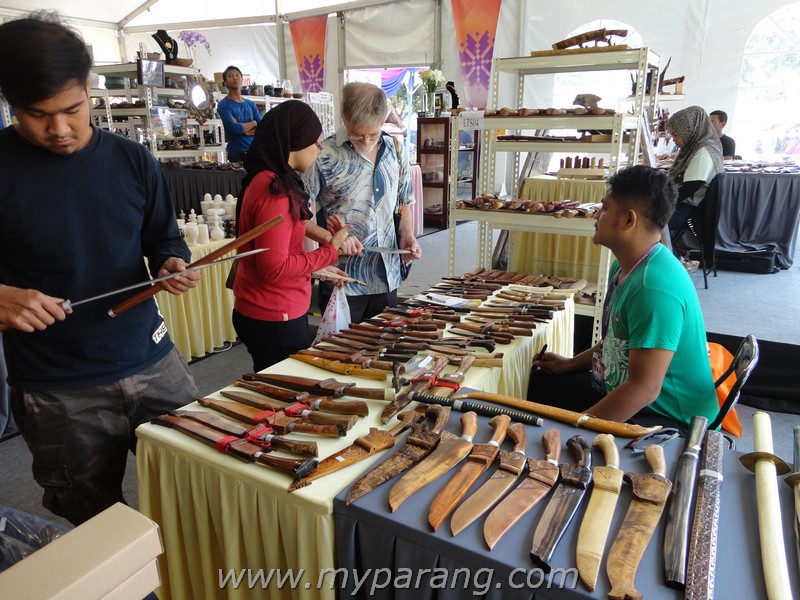
Keris and parangsswords, and spearsgardening toolsIt can be hard to choose when there are so many choicesBesides the parangs , you can also see the basketry in the backgroundA whole line of parang sellers
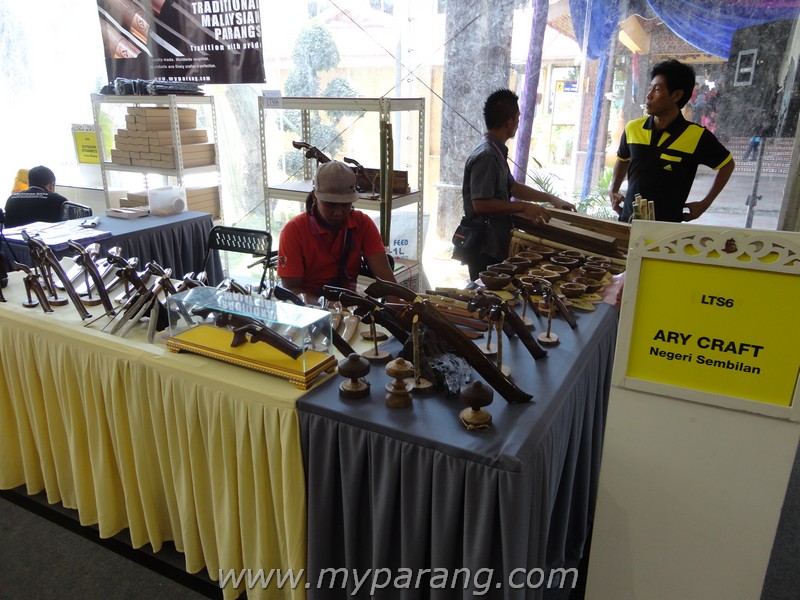
Most of the above pictures are from hall C, while the pictures below are from hall E . All together there were 13 halls covering all sorts of crafts. It can be pretty mind boggling and exhausting to cover all in one day, and it was pretty common to see the same customers coming over a span of a few days.
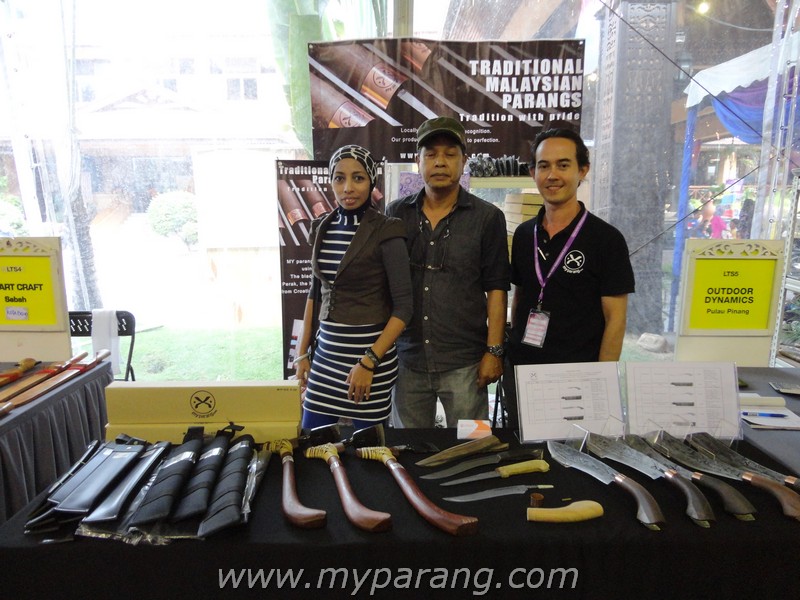
The Penang Craft Director Encik Rosli ( with cap ) at our booth in hall E
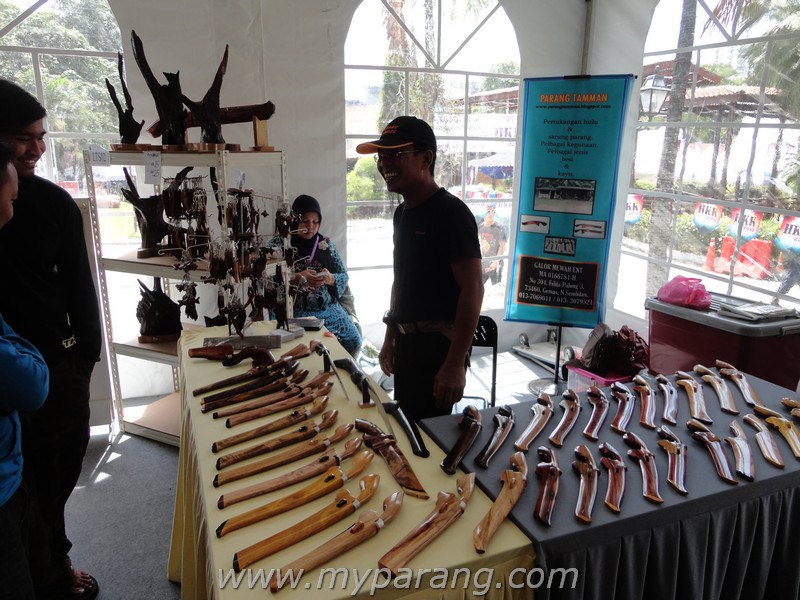
Some customers looking at MY Parang productsOur neighbor in Hall E ( Ary Craft from Negeri Sembilan )Hall E exhibitors (Parang Kraf from Johor)Hall E exhibitor ( Parang Tamman from Negeri Sembilan )Hall E exhibitors ( Smart kraf from Kota Belud Sabah )
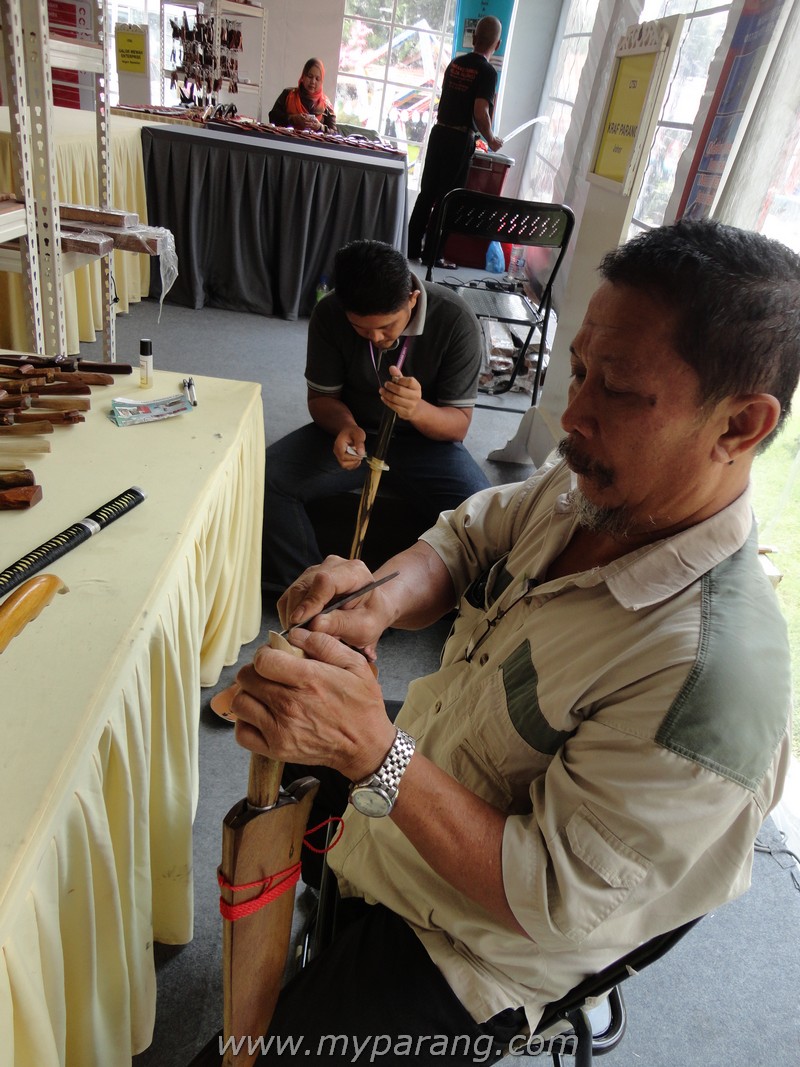
Most of the craftsmen I noticed kept themselves busy when they can. Most of them brought their tools with them – carving knives, angle grinders and whenever they had time, they would be busy carving, sharpening or polishing their products. Besides selling their works to customers, there was also a “Back sales” going on between the sellers. No, nothing against the law, just special tool attachments, sand paper, brass tubes , wood , steel for making parang blades, various oils and polishing items, carving knives, jigs and whatnot. It was pretty amusing actually. The Craft fair is also a time for all the craftsmen from all over Malaysia to meet, discuss, share and learn new things from their fellow traders.
Busy when there are no customers
Another highlight of the National Craft Week is the blacksmith demonstration or known as ” Demonstrasi Kembang Api ” . Every year about 6-8 craftsmen are invited to demonstrate their skills at making everyday tools , like the parang, goloks, Kris, knives, Kacip ( a scissor like tool to cut betelnut ) , sabit ( sickle ) and lembings ( spears ) . They are located in an open booth , usually at the back of the premises . They do start pretty early in the day, as they take a long break when the day gets hot. Every time I arrive to man our booth at 9.30 am, they are already busy hammering orange colored steel . I believe they try to use the cooler part of the day to do the forging, then move to grinding and heat treating in the afternoon and evenings . Below are some videos I took of their booth.
The above is a video of a guy hardening a plane Iron
The video above shows the “Kembang Api ” open booth. You are welcomed to grab a hammer and start hitting.
As mentioned earlier, it was an honor for MY Parang to be able to take part in this year’s National Craft Week . It was a very busy two week period , not only selling MY Parang products, but visiting other Parang makers, discussing little details and learning new techniques. Some of our customers also have a wealth of knowledge and they are not stingy when it comes to sharing it.
We would like to give a big Thank You to Kraftangan Malaysia for letting us take part in the National Craft Week, and we hope we will be able to make it every year now onwards. We also would like to say thank you to the Kraftangan Staff who dropped by our booth to have a look at our products and give us words of encouragement .
Every parang user will need eventually a means to sharpen it. Here is a short write up on sharpening stones used to sharpen parangs .
Being a parang user for 20+ years, I have an array of sharpening stones. Some have been worn out and discarded, and some are still in use. Sharpening stones come in various shapes, sizes , material and grits. Most sharpening stones are square, but some come round or wedge- shaped. Some are made of natural material – especially the finer grit ones. The coarser stones are usually made with carborundum , diamond or similar types of abrasives held together with a binder. Grits range from 40 and all the way up to about 1200 grit. It is quite difficult to grade a natural sharpening stone as it is not made of a specific grit and you can only tell from using it. Some natural sharpening stones will be harder than some and some will not cut as well as some.
Sharpening is basically removing steel from the knife edge , and how you achieve this can be quite interesting. I have seen rocks , sand , files, carbide scraper, sand paper , porcelain , dremmel and grinders being used. They all try and achieve the same final outcome, which is a sharp edge.
A note on mechanical sharpening – ie sanding machines, dremmel and grinders – I’ll not touch on these as I believe if you are not familiar with power tools, you can actually ruin the edge by over grinding. You can also destroy the heat treatment by overheating the knife edge.
So lets go to the sharpening stones. First up is a natural sharpening stone I am very familiar with. It belongs to my late grandmother and was placed outside her house on the ground next to the garage. It was one of the first natural sharpening stones I have ever seen, and it was used very very well. As you can see from the pictures below, the surface has become like a saddle from all the years of sharpening kitchen knives, goloks, sabit and parangs. A few years back, I noticed the stone was not in its place and only recently my uncle told me that someone had moved it. I’m so glad that it is now in my possession , although someone had chopped the top surface . I’ll try and recondition the surface back to its original smoothness. It is believed that this stone is more than 50 years, as my uncles remember that is was already in use when he was a child. In some villages even today, it is quite common to see a similar stone by the riverbank which the whole village uses to sharpen their knives.
The Natural sharpening stone from my late grandmother’s houseAnother angleThe top of the stone has been damaged. Looks like someone chopped itThe saddle and smooth surface of the stone
Below are some of the sharpening stones I have used in the past. Some are natural and some are man made. The rough “brick” is used to dress the other stones, ie I do not use it to sharpen knives, but I use it to flatten the surface of the other stones before I start sharpening. A concave stone does not produce a good edge. As you can see, they come is various different sizes, from 5 inches long to 8 inches long. Some of the sharpening stones have two grits, one rough grit on one side, and a finer one on the other side.
Some of my sharpening stones I have used
Here are some of the man made ones , some are thinner and good for field use. The green sharpening stones are much harder and better for stainless steel knives as they don’t wear out as fast as the black ones.
Man made sharpening stones
Here is a close up of the natural stones. These natural stones differ in hardness, and some produce a slurry / muddy paste when sharpening. The left most and right most stones are the hardest, they sharpen quite slowly and produce not much slurry. The second from the left is my favorite, it sharpens fast and produces a muddy slurry. The on to the right of it is not the best stone, too soft and the slurry is very gritty. Usually I use these stones at the final stage, to get a razor sharp edge. The edges usually come out slightly hazy or mirror polished, depending on which sharpening stone you use.
Natural sharpening stones
Recently about a year back, I discovered or actually had the opportunity to try out a friends diamond stones. To keep things short, I’ve never looked back 🙂 . They cut much faster and you can use them dry. Best of all , they don’t need any dressing and stay flat forever. I’ve tried cheaper diamond stones and have been disappointing as the diamonds fall off after some time. But these DMT diamond stones are the best!
DMT diamond stones
Sharpening stone holders also come in various shapes and sizes. The left one below is from my inlaws , and it is just a square block of heavy wood with a carved recess for the stone to sit in . The middle one is one I made a long time ago, and you can wedge it against the table edge. I used to use oil when sharpening , hence the mess , but now days I either use water or nothing ( on the diamond stones ) . The sharpening stone holder you see on the right is one which I made a few years ago. It’s a copy of the modern stone holders and it works very very well. The bottom picture shows the modern sharpening stone holder , it’s much slimmer and has a better grip. I now have a few of these at home and in the workshop. it’s the best addition to your sharpening stones, and everyone should have one.
Various types of sharpening stone holdersA modern sharpening stone holder
Besides these, I also have some Japanese sharpening stones, up to 6000 grit. I seldom use it as I don’t need such a sharp knife. For the parangs I have , 600 grit is more than enough, and if I want to show off to friends, i use the 1200 grit. Thats enough to shave hair off my arm.
I also have a Spyderco Sharpmaker, and I use it for sharpening my folding knives. it’s easy and fast!
Yes, they are out there , beware. Some say imitation is another form of flattery , but unless you know it is a fake, you can be easily be cheated when buying a parang. Fake Bidor parangs should be avoidedas they may be made of inferior quality steel, I’ve even heard of some using rebar ( construction steel ) and their heat treatment may be of suspect as well. If you buy a fake Bidor Parang, you may end up with a piece of useless metal.
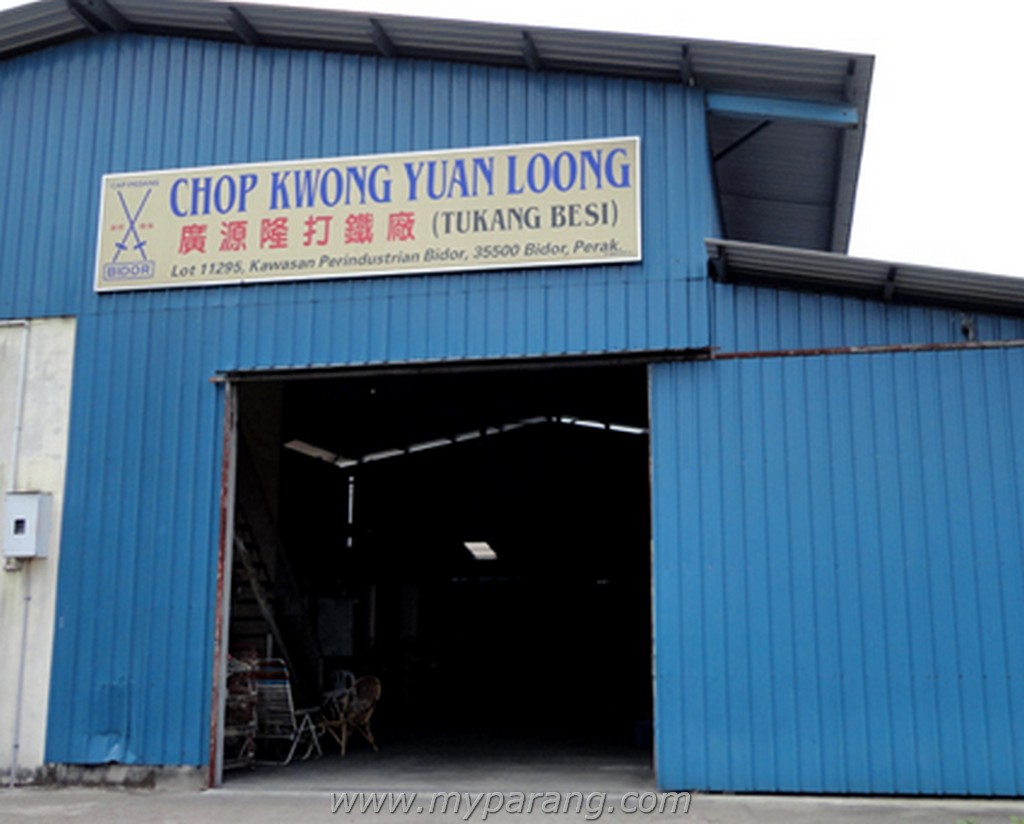
The genuine Bidor Blacksmith workshop
When I first went to the Bidor Blacksmith many years back, Ah Pin mentioned to me that there are many fake Bidor parangs out there. Initially I thought not much out of it, until recently when I went around looking for various types of Parangs sold here in Malaysia. Whenever I had the time, I would drop by a hardware shop and get whatever parang brands I could find. And much to my surprise , many have the word or name “BIDOR” stamped or stuck on them , despite not being made in Bidor.
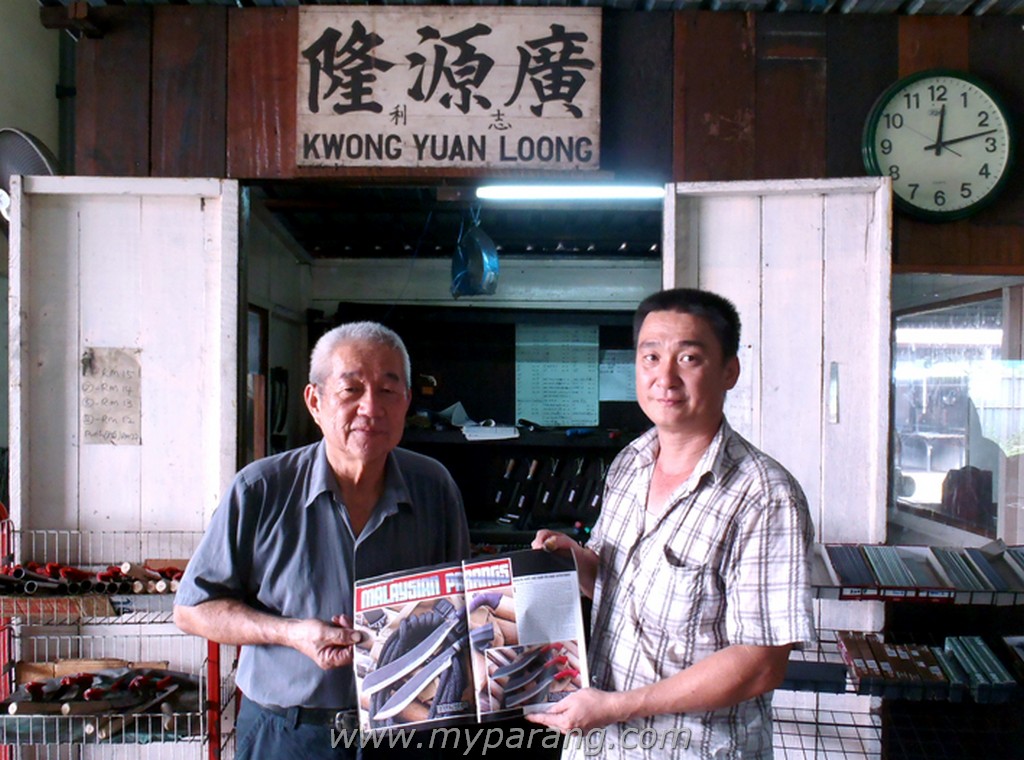
Mr. Chin Pin Yon ( Left ) and His Son in law – Foo Yong Ming ( right ) with the magazine article
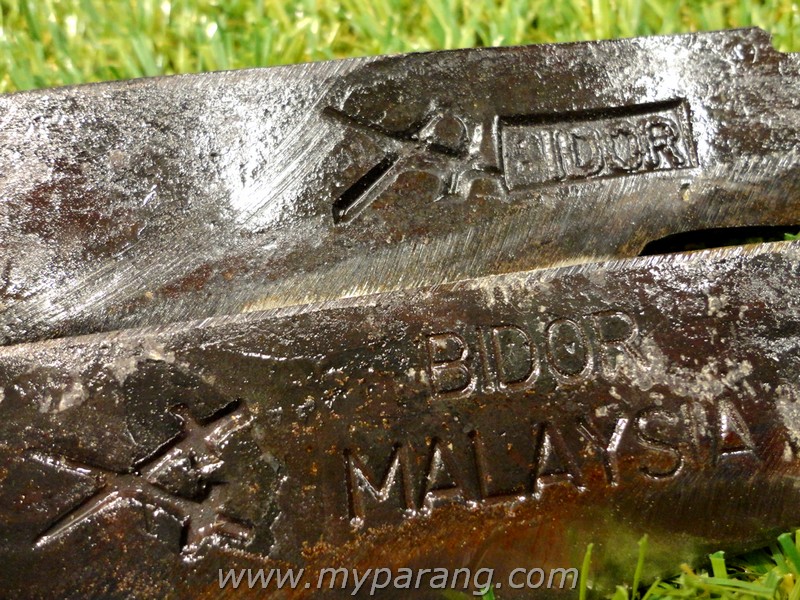
As far as I know, there are two parang blacksmiths in Bidor, and they are just about 100 meters from each other. One is Chop Kwong Yuan Loong and the other newer one is Mak Heng Seng . There may be a few other small traditional makers around, but I have not seen them. Chop Kwong Yuan Loong is the authentic Bidor parang maker and they have been featured in the Tactical Knifes Magazine ( July 2012 issue ) , as you can see in the picture above. Outdoor Dynamics Sdn Bhd gets their parangs from Chop Kwong Yuan Loong . Outdoor Dynamics also supplies parangs to Machetespecialist.com , so yes, they do sell authentic parangs from Bidor. As for the other Blacksmith in Bidor, we did attempt to meet them some time back, but they were cold and uncooperative. Authentic Bidor Parang Stamps – The Crossed swords and BIDOR are their trademark. The Crossed Swords and BIDOR MALAYSIA are these made specially for Outdoor Dynamics.
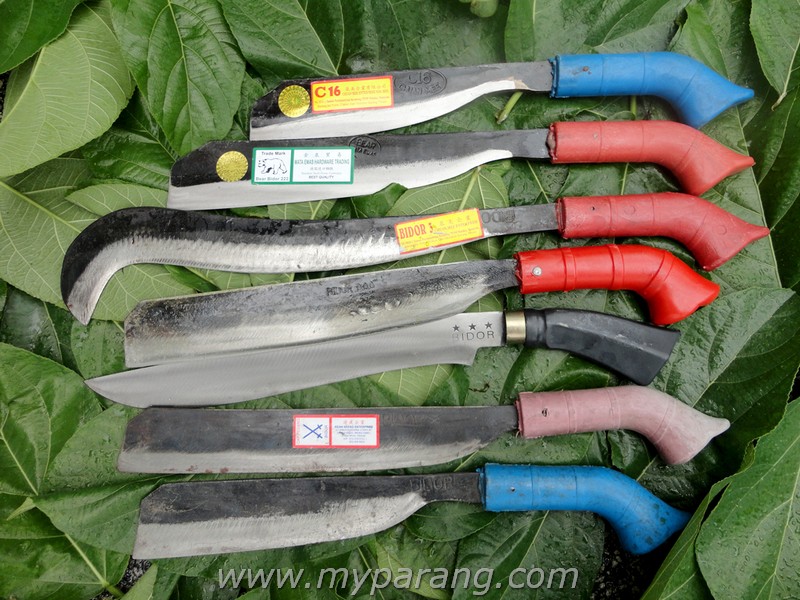
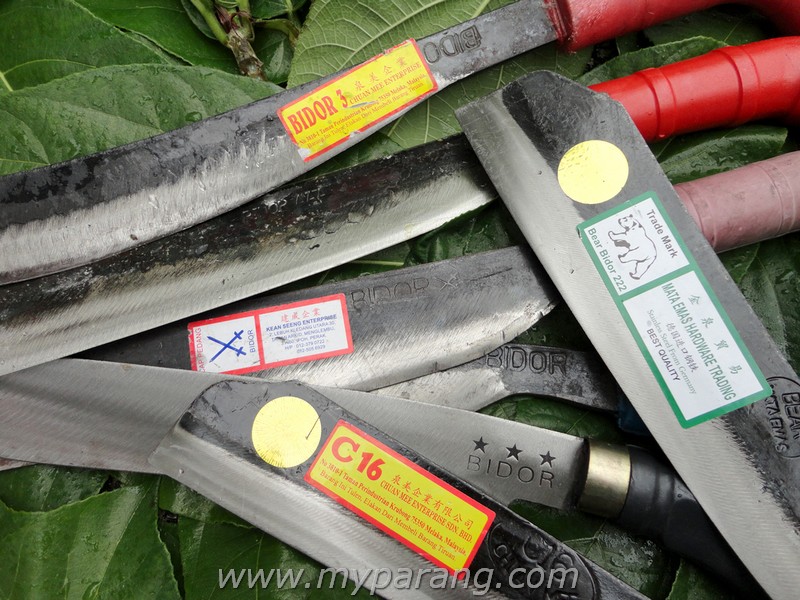
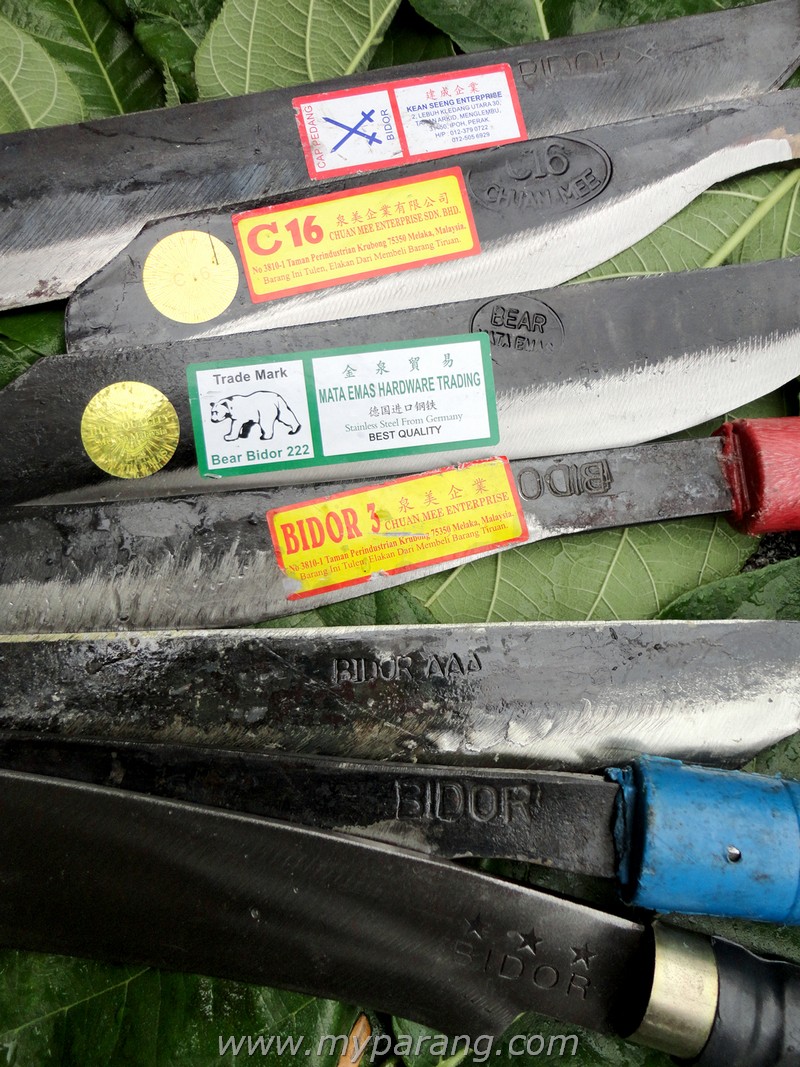
Bidor is a town in Perak, Malaysia , so if the parangs are not made there , it would be wrong to put the name “Bidor” on it. Imagine a knife with the word “Seki City” but made in Iwata Japan. That would be misleading and not right. Some red flags that these are fake Bidor Parangs are: Stamped BIDOR , but the factory address is in another state , has the Bidor Stamp, but use a different Logo , ie instead of the crossed swords, they have the picture of a Bear or 3 stars. One even copied the sticker but had a different address ( in another state of course ) and another just stamped “BIDOR” without the crossed swords.
Below are some pictures of the fake Bidor parangs. I am not sure of the quality , but if they need to copy someone else, then that from the start is not good.
So if you are looking for authentic Bidor Parangs, keep and eye for the red flags. In my opinion, a brandless parang is better then a fake Bidor parang. To be sure, buy your parangs from a reputable dealer.
All about Malaysian Parangs, Goloks and Duku Chandongs